



Scaling a Poultry Business;The Inspiring Journey of Dr. Daniel Masaba
Dr. Daniel Masaba’s journey from 800 birds to producing over 100,000 day-old chicks weekly shows how knowledge, discipline, and bold decisions can turn poultry farming into a thriving agribusiness.

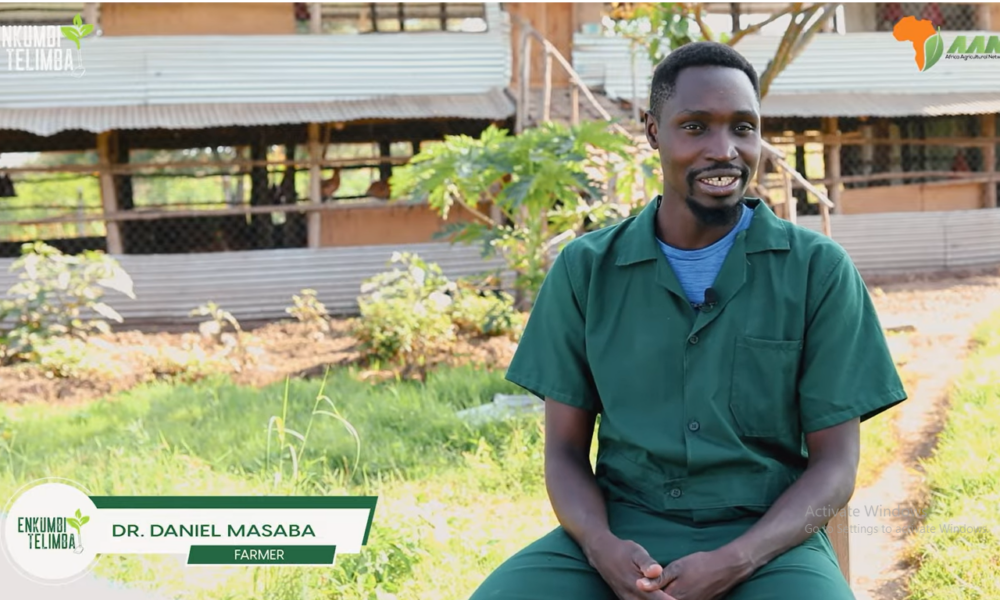
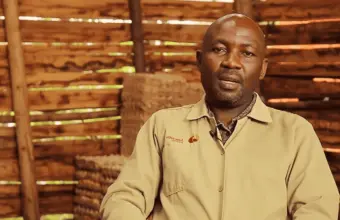
Dr. Daniel Masaba made a decision that surprised many: he left his medical career to become a full-time poultry farmer. What started as a conversation with a greenhouse farming expert evolved into one of Uganda’s most successful poultry operations. Today, through his brand FarmUp, he produces over 100,000 day-old chicks weekly and has become a recognized figure in Uganda’s agricultural sector.
Table Of Content
The Humble Beginning: 800 Birds on Dad’s Land
In May 2019, Daniel approached his father, Munyaro Robert, with an unusual request. He wanted to start a small poultry project on a section of the family land. With his father’s support, he began with just 800 birds. The first project proved highly profitable, convincing Daniel to pursue poultry farming with complete dedication.
“My dad was very supportive and not predatory on what was happening,” Daniel recalls. His father provided fuel for the vehicle and ensured Daniel didn’t feel burdened by the initial investment. This family support became the foundation of his success.
The Expensive Lessons
The journey wasn’t without challenges. When Daniel started, maize prices had skyrocketed to 1,300 shillings, more than double his projections. Despite earning three million shillings monthly as a doctor, he sometimes spent four to five million shillings feeding his birds. From construction to the point when chickens started laying, the investment reached 33 million shillings.
“It was too much for me, but it taught me a lot of lessons,” Daniel admits. His first chicken house was extravagant with unnecessary brick construction. He learned that chickens don’t need luxury, and simpler structures work just as well.
Quality Over Everything
Poor feed quality became another expensive teacher. Daniel initially bought ingredients like soya from unreliable sources and old bran that affected bird production. He discovered that the crucial period between six weeks and laying is when the reproductive system develops, yet many farmers neglect this phase.
“You can’t tell how good a chicken is doing from how it looks unless you know its weight,” Daniel explains. He emphasizes following target weights and adjusting feed constituents accordingly.
The Biosecurity Wake-Up Call
Fowl typhoid struck Daniel’s farm early on, causing significant losses. As a scientist, he knew diseases have preventable causes. He identified two main culprits: poor vaccination programs and inadequate biosecurity measures.
Daily biosecurity practices became non-negotiable. Workers must change clothing, wash hands, wear gumboots, and disinfect before entering chicken houses. Footbaths with disinfectant chemicals are placed at every entrance to kill microorganisms.
Smart Farm Design
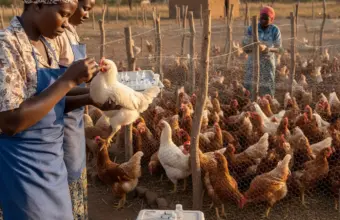
Daniel’s current chicken houses showcase practical efficiency. Automated water systems ensure birds never go thirsty, while automatic feeders reduce spillage and waste. The deep litter system, made from wood shavings, keeps the houses odor-free and disease-free while producing excellent manure for the crops grown around the farm.
“The farm can be as self-sustaining as possible without me needing to touch my pocket,” he notes, pointing to the thriving crops fertilized by chicken house manure.
Why Eggs Over Meat?
Daniel chose layer chickens over broilers for strategic reasons. In rural Uganda, local chicken is preferred over commercial broilers. However, eggs are consumed everywhere, from Rolex stands to bakeries, schools to wholesale markets.
Operating in Mbale, one of Uganda’s most densely populated areas, Daniel produces over 120 trays daily from one farm alone. None of these eggs need to leave the district. They’re absorbed by wholesalers, chapati sellers, schools, and his retail outlet in Mbale town.
The Breeder Farm Revolution
After depleting his first flock, Daniel ordered replacement birds from a company. The six-month wait was frustrating. This experience inspired him to start a breeder farm, not just for himself but to close the supply gap for other farmers.
Partnering with a colleague, he established a massive operation on 400 acres in Nakaseke with capacity for 60,000 breeder chickens. Today, they produce over 100,000 day-old chicks weekly, distributed through outlets across Uganda from Kampala and Mukono to Gulu and Mbarara.
The Power of Self-Education
Daniel credits his success to actively seeking information. When starting, he didn’t have mentors or YouTube tutorials. Instead, he turned to Google and downloaded poultry guides in PDF format.
“If I get a problem with a disease on my farm, I just put in how to manage it. Google brings about 50 articles. I only need to read 20 of them to become an expert in one day,” he explains.
He now runs a YouTube channel sharing this knowledge with aspiring farmers, providing resources he wished he had when starting.
The Winning Formula
Daniel’s father emphasizes three critical elements for farming success: passion for the work, trusted people to work with, and consistent presence. Daniel adds the importance of balance between preparation and action.
“A lot of people will start without being ready. They have no knowledge, they have nothing, they have some money, they start. It’s a mistake,” he cautions. Conversely, some people seek knowledge endlessly without starting. His advice? Get a job if you lack capital, start small, but start now.
Freedom and Financial Success
Comparing his life to medical peers, Daniel believes he’s ahead of most. He’s purchased land, built a house, bought cars, and most importantly, gained time freedom.
“I don’t have to set an alarm in the morning. I don’t have to beat traffic. I can travel when I want, where I want,” he says. “That’s the best thing about business in general—the freedom to do what you want, when you want.”
The Takeaway
Dr. Daniel Masaba’s journey from 800 birds to 100,000 weekly chicks demonstrates that success in agriculture requires knowledge, persistence, proper biosecurity, quality inputs, and the courage to start. His story proves that with the right approach, farming can provide not just financial rewards but the invaluable gift of personal freedom.
For anyone considering an agricultural venture, Daniel’s message is clear: the information is available, the opportunity exists, and the time to start is now.
Watch the video here:

No Comment! Be the first one.