



Climate-Smart Farming for Uganda’s Changing Weather
Discover practical climate-smart farming techniques helping Ugandan farmers adapt to unpredictable weather patterns while boosting yields and protecting crops.

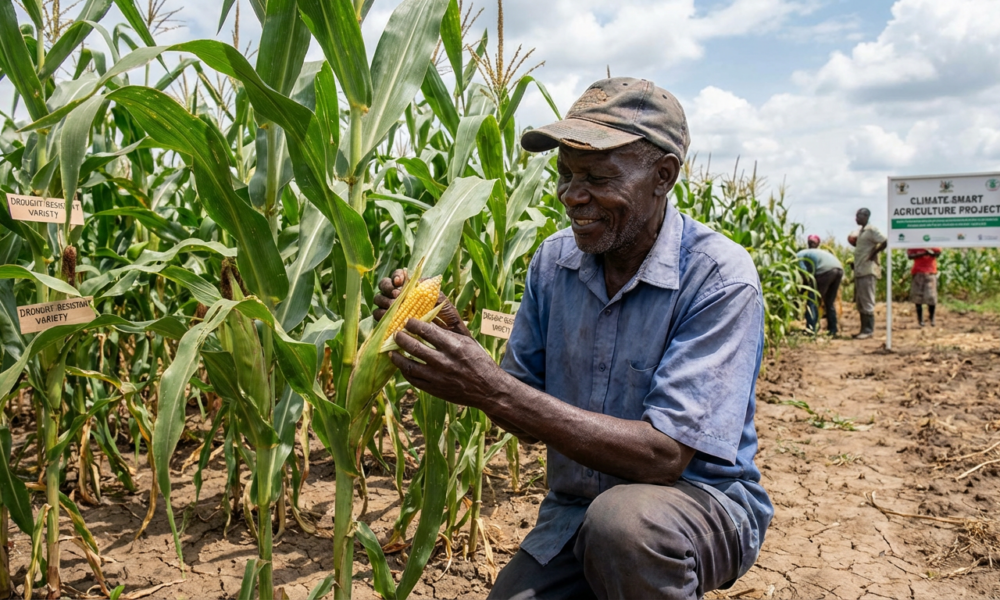
Uganda’s farmers are facing an unprecedented challenge. Rainfall patterns have become increasingly erratic, temperatures are rising, and traditional planting calendars no longer work as they once did. Consequently, many farmers are experiencing crop failures and reduced yields that threaten their livelihoods.
Table Of Content
- What is Climate-Smart Farming?
- Understanding Uganda’s Changing Weather Patterns
- The Reality on the Ground
- Practical Climate-Smart Strategies for Ugandan Farmers
- 1. Drought-Resistant Crop Varieties
- 2. Water Harvesting and Conservation
- 3. Soil Health Management
- 4. Agroforestry: Trees on Farms
- 5. Flexible Planting Schedules
- 6. Integrated Pest Management
- Government Support and Resources
- Success Stories: Ugandan Farmers Leading the Way
- Getting Started: Your Climate-Smart Action Plan
- Step 1: Assess Your Situation
- Step 2: Start Small
- Step 3: Learn and Adapt
- Step 4: Expand Gradually
- Conclusion
However, there is hope. Climate-smart farming offers practical solutions that help farmers adapt to these changes while maintaining productivity. Moreover, these techniques don’t require expensive equipment or complex technology. Instead, they rely on proven methods that work with nature rather than against it. Therefore, farmers across Uganda are discovering that adapting to climate change is not only possible but can also improve their long-term success.
What is Climate-Smart Farming?
Climate-smart farming refers to agricultural practices that help farmers adapt to changing weather conditions while reducing environmental impact. Furthermore, these methods focus on three key goals: increasing productivity, building resilience to climate shocks, and reducing greenhouse gas emissions when possible. Read more about climate-smart agriculture from FAO
Unlike conventional farming, climate-smart approaches recognize that weather patterns are changing. As a result, farmers need flexible strategies rather than rigid seasonal calendars.
Understanding Uganda’s Changing Weather Patterns
The Reality on the Ground
Ugandan farmers have noticed significant shifts in recent years. For instance, the traditional rainy seasons now start late or arrive unpredictably. Additionally, dry spells occur during what should be wet months, while unexpected heavy rains cause flooding and soil erosion.
These changes directly impact crop production. Consequently, farmers who plant according to old calendars often lose their investments when rains fail to arrive on time. Learn about crop insurance options
Practical Climate-Smart Strategies for Ugandan Farmers
1. Drought-Resistant Crop Varieties
One of the most effective strategies involves selecting crops that can withstand dry conditions. Indeed, many improved seed varieties mature faster and require less water than traditional crops.
Recommended varieties include:
- Drought-tolerant maize varieties (e.g., Longe 5, Longe 10H)
- Short-season beans (complete growth in 60-75 days)
- Cassava and sweet potatoes (naturally drought-resistant)
- Sorghum and millet (traditional crops making a comeback)
Learn more about drought-resistant crop varieties for Uganda
Moreover, mixing several crop varieties reduces risk. If one variety fails, others may still produce a harvest.
2. Water Harvesting and Conservation
Water is becoming increasingly precious. Therefore, smart water management is essential for survival during dry spells. Discover more water conservation methods
Simple water harvesting techniques:
First, dig contour trenches along slopes to capture rainwater before it runs off. These trenches slowly release water into the soil throughout the dry season.
Second, create small retention ponds to collect water during rainy periods. This stored water can irrigate crops during dry spells.
Third, apply mulching around crops using grass, leaves, or crop residues. Mulch reduces evaporation and keeps soil moist longer.
Additionally, consider installing low-cost drip irrigation systems using recycled bottles or pipes. These systems deliver water directly to plant roots, minimizing waste.
3. Soil Health Management
Healthy soil acts like a sponge, holding water and nutrients for crops. Consequently, improving soil health is crucial for climate resilience.
Key soil management practices:
- Add organic matter through compost and animal manure
- Practice crop rotation to prevent soil exhaustion
- Plant cover crops during off-seasons to protect soil
- Minimize tillage to preserve soil structure
- Use terracing on slopes to prevent erosion
Furthermore, healthy soil supports beneficial microorganisms that help plants access nutrients and resist stress. Discover more soil health improvement techniques
4. Agroforestry: Trees on Farms
Planting trees alongside crops provides multiple benefits. First, trees create microclimates that protect crops from extreme heat. Second, their roots prevent soil erosion during heavy rains. Third, trees provide additional income through fruits, timber, or fodder.
Suitable trees for Ugandan farms:
- Fruit trees (mango, avocado, citrus)
- Nitrogen-fixing trees (calliandra, sesbania)
- Shade trees (grevillea, terminalia)
Learn more about agroforestry benefits for Ugandan farms
Moreover, trees increase biodiversity and attract beneficial insects that control pests naturally.
5. Flexible Planting Schedules
Rather than following fixed planting dates, climate-smart farmers monitor weather signals carefully. Similarly, they use mobile phone apps and radio forecasts to time their planting.
Smart timing strategies:
- Wait for consistent rainfall before planting
- Use early-maturing varieties if the season starts late
- Practice staggered planting (plant in stages over 2-3 weeks)
- Keep some seeds for replanting if the first crop fails
Access Uganda weather forecast resources for farmers
Additionally, joining farmer groups helps share information about local weather patterns and successful timing strategies.
6. Integrated Pest Management
Climate change has altered pest and disease patterns. Therefore, farmers need adaptive pest control strategies that don’t rely heavily on expensive chemicals.
Effective IPM techniques:
First, regularly scout fields to detect problems early. Second, use natural predators and companion planting to control pests. Third, apply organic pesticides made from neem, garlic, or chili peppers. Finally, maintain crop diversity to reduce pest buildup.
Consequently, these methods protect both crops and the environment while reducing costs. Read our guide on organic pest control methods
Government Support and Resources
The Ugandan government, through the Ministry of Agriculture, offers several climate-smart farming programs. Furthermore, organizations like NAADS and Operation Wealth Creation provide improved seeds and training.
Available support includes:
- Subsidized drought-resistant seeds
- Extension services and training
- Weather information through SMS
- Farmer field schools
Therefore, farmers should contact their local agricultural extension officers to access these resources.
Success Stories: Ugandan Farmers Leading the Way
In Karamoja region, farmers using drought-resistant sorghum varieties have maintained harvests despite prolonged dry seasons. Similarly, coffee farmers in Mbale who adopted agroforestry practices report higher yields and better climate resilience.
These success stories demonstrate that climate-smart farming works. Moreover, the techniques are accessible to both small-scale and large-scale farmers.
Getting Started: Your Climate-Smart Action Plan
Step 1: Assess Your Situation
Identify which climate challenges affect your farm most: drought, flooding, unpredictable rain, or extreme heat.
Step 2: Start Small
Choose 2-3 techniques to implement first. For example, try drought-resistant seeds plus mulching.
Step 3: Learn and Adapt
Monitor results and adjust your approach. Additionally, join farmer groups to share experiences.
Step 4: Expand Gradually
As you gain confidence and see results, incorporate more climate-smart practices.
Conclusion
Climate change presents serious challenges for Ugandan farmers. However, climate-smart farming provides practical, affordable solutions that work. By adopting drought-resistant crops, conserving water, improving soil health, and using flexible planting strategies, farmers can protect their livelihoods while adapting to new weather realities. Explore financing options for climate-smart investments
The key is to start now. Even small changes can make a significant difference. Furthermore, as more farmers adopt these practices, entire communities become more resilient.
Therefore, don’t wait for perfect conditions. Instead, begin implementing climate-smart techniques today and secure your farm’s future despite unpredictable weather.

No Comment! Be the first one.