



Reduce Post-Harvest Losses: Uganda Farmers’ Income Guide
Learn proven strategies Ugandan farmers use to reduce post-harvest losses by 50% and boost income through better storage, processing, and market access

.
Table Of Content
- Introduction
- Understanding Post-Harvest Losses in Uganda
- The Hidden Cost of Poor Handling
- The Real Impact on Farmers
- Major Causes of Post-Harvest Losses
- 1. Improper Harvesting Timing and Techniques
- 2. Inadequate Drying
- 3. Poor Storage Facilities
- 4. Limited Market Access
- 5. Lack of Processing Options
- Proven Strategies to Reduce Post-Harvest Losses
- 1. Optimal Harvesting Practices
- 2. Effective Drying Methods
- 3. Improved Storage Solutions
- 4. Value Addition and Processing
- 5. Better Market Access Strategies
- 6. Cold Storage and Cooling Solutions
- Government and NGO Support Programs
- Available Support
- Success Stories: Farmers Winning Against Losses
- Maize Farmers in Eastern Uganda
- Fruit Farmers in Central Region
- Vegetable Cooperatives in Karamoja
- Getting Started: Your Action Plan
- Step 1: Assess Your Current Losses
- Step 2: Choose Appropriate Technologies
- Step 3: Join or Form a Farmer Group
- Step 4: Invest in Market Intelligence
- Step 5: Start Small and Scale Up
- Financing Your Improvements
- Affordable Investment Options
- Accessing Credit
- Government Grants
- Conclusion
Introduction
Every year, Ugandan farmers lose nearly 30-40% of their harvest before it reaches the market. Consequently, billions of shillings worth of food rot in stores, get eaten by pests, or spoil during transport. This represents not just wasted food, but lost income that could transform families and communities.
However, the situation is not hopeless. Indeed, farmers across Uganda are discovering practical solutions that dramatically reduce these losses. Moreover, these strategies don’t require expensive infrastructure or complex technology. Instead, they focus on simple improvements in storage, handling, processing, and marketing that any farmer can implement.
Therefore, by addressing post-harvest losses, farmers can increase their income by 30-50% without growing a single extra crop. Furthermore, reducing waste means more food security for families and communities. This article explores proven methods that Ugandan farmers are using to break the cycle of post-harvest losses and build prosperity. Combine these strategies with climate-smart farming techniques for maximum farm profitability.
Understanding Post-Harvest Losses in Uganda
The Hidden Cost of Poor Handling
Post-harvest losses occur at every stage after crops leave the field. First, improper harvesting damages produce. Second, poor drying leads to mold and rot. Third, inadequate storage invites pests and moisture damage. Finally, rough handling during transport bruises fruits and vegetables.
These losses hit farmers hardest during harvest season when prices are low. Consequently, farmers often sell immediately at rock-bottom prices rather than risk storage losses.
The Real Impact on Farmers
For a typical maize farmer, losing 40% of harvest means 40% less income. Additionally, it means wasted investment in seeds, fertilizer, and labor. Moreover, it contributes to food insecurity even in productive regions.
However, reducing these losses directly translates to more income without additional farming costs.
Major Causes of Post-Harvest Losses
1. Improper Harvesting Timing and Techniques
Many farmers harvest too early or too late, reducing crop quality and shelf life. Furthermore, rough handling during harvest creates entry points for diseases and pests.
2. Inadequate Drying
Moisture is the enemy of stored crops. Indeed, grains stored with high moisture content quickly develop mold and aflatoxins. Similarly, improperly dried cassava and sweet potatoes rot within days.
3. Poor Storage Facilities
Traditional storage methods often fail to protect crops from pests, moisture, and rodents. Consequently, farmers watch their hard-earned harvest disappear over months. Learn about the best storage solutions for different crops
4. Limited Market Access
Without proper market information or transport, farmers sell at low prices or watch produce spoil. Additionally, lack of collective bargaining power means middlemen capture most profits.
5. Lack of Processing Options
Fresh produce has a short shelf life. Therefore, without processing capabilities, farmers cannot add value or extend storage time. Moreover, they miss opportunities for premium prices.
Proven Strategies to Reduce Post-Harvest Losses
1. Optimal Harvesting Practices
Timing is Everything
Harvest at the right maturity stage for each crop. For instance, maize should reach 13-14% moisture content before shelling. Similarly, tomatoes picked at the right ripeness stage last longer and fetch better prices.
Gentle Handling
Use proper tools and techniques to minimize bruising and damage. Furthermore, harvest during cool morning hours to reduce heat stress on produce. Additionally, use clean containers lined with soft materials for delicate crops.
2. Effective Drying Methods
Sun Drying Done Right
Spread crops thinly on clean surfaces elevated from the ground. Moreover, turn them regularly for uniform drying. Additionally, cover produce at night to prevent moisture absorption.
Solar Drying Technology
Consider investing in solar dryers that speed up drying while protecting crops from contamination. Indeed, these simple structures can reduce drying time by 50% while improving quality. Read our complete guide on solar drying technology
Moisture Testing
Test grain moisture before storage using simple moisture meters. Consequently, you ensure crops are safe for long-term storage. Grains should reach 13% moisture or below.
3. Improved Storage Solutions
Hermetic Storage Bags
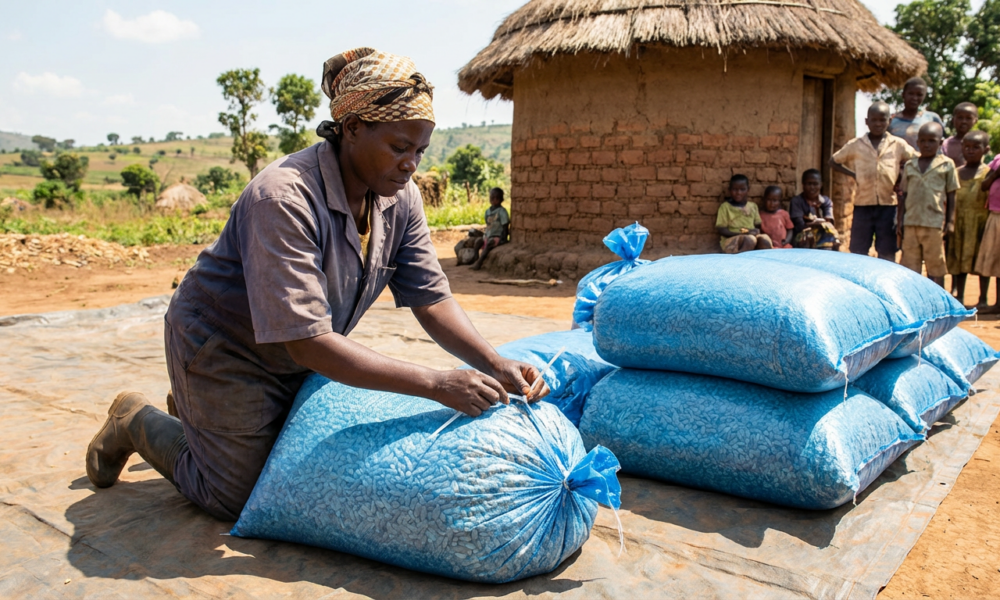
These airtight bags prevent pest infestation without chemicals. Furthermore, they’re affordable and reusable for multiple seasons. Studies show they reduce storage losses by up to 98%.
Metal Silos
For larger quantities, metal silos protect grain from rodents, pests, and moisture. Moreover, they last for decades with proper maintenance.
Traditional Stores Upgraded
Improve existing granaries by sealing cracks, elevating floors, and adding metal sheets to prevent pest entry. Additionally, ensure proper ventilation to control moisture.
Natural Pest Control
Mix dried neem leaves or wood ash with stored grains as natural pesticides. Similarly, use diatomaceous earth for chemical-free pest control. Furthermore, regular inspection catches infestations early. Discover more organic pest control methods for stored grains
4. Value Addition and Processing
Simple Processing Extends Shelf Life
Transform perishable produce into products with longer shelf life. For example, process tomatoes into paste, dry fruits into chips, or mill grains into flour.
Adding Value Increases Income
Processed products command premium prices. Indeed, dried mango chips sell for 3-5 times more than fresh mangoes. Similarly, packaged beans or processed cassava flour attract better markets.
Group Processing Equipment
Join farmer cooperatives to access shared processing equipment like mills, dryers, and packaging machines. Consequently, you reduce individual investment while accessing technology.
5. Better Market Access Strategies
Market Information Systems
Use mobile apps to track market prices across different regions. Therefore, you can choose when and where to sell for maximum profit. Additionally, platforms like e-Soko or Esoko provide real-time price data.
Collective Marketing
Form or join farmer groups to bulk produce and negotiate better prices. Moreover, collective marketing reduces individual transport costs. Furthermore, it gives farmers bargaining power against middlemen.
Direct-to-Consumer Sales
Consider selling directly to consumers, schools, hospitals, or restaurants. Consequently, you eliminate middlemen and capture retail margins. Additionally, establish regular supply relationships for consistent income.
Contract Farming
Partner with reliable buyers before planting. Indeed, contract farming guarantees markets and often provides inputs. Moreover, it reduces marketing risk and uncertainty.
6. Cold Storage and Cooling Solutions
Community Cold Rooms
Although individual cold storage is expensive, community-based cold rooms serve multiple farmers. Furthermore, they enable storage of perishables during glut periods for sale when prices rise.
Evaporative Cooling
Build simple evaporative coolers using local materials. These structures keep vegetables fresh for weeks without electricity. Moreover, they’re affordable for small-scale farmers.
Zero Energy Cool Chambers
Use pot-in-pot cooling or sand-based systems that extend vegetable shelf life by 2-3 weeks. Additionally, these traditional methods cost almost nothing to construct.
Government and NGO Support Programs
The Ugandan government recognizes post-harvest losses as a critical challenge. Consequently, several support programs exist to help farmers.
Available Support
Ministry of Agriculture provides training on post-harvest handling and subsidizes storage equipment through various programs.
NAADS offers extension services focused on reducing post-harvest losses and improving storage.
Uganda National Bureau of Standards (UNBS) provides certification for value-added products, opening premium markets.
Additionally, NGOs like Solidaridad, Mercy Corps, and USAID Feed the Future provide training and equipment for post-harvest management.
Therefore, contact your local agricultural extension officer to access these resources and programs.
Success Stories: Farmers Winning Against Losses
Maize Farmers in Eastern Uganda
Farmers in Mbale who adopted hermetic bags reduced storage losses from 35% to less than 5%. Consequently, they stored grain for 6 months and sold when prices peaked, doubling their income.
Fruit Farmers in Central Region
Mango growers near Kampala invested in solar dryers and now produce dried mango chips. Moreover, they sell these products year-round at 4 times the fresh fruit price. Additionally, they created employment for 20 women in processing.
Vegetable Cooperatives in Karamoja
Farmer groups using evaporative coolers extended vegetable shelf life from 3 days to 3 weeks. Therefore, they access distant markets with better prices. Furthermore, collective transport reduced individual costs by 60%.
These examples prove that reducing post-harvest losses transforms farm economics.
Getting Started: Your Action Plan
Step 1: Assess Your Current Losses
Track what percentage of harvest you lose and at which stage. Consequently, you can prioritize solutions that address your biggest losses.
Step 2: Choose Appropriate Technologies
Select 2-3 improvements that fit your crops, scale, and budget. For instance, start with better drying methods and hermetic storage bags.
Step 3: Join or Form a Farmer Group
Collective action gives access to shared resources, training, and better markets. Moreover, groups qualify for government and NGO support programs.
Step 4: Invest in Market Intelligence
Subscribe to price information services and identify the best markets for your produce. Additionally, build relationships with reliable buyers.
Step 5: Start Small and Scale Up
Test new methods on a portion of your harvest first. Consequently, you learn without risking everything. Furthermore, success builds confidence for larger investments.
Financing Your Improvements
Affordable Investment Options
Many post-harvest solutions require minimal investment. Indeed, hermetic bags cost 5,000-15,000 UGX each but save thousands in prevented losses. Similarly, improved drying surfaces can be built with local materials.
Accessing Credit
Agricultural lending institutions like Centenary Bank and DFCU Bank offer loans for post-harvest equipment. Moreover, SACCOs and microfinance provide smaller, more accessible credit.
Government Grants
Various programs offer matching grants or subsidies for post-harvest infrastructure. Therefore, explore options through your district agricultural office.
Conclusion
Post-harvest losses represent the silent thief robbing Ugandan farmers of prosperity. However, the solutions are within reach. By implementing better harvesting, drying, storage, processing, and marketing practices, farmers can reduce losses by 50% or more.
Consequently, this translates directly to increased income without expanding farmland or increasing production costs. Moreover, it means more food security, better nutrition, and stronger rural economies.
Therefore, don’t let your hard work go to waste. Instead, take action today to protect your harvest and increase your income. Furthermore, remember that even small improvements make a significant difference. The journey to breaking the post-harvest loss cycle starts with a single step.
Start now, start small, and watch your farm income grow.

No Comment! Be the first one.