



Uganda Poultry Vaccination Guide: Schedules, Costs & Methods.
Introduction Raising healthy chickens in Uganda requires more than just good feed and clean water. Indeed, vaccination stands as the cornerstone of successful poultry farming, protecting your...

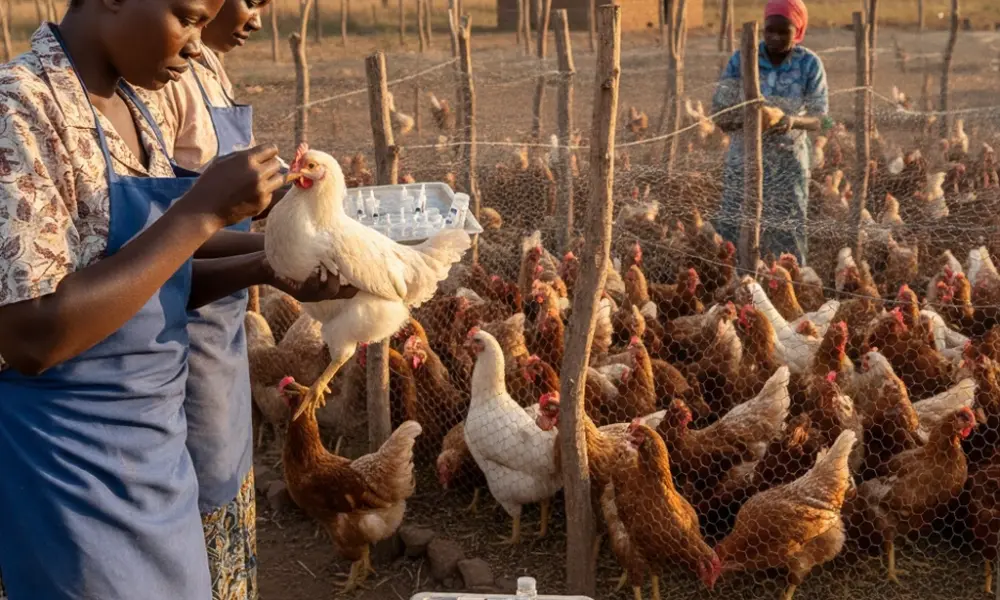
Introduction
Raising healthy chickens in Uganda requires more than just good feed and clean water. Indeed, vaccination stands as the cornerstone of successful poultry farming, protecting your investment from devastating diseases. Whether you’re managing 50 birds in your backyard or running a commercial operation with thousands, understanding the right vaccination schedule can mean the difference between profit and loss.
Table Of Content
- Introduction
- Understanding Poultry Vaccination in Uganda
- Why Vaccination Matters for Your Flock
- Types of Vaccines Available
- Essential Vaccines for Ugandan Poultry
- Newcastle Disease Vaccine (Critical)
- Gumboro Disease Vaccine (Essential)
- Fowl Pox Vaccine (Recommended)
- Infectious Bronchitis Vaccine (For Layers)
- Marek’s Disease Vaccine (For Day-Old Chicks)
- Fowl Typhoid Vaccine (Salmonella)
- Comprehensive Vaccination Schedule
- Broilers (6-8 Weeks Production Cycle)
- Layers (18+ Months Production Cycle)
- Indigenous/Village Chickens
- Proper Vaccination Administration Methods
- Eye Drop Method (Intranasal/Intraocular)
- Drinking Water Method
- Wing-Web Stab Method
- Intramuscular Injection
- Vaccination Best Practices
- Handling and Storage
- Stress Management During Vaccination
- Record Keeping
- Biosecurity Measures
- Cost Analysis and Budgeting
- Vaccination Costs Per Bird
- Return on Investment
- Reducing Vaccination Costs
- Common Vaccination Mistakes to Avoid
- Timing Errors
- Improper Storage
- Incorrect Dosage
- Vaccination During Outbreaks
- Neglecting Hygiene
- Where to Buy Quality Vaccines in Uganda
- Veterinary Drug Shops
- Commercial Hatcheries
- Agricultural Input Suppliers
- Government Veterinary Offices
- Conclusion
- Frequently Asked Questions
Many Ugandan farmers lose up to 30% of their flocks annually to preventable diseases like Newcastle disease and Gumboro. However, with proper vaccination protocols, you can significantly reduce mortality rates and maximize your returns. According to the Food and Agriculture Organization (FAO), proper vaccination is critical for sustainable poultry production in East Africa. This comprehensive guide walks you through everything you need to know about poultry vaccination in Uganda, including essential vaccines, optimal timing, administration methods, and costs tailored to local conditions.
By following this vaccination schedule, you’ll not only protect your birds but also ensure they reach their full production potential. Moreover, you’ll build consumer confidence in your products and establish a reputation for quality poultry farming.
Understanding Poultry Vaccination in Uganda
Why Vaccination Matters for Your Flock
Vaccination serves as your first line of defense against infectious diseases that can wipe out entire flocks within days. In Uganda’s tropical climate, poultry diseases spread rapidly due to high temperatures and humidity. Research from The Poultry Site, a leading global poultry information resource, shows that unvaccinated birds face constant threats from viruses and bacteria that thrive in these conditions.
Furthermore, vaccination offers economic benefits beyond disease prevention. Vaccinated birds grow faster, produce more eggs, and require fewer antibiotics. Additionally, buyers increasingly demand birds from vaccinated flocks, giving you access to premium markets and better prices.
Types of Vaccines Available
Ugandan farmers have access to two main vaccine categories: live attenuated vaccines and killed (inactivated) vaccines. Live vaccines contain weakened disease-causing organisms that stimulate immunity without causing illness. Meanwhile, killed vaccines contain dead organisms that trigger immune responses safely.
Live vaccines work quickly and cost less, making them ideal for routine immunization programs. On the other hand, killed vaccines provide longer-lasting immunity and work well as boosters. Therefore, effective vaccination programs typically combine both types strategically.
Essential Vaccines for Ugandan Poultry
Newcastle Disease Vaccine (Critical)
Newcastle disease remains the number one killer of chickens in Uganda, causing up to 100% mortality in unvaccinated flocks. This highly contagious viral disease spreads through air, water, and contaminated equipment. Consequently, vaccination against Newcastle disease is absolutely non-negotiable for every poultry farmer.
The vaccine comes in several strains, including Lasota, I-2, and V4. Major vaccine manufacturers like Ceva Animal Health and Zoetis produce reliable Newcastle disease vaccines available in Uganda. Moreover, it’s administered through eye drops, drinking water, or intranasal routes depending on bird age and flock size.
Cost: UGX 500-1,500 per dose (varies by supplier and quantity)
Gumboro Disease Vaccine (Essential)
Gumboro disease, also called Infectious Bursal Disease (IBD), attacks young chickens’ immune systems, leaving them vulnerable to other infections. According to the World Organisation for Animal Health (WOAH), this virus survives for months in poultry houses, making prevention crucial. Therefore, timely Gumboro vaccination protects your chicks during their most vulnerable weeks.
Intermediate and intermediate-plus strains are commonly used in Uganda. Additionally, the vaccine is typically given through drinking water for easy administration to large numbers of chicks.
Cost: UGX 800-2,000 per dose
Fowl Pox Vaccine (Recommended)
Fowl pox causes lesions on combs, wattles, and skin, reducing egg production and market value. While not immediately fatal, it significantly impacts profitability. Furthermore, mosquitoes transmit this disease, making it particularly problematic during rainy seasons in Uganda.
The vaccine is administered using a wing-web stab method with a specialized needle. Importantly, proper application ensures effective immunity development.
Cost: UGX 600-1,200 per dose
Infectious Bronchitis Vaccine (For Layers)
Infectious Bronchitis (IB) primarily affects laying hens, causing permanent damage to reproductive systems and reducing egg production by 40-60%. Consequently, layer farmers must prioritize this vaccination to maintain profitability.
Several strains exist, including H120 and 4/91. Moreover, combining different strains provides broader protection against virus variations common in East Africa.
Cost: UGX 1,000-2,500 per dose
Marek’s Disease Vaccine (For Day-Old Chicks)
Marek’s disease causes tumors and paralysis in growing chickens, leading to steady losses over several weeks. This vaccine must be administered on day one for maximum effectiveness. Therefore, purchasing already-vaccinated chicks from reputable hatcheries often proves more practical.
Cost: UGX 500-1,000 per chick (usually included in chick price)
Fowl Typhoid Vaccine (Salmonella)
Fowl typhoid reduces egg production and causes high mortality in adult birds. Additionally, it poses food safety risks, making vaccination important for market access. The killed vaccine provides solid protection when properly administered.
Cost: UGX 1,500-3,000 per dose
Comprehensive Vaccination Schedule
Broilers (6-8 Weeks Production Cycle)
Day 1:
- Marek’s disease (at hatchery)
- Start vitamin supplements in water
Day 5-7:
- Newcastle Disease (Lasota or I-2 strain)
- Infectious Bronchitis H120 (optional but recommended)
Day 10-14:
- Gumboro (IBD) – First dose
- Administer via drinking water in morning
Day 18-21:
- Gumboro (IBD) – Second dose
- Ensures complete immunity development
Day 21-24:
- Newcastle Disease – Booster dose (Lasota)
- Strengthens immunity before market age
Week 4-5:
- Fowl Pox (wing-web method)
- Particularly important during mosquito seasons
Layers (18+ Months Production Cycle)
Day 1:
- Marek’s disease (at hatchery)
- Critical for long-term flock health
Day 5-7:
- Newcastle Disease (I-2 or V4 strain)
- Infectious Bronchitis H120
Day 10-14:
- Gumboro – First dose
Day 21-24:
- Gumboro – Second dose
- Newcastle Disease booster (Lasota)
Week 4:
- Fowl Pox
Week 6:
- Newcastle Disease (Lasota)
- Infectious Bronchitis 4/91 strain
Week 8:
- Newcastle Disease (Lasota)
Week 12:
- Newcastle Disease killed vaccine (injection)
- Fowl Typhoid (optional)
Week 16-18 (Before laying):
- Newcastle Disease killed vaccine booster
- Infectious Bronchitis killed vaccine
- Egg Drop Syndrome (EDS) if available
During Laying Period:
- Newcastle Disease booster every 3-4 months
- Monitor flock health continuously
Indigenous/Village Chickens
Week 2-3:
- Newcastle Disease (I-2 strain)
- Use community vaccination days
Week 6:
- Newcastle Disease booster (Lasota)
Week 12:
- Fowl Pox
- Newcastle Disease
Every 3-4 Months:
- Newcastle Disease booster
- Essential for free-range birds with higher disease exposure
Proper Vaccination Administration Methods
Eye Drop Method (Intranasal/Intraocular)
This method works excellently for Newcastle and Infectious Bronchitis vaccines in small to medium flocks. First, restrain the bird gently but firmly. Then, place one drop directly into the eye or nostril, ensuring the bird inhales or blinks the vaccine in. Subsequently, hold the bird for a few seconds to prevent shaking off the dose.
Advantages: Highly effective, ensures each bird receives proper dosage, minimal stress
Best For: Chicks under 2 weeks, valuable breeding stock, small flocks (under 500 birds)
Drinking Water Method
This method suits large commercial operations where individual handling is impractical. Initially, withdraw water for 1-2 hours before vaccination (avoid during hot periods). Next, mix the vaccine in clean, chlorine-free water following manufacturer instructions. Then, provide enough waterers so all birds can drink within 2-3 hours.
Important Tips:
- Use skim milk powder (2-3 grams per liter) to stabilize vaccine
- Avoid direct sunlight on water containers
- Ensure all birds have access simultaneously
- Calculate water volume based on flock size and age
Advantages: Fast, labor-efficient, suitable for thousands of birds
Best For: Commercial operations, birds over 2 weeks old
Wing-Web Stab Method
This technique specifically applies to Fowl Pox vaccination. First, stretch the wing to expose the web (thin skin area). Then, dip the specialized double-needle applicator in reconstituted vaccine. Finally, stab through the web once firmly. A small swelling should appear within 7-10 days, indicating successful vaccination.
Advantages: Long-lasting immunity, easy to verify success
Best For: Fowl Pox vaccination exclusively
Intramuscular Injection
Killed vaccines require injection into breast or thigh muscles. Use sterile needles, changing them frequently to maintain sharpness. Moreover, always inject the correct dosage (usually 0.3-0.5 ml) and rotate injection sites for multiple vaccinations.
Advantages: Precise dosage, long-lasting immunity
Best For: Killed vaccines, older birds, valuable breeding stock
Vaccination Best Practices
Handling and Storage
Vaccines contain living organisms that die quickly under poor conditions. The Merck Veterinary Manual provides detailed guidance on vaccine storage and handling. Therefore, always transport vaccines in cool boxes with ice packs. Additionally, store them at 2-8°C in a dedicated refrigerator—never freeze live vaccines. Furthermore, check expiry dates before purchasing and use reconstituted vaccines within 2 hours.
Stress Management During Vaccination
Stressed birds develop weaker immunity, reducing vaccine effectiveness. Consequently, vaccinate during cooler morning hours and provide vitamins in drinking water before and after vaccination. Moreover, avoid other stressful activities like debeaking or transportation on vaccination days. Additionally, maintain adequate ventilation and minimize noise during the process.
Record Keeping
Successful vaccination programs require meticulous records. Document every vaccination date, vaccine type, batch number, birds vaccinated, and any reactions observed. Furthermore, track mortality rates and production parameters to assess vaccine effectiveness. This data helps you optimize future schedules and troubleshoot problems quickly.
Biosecurity Measures
Vaccination works best within comprehensive biosecurity programs. The Uganda Ministry of Agriculture, Animal Industry and Fisheries provides guidelines for maintaining proper farm biosecurity. Therefore, restrict farm access, disinfect footbaths regularly, and quarantine new birds. Additionally, clean and disinfect equipment between flocks and control rodents and wild birds that spread diseases.
Cost Analysis and Budgeting
Vaccination Costs Per Bird
Broilers (Complete Schedule):
- Total vaccine cost: UGX 3,000-5,000 per bird
- Labor and administration: UGX 500-1,000 per bird
- Total investment: UGX 3,500-6,000 per bird
Layers (To Point of Lay):
- Total vaccine cost: UGX 8,000-12,000 per bird
- Labor and administration: UGX 1,500-2,500 per bird
- Total investment: UGX 9,500-14,500 per bird
Ongoing Layer Maintenance (Annual):
- Booster vaccines: UGX 3,000-5,000 per bird per year
Return on Investment
While vaccination represents a significant expense, the returns far outweigh costs. Unvaccinated flocks commonly experience 20-40% mortality from preventable diseases. In contrast, properly vaccinated flocks typically see less than 5% mortality. Therefore, on a flock of 500 broilers, vaccination could save 150-175 birds, translating to UGX 3-4 million in preserved revenue.
Moreover, vaccinated birds grow 10-15% faster and achieve better feed conversion ratios. Consequently, they reach market weight sooner, reducing overall production costs. Additionally, vaccinated layers produce 20-30% more eggs over their productive life.
Reducing Vaccination Costs
Buying vaccines in bulk during promotional periods significantly reduces per-dose costs. Furthermore, forming farmer cooperatives enables group purchasing at wholesale prices. Additionally, some government programs and NGOs offer subsidized vaccines—contact your local veterinary office for information. Finally, mastering drinking water vaccination reduces labor costs compared to individual bird handling.
Common Vaccination Mistakes to Avoid
Timing Errors
Vaccinating too early before maternal antibodies decline renders vaccines ineffective. Conversely, vaccinating too late leaves birds vulnerable during critical growth periods. Therefore, strictly follow recommended schedules and adjust only under veterinary guidance.
Improper Storage
Exposing vaccines to heat or sunlight destroys their potency immediately. Similarly, freezing live vaccines kills the organisms. Consequently, always use coolers for transport and dedicated refrigerators for storage.
Incorrect Dosage
Underdosing fails to provide adequate immunity, while overdosing wastes money without added benefits. Additionally, improper mixing of drinking water vaccines leads to uneven dosages. Therefore, carefully calculate flock size and follow manufacturer instructions precisely.
Vaccination During Outbreaks
Vaccinating sick birds or during active disease outbreaks often worsens situations. Instead, isolate affected birds immediately and consult a veterinarian before proceeding with any vaccination.
Neglecting Hygiene
Using contaminated equipment or dirty water spreads diseases rather than preventing them. Furthermore, failing to disinfect between flocks carries diseases forward. Therefore, maintain strict hygiene protocols throughout vaccination processes.
Where to Buy Quality Vaccines in Uganda
Veterinary Drug Shops
Licensed veterinary pharmacies in major towns stock most common poultry vaccines. Visit shops in Kampala, Mbarara, Gulu, or Mbale for wider selections. However, always verify cold chain maintenance and check expiry dates carefully.
Commercial Hatcheries
Reputable hatcheries like Biyinzika Poultry International, UGACHICK, and others sell vaccines alongside chicks. Moreover, they often provide technical guidance on proper vaccination schedules.
Agricultural Input Suppliers
Companies like FICA Seeds, Biyinzika, and Uzuri Foods supply vaccines to farmers. Additionally, they offer delivery services and bulk discounts for larger orders.
Government Veterinary Offices
District veterinary offices sometimes provide subsidized vaccines during vaccination campaigns. The Uganda Veterinary Association works closely with government to support farmers. Furthermore, they offer free technical advice and training on proper vaccination techniques.
Important: Always purchase from licensed, reputable suppliers who maintain proper cold chains. Counterfeit or improperly stored vaccines waste money and endanger your flock.
Conclusion
Implementing a proper poultry vaccination schedule stands as your most important investment in flock health and farm profitability. While vaccination requires financial commitment and careful management, the returns through reduced mortality, improved growth, and increased production far exceed the costs.
Start by understanding which vaccines your birds need based on their purpose—broilers, layers, or indigenous chickens. Then, follow the appropriate schedule meticulously, ensuring proper storage, handling, and administration. Moreover, combine vaccination with good biosecurity, nutrition, and housing for optimal results.
Remember that vaccination isn’t a one-time event but an ongoing commitment throughout your birds’ lives. Therefore, keep detailed records, work with qualified veterinary professionals, and continuously educate yourself on emerging diseases and new vaccines.
By protecting your flock through strategic vaccination, you’re not just preventing losses, you’re building a sustainable, profitable poultry business that serves Ugandan consumers with safe, high-quality products. Start your vaccination program today and watch your farming success grow.
Frequently Asked Questions
Q: Can I skip some vaccines to save money? A: While you might skip optional vaccines, never skip Newcastle and Gumboro vaccinations. These prevent the most devastating and common diseases. Skipping them risks losing your entire flock, costing far more than the vaccines.
Q: What if I miss a vaccination date? A: Consult a veterinarian immediately. Generally, you can still vaccinate, though you may need to adjust subsequent schedules. However, some vaccines like Marek’s lose effectiveness if delayed.
Q: Are vaccines safe for my birds? A: Yes, when properly stored and administered, vaccines are safe. Mild reactions like temporary reduced activity are normal. Serious reactions are rare and usually result from improper handling.
Q: Can I vaccinate pregnant or laying hens? A: Yes, but avoid live vaccines during peak laying periods when possible. Killed vaccines are safer for layers. Always follow manufacturer recommendations for laying birds.
Q: How do I know if vaccination worked? A: Monitor mortality rates, growth performance, and egg production. Additionally, regular blood tests can confirm antibody levels, though this is typically unnecessary for small-scale farmers.


No Comment! Be the first one.