



How Hass Avocado Could Reshape Uganda’s Agricultural Economy
Uganda's Hass avocado sector is quietly reshaping the country's agricultural economy with a projected $3.76 billion foreign exchange windfall by 2030.

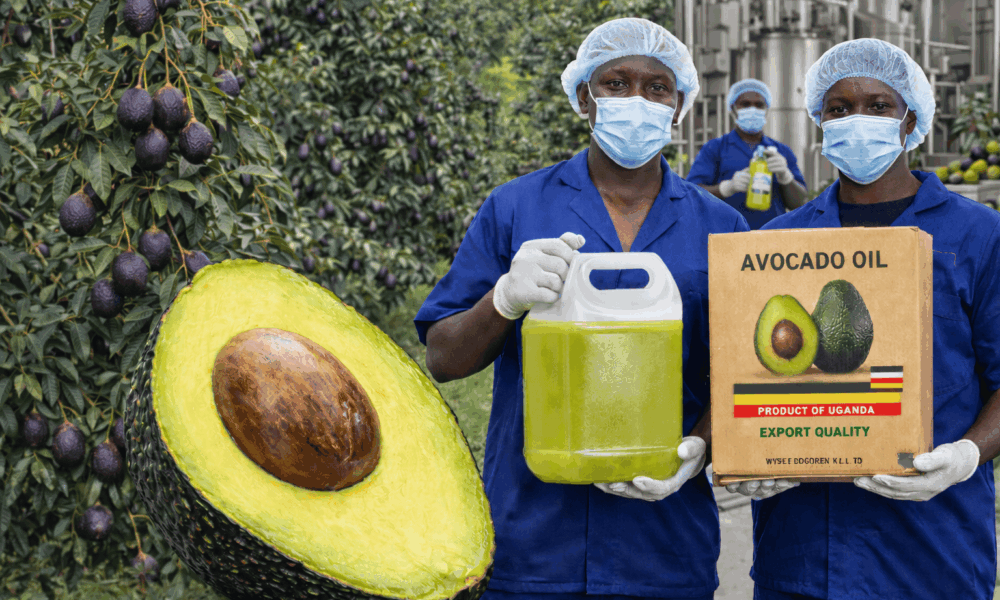
Deep in the red-soiled hillsides of Nakaseke, Kasese, Kyenjojo, and Namanve, a quiet green revolution is reshaping Uganda’s agricultural economy. Hass avocado, the dark-skinned, creamy-fleshed variety beloved by consumers from London to Los Angeles, is rapidly emerging as Uganda’s most exciting high-value export crop. Consequently, what was once a marginal niche is now a national strategic priority, backed by government policy, private factories, and a projected foreign exchange windfall of $3.76 billion by 2030.
Table Of Content
- Why Hass? The Science Behind Uganda’s Favourite Export Avocado
- Government Initiative Aims to Mobilize 5 Million Acres by 2031
- How produce moves from garden to export markets
- The Byproduct Economy Taking Shape
- Infrastructure challenges and an underserved Industry
- Hass Avocado Uganda: Key Facts at a Glance
- The Goldmine is real, but the foundations must hold
Furthermore, the rise of Hass avocado farming in Uganda is not simply a story of crop substitution. It is a story of transformation, of smallholder farmers finding guaranteed markets, of factories turning fruit waste into soap and animal feed, and of a country positioning itself to capture a growing share of the global avocado industry, which is projected to exceed $21 billion globally by 2031. Above all, it is a story still being written, with both enormous promise and real challenges yet to overcome.
Additionally, Uganda’s tropical climate, fertile soils, and expanding rural smallholder networks make it exceptionally well-suited for Hass production at scale. Therefore, understanding how this crop works, from orchard to export container, is essential for every farmer, investor, and policymaker watching Uganda’s agricultural future unfold.
Why Hass? The Science Behind Uganda’s Favourite Export Avocado
The Hass avocado gets its name from Rudolph Hass, an American mail carrier from California who stumbled upon the variety in the late 1920s after planting seeds in his grove in La Habra Heights. One particular seedling stood out for its exceptionally rich and creamy flavor, and its skin had the distinctive trait of turning dark purplish-black when ripe, a handy visual cue that other varieties lacked. Hass almost had the tree cut down since it wasn’t a recognized variety, but his children were so fond of eating its fruit that they persuaded him to keep it. Recognizing its potential, he went on to patent it in 1935, making it one of the few plant patents ever granted at the time.
From those humble beginnings, the Hass avocado grew to dominate the global market, now accounting for roughly 80% of all avocados consumed worldwide. Its popularity is no accident. According to Hesboan Cheruiyot, production manager at Musubi Farm in Mayuge District, the variety owes its global dominance to its superior taste, extended shelf life, and year-round harvest cycle. The fruit typically weighs between 200g and 300g, with dark, bumpy skin that signals ripeness by turning purplish-black, revealing the rich, creamy flesh beneath. The original mother tree stood in Hass’s California grove until 2002, when it was finally lost to root rot, but its legacy had long since spread across the world.
Not all avocados are created equal, and nowhere is this more apparent than in the oil processing industry. What truly sets Hass apart for processors and exporters is its impressive oil content of 10–11%, compared to just 3% found in Uganda’s traditional local avocado varieties. This means processors would need three times the volume of local fruit to produce the same quantity of oil, making Hass not merely a preference but an economic necessity for factories and exporters alike. As a result, the shift toward Hass cultivation in Uganda and beyond is driven as much by industrial demand as it is by export market requirements, cementing its status as the world’s most strategically important avocado variety.
Government Initiative Aims to Mobilize 5 Million Acres by 2031
Recognising Hass’s export potential, the Ugandan government moved decisively in 2022, formally designating Hass avocado as a priority high-value crop under a national promotion programme. Subsequently, five private processing factories were established in the districts of Nakaseke, Kasese, Kyenjojo, and Namanve, creating the industrial backbone needed to support large-scale production. Additionally, the National Agricultural Advisory Services (NAADS) announced an ambitious target: five million acres of Hass planted within five years.
“By 2022, individual farms had planted 3,300 acres. With support, more than 3,900 acres have since been added,” says Khadija Nakakande, NAADS spokesperson. Moreover, the programme makes seedlings accessible through a subsidised cost-sharing model, farmers pay just 30% of the seedling cost, while the government covers the remaining 70%. As a direct result, thousands of smallholder farmers across Uganda are now planting Hass for the first time, drawn by the promise of guaranteed market access and premium prices.
Furthermore, the long-term projection is staggering: by 2030, Hass avocado is projected to become Uganda’s top foreign exchange earner, contributing $3.76 billion annually to the national economy. In turn, this would overtake traditional export earners including coffee and tea, a historic shift for a country that has long relied on beverage crops to drive its export income.
How produce moves from garden to export markets
At the centre of Uganda’s avocado farming economy sits a clear and increasingly well-organised value chain. A well-managed Hass tree produces approximately 70% Grade One fruits suitable for the fresh export market, fetching between sh2,500 and sh3,000 per kilogramme. Export specifications are demanding: fruits must meet precise maturity, weight, and uniform skin colour standards before they qualify for international markets in Europe, the Middle East, and Asia.
Meanwhile, the remaining 30%, Grade Two fruits that fall short of export standards, are absorbed by local processors at sh500 to sh1,000 per kilogramme. Companies like Avolio Industries in Namanve process both grades into crude avocado oil, which is exported at $6 (approximately sh22,000) per litre. Each month, the factory ships a full container of crude Hass oil, primarily to refineries abroad, since East Africa currently has only one avocado oil refinery, established in Kenya in 2025. As a result, there is enormous untapped refining potential within Uganda itself.
Notably, the flexibility of local factories has become a genuine lifeline for farmers like James Nyanzi. “We used to make losses as the export market rejected mature fruits. Now factories buy all varieties, and payment is guaranteed,” he explains. Consequently, the development of local processing capacity has transformed the risk profile of avocado farming in Uganda for thousands of small-scale growers.
“By 2030, Hass avocado is projected to be Uganda’s top foreign exchange earner, bringing in $3.76 billion, overtaking both coffee and tea in a historic shift for the national economy.”
— NAADS Programme Projection, Uganda
The Byproduct Economy Taking Shape
One of the most impressive aspects of Uganda’s Hass avocado industry is its approach to waste. Leading processors are demonstrating that virtually every part of the fruit has value, turning what would be discarded into additional revenue streams that strengthen the economics of the entire value chain.
Avolio Industries, for instance, is already producing bar soap from processing waste. Similarly, seeds are retained for grafting new seedlings, reducing input costs and ensuring genetic consistency in new plantings. Furthermore, organic waste is dried and milled into fertiliser powder, while in a particularly innovative application, it is also used to cultivate protein-rich black soldier fly maggots for livestock feed. Additionally, juice extracted during the oil crushing process is fermented to produce wines and other beverages, creating an entirely new product category from a former waste stream.
In turn, these byproduct streams are not merely environmental wins. They directly improve the financial returns for processors and, therefore, their ability to pay competitive farm-gate prices to avocado farmers across Uganda. Ultimately, the circular economy model emerging from Uganda’s avocado factories could serve as a template for agro-processing across East Africa.
Infrastructure challenges and an underserved Industry
Despite its remarkable momentum, Hass avocado farming in Uganda faces structural challenges that, if left unaddressed, could significantly constrain the sector’s growth. Road infrastructure is the most immediately disruptive. Uganda’s rural road network, inadequate in the best conditions, becomes impassable in many areas during the rainy season. For a highly perishable crop like avocado, where transit delays of even a few days can render an entire consignment unsaleable, this represents a direct threat to profitability at every level of the value chain.
Industry reports document the severity of this challenge vividly. A factory manager in Nakaseke is quoted recalling that between October and December 2024, the operation “nearly closed as trucks couldn’t move.” Moreover, unreliable power supply forces many factories to rely on costly diesel generators, eroding the margins needed to sustain competitive farm-gate pricing. Accordingly, investment in rural electrification and road rehabilitation are not peripheral policy concerns, they are core commercial prerequisites for the sector’s long-term viability.
Supply consistency presents a third challenge. Reports indicate that at least one major processing facility is operating at only half its four-tonne-per-hour capacity, dependent on out-grower supply and seasonal imports from Kenya to partially bridge the gap. Nevertheless, industry representatives are clear about what this means for prospective farmers: demand at existing factories substantially exceeds current supply. As a result, the entry opportunity for new avocado farmers in Uganda is immediate and tangible, the market is ready and waiting.
Hass Avocado Uganda: Key Facts at a Glance
- Hass avocado delivers 10–11% oil content vs. just 3% for local varieties, making it the only commercially viable option for Uganda’s growing oil processing sector.
- NAADS targets five million acres planted within five years; farmers access subsidised seedlings at 30% of cost, with government covering the rest.
- By 2030, Hass avocado is projected to generate $3.76bn annually in foreign exchange, potentially overtaking coffee as Uganda’s top earner.
- Grade One export fruits fetch sh2,500–sh3,000/kg; Grade Two is absorbed locally by processors at sh500–sh1,000/kg.
- Crude Hass avocado oil is exported at $6/litre (~sh22,000). East Africa’s only refinery is in Kenya, established in 2025.
- Processing byproducts include bar soap, organic fertiliser, livestock maggot feed, grafting seedlings, and avocado wine.
- Key structural challenges: impassable rural roads during rainy season, diesel generator dependence, and insufficient farm supply to fill factory capacity.
The Goldmine is real, but the foundations must hold
The evidence assembled from across Uganda’s Hass avocado sector paints a consistent and compelling picture: this is a crop with genuine, large-scale commercial potential, backed by government policy, private investment, and growing international demand. Furthermore, the circular processing model being developed by Uganda’s best factories demonstrates that the country’s agro-industrial sector is capable of sophisticated, high-value production. Consequently, the $3.76 billion projection for 2030 is not mere optimism — it is grounded in real and growing industrial activity.
Nevertheless, achieving that target will require decisive action on infrastructure. Rural roads must be upgraded before seasonal closures continue to cost the sector significant revenue. Reliable electricity must be extended to processing zones. Quality and traceability standards need to be formally codified to unlock the highest-value markets in Europe and beyond. Moreover, the case for a domestic avocado oil refinery in Uganda grows stronger with every container of crude oil that leaves the country for refinement elsewhere, a structural value leak that policymakers should urgently address.
Ultimately, all the preconditions for success are present in Uganda’s Hass avocado sector. The land is fertile, the government is committed, the factories are operational, and,critically, demand at existing processors outstrips current supply. Therefore, for farmers considering their next crop, the signal from Uganda’s avocado industry is unambiguous: the goldmine is real. The question is simply who acts fast enough to claim their share of it.
Disclaimer
Africa Agricultural Network (AAN) is committed to informing and empowering agricultural communities across Africa as per our mandate. This article is intended for informational purposes only. Readers are advised to verify all details directly with the relevant agricultural organizations before making any decisions.





No Comment! Be the first one.