
Beyond Diamonds: Botswana Stakes Its Future on Hemp
For generations, Botswana’s economic story has been written in diamonds. Now, the country is adding a new chapter, one grown from the soil rather than mined from the ground. President Duma Boko...

For generations, Botswana’s economic story has been written in diamonds. Now, the country is adding a new chapter, one grown from the soil rather than mined from the ground. President Duma Boko has placed medical cannabis and industrial hemp at the center of a plan to diversify the economy, and recent government trials suggest the crop can genuinely take root across the country’s varied climates. As the industry moves from research into commercial reality, Botswana is also learning valuable lessons about how to build a fair, inclusive system, one that stakeholders and regulators are actively working through together. What began as an agricultural diversification story is quickly becoming a broader test of how ambitious policy translates into practice on the ground.
Table Of Content
Trials That Sparked Government Confidence
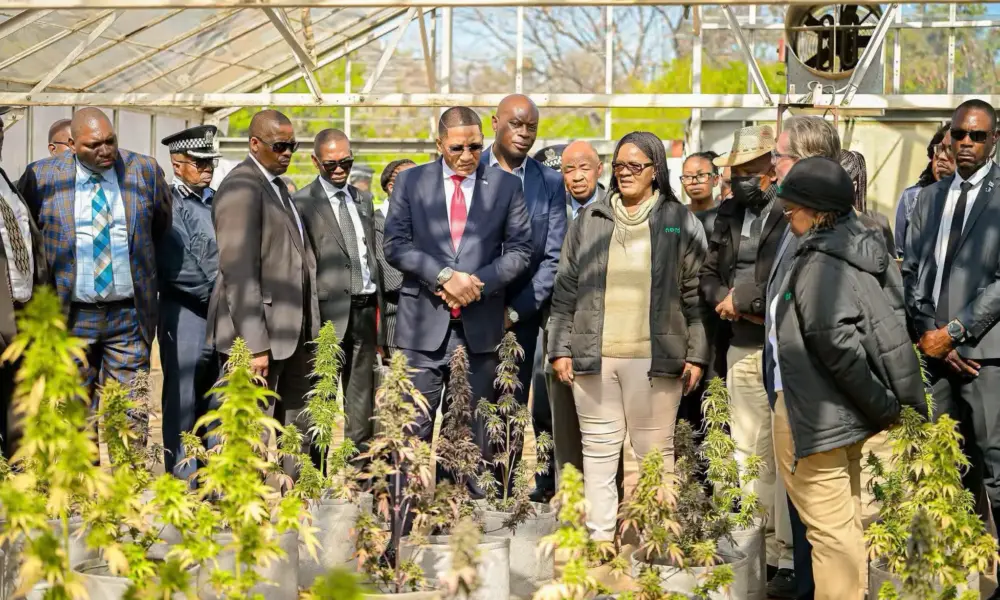
The push toward commercial hemp production followed successful trials led by the National Agricultural Research and Development Institute (NARDI). During a visit to the institute, President Boko confirmed that the results give the government enough confidence to move from research into full implementation of its hemp strategy.
Boko has framed the initiative as the fulfillment of an earlier commitment to introduce hemp cultivation nationally. The trials themselves were a joint effort, involving NARDI, Botswana University of Agriculture and Natural Resources, the Botswana Investment and Trade Centre, and two licensed private companies. So far, officials have withheld the technical details, including which hemp varieties were tested, yield performance, and THC readings.
Moving Toward Commercial Production
Assistant Minister of Lands and Agriculture Motsamai Motsamai has said that stakeholders who satisfy regulatory requirements will be eligible for government support as the sector scales into commercial production. Large-scale cultivation, he noted, is expected to generate jobs and open new manufacturing and agricultural value chains across the country.
This commercial phase builds on regulations Botswana adopted earlier in the year, which established one of the strictest hemp licensing regimes on the continent. Rather than treating hemp as a separate legal category, Botswana classifies it as “industrial cannabis,” capped at a maximum THC level of 0.7%.
A Tightly Controlled Industry
Under the Cannabis Act, virtually every stage of the value chain requires a license. Cultivation, seed production, nurseries, processing, transport, research, and even imports and exports all fall under the oversight of the newly created National Cannabis Control Authority (NCCA).
Applicants must meet extensive criteria spanning security protocols, business planning, site details, crop management practices, financial capacity, and regulatory compliance. Once licensed, operators remain subject to ongoing inspections. Notably, the framework draws a hard line around industrial use: CBD and other cannabinoids remain illegal, and commercial flower production is not authorized under current rules. Instead, officials have consistently positioned hemp as a raw material for industries such as textiles, construction materials, and food products.
Building a System That Works for Everyone
Industry players have broadly welcomed the government’s commitment to building a hemp sector. As the licensing framework matures, some have suggested that continued attention to compliance requirements could help ensure smaller farmers and grassroots operators have just as clear a path to participation as larger, well-resourced businesses.
Working Through Growing Pains
Nearly six months after the Cannabis Act and Regulations took effect on 12th January 2026, the industry is navigating the natural growing pains of building a brand-new regulatory system. Some stakeholders have called for faster licensing timelines and greater clarity in the process, and for the government’s broad-based participation goals to be reflected more fully as implementation continues.
These conversations have, in at least one case, moved toward formal engagement through legal channels. The Cannabis Association of Botswana has instructed lawyers to file a statutory notice seeking formal recognition as a stakeholder in the reform process. Meanwhile, the Hemp Business Summit, co-founded by Oratile Masala, paused its own legal proceedings after the government agreed to revisit licensing fees and participation conditions, a sign that dialogue between industry and regulators is actively progressing.
Masala has indicated his organization is now waiting on the Ministry of Lands and Agriculture to formally announce the promised changes before deciding on next steps. He has also noted that closer coordination between policymakers and implementing officials, particularly around support for smallholder farmer associations, could help translate agreed reforms into action more consistently on the ground.
Refining the Licensing Model
Adding a further layer to this conversation, some observers have pointed to the tiered licensing fee structure, which scales costs according to business activity and investor category across the value chain, as an area worth revisiting to ensure smaller and grassroots entrants have a genuine pathway to participate alongside larger, well-capitalized businesses. As of early June 2026, the NCCA’s chief executive had not yet responded to requests for comment on these discussions.
Why Diversification Matters So Much Here
To understand why this industry carries such weight, it helps to look at Botswana’s underlying economic structure. Agriculture contributes less than 2% of the country’s GDP, yet remains essential to rural livelihoods. The sector leans heavily on livestock, with beef exports serving as its primary agricultural earner, while crop farming struggles against drought, poor soils, and scarce arable land.
Indeed, of Botswana’s roughly 58.2 million hectares, only about 0.5%, roughly 290,000 hectares, is classified as arable, one of the lowest shares anywhere in the world. As a result, the country remains heavily dependent on food imports. Meanwhile, diamonds continue to dominate the economy, accounting for roughly a quarter of GDP, about a third of government revenue, and as much as 80 to 90% of export earnings.
Given this imbalance, it’s easy to see why hemp has captured such political attention. A successful, inclusive hemp industry could meaningfully diversify rural livelihoods and export revenue in a country that badly needs both. Whether Botswana can translate strong trial results into a genuinely accessible commercial industry, rather than one dominated by a well-capitalized few, may ultimately determine whether this new chapter lives up to its promise.
Disclaimer
Africa Agricultural Network (AAN) is committed to informing and empowering agricultural communities across Africa as per our mandate. This article is intended for informational purposes only. Readers are advised to verify all regulatory, licensing, and legal details directly with Botswana’s National Cannabis Control Authority and the Ministry of Lands and Agriculture before making any business decisions.
No Comment! Be the first one.