


Pig Farming in Uganda: A Complete Guide to Piggery, Profitability, and Best Practices
Thinking about pig farming in Uganda? Learn how to start a profitable piggery, manage sows and piglets, build the right sty, and maximise your earnings per year.

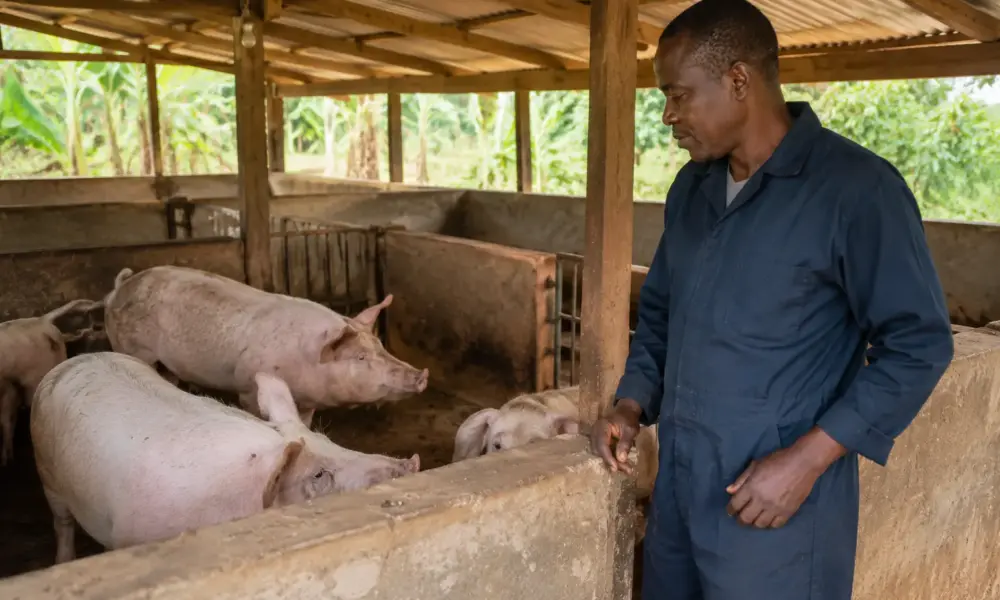
Uganda’s pig farming sector is undergoing a quiet but significant transformation. What was once a largely traditional and subsistence-based activity is rapidly shifting toward commercialised production, driven by huge investments in genetics, housing, feeds, and veterinary care. Today, there are an estimated five million pigs in the country, and while most are kept by smallholder farmers averaging three mothering sows, the economic potential for anyone willing to invest seriously is substantial.
Table Of Content
- Why Pig Farming in Uganda is Worth the Investment
- How to Set Up a Good Pig Sty
- Key Features of a Good Pig Sty
- Buying and Managing Pregnant Sows
- How to Feed a Sow for Better Results
- Managing a Lactating Sow and Newborn Piglets
- Threats to Piglets in the First Days After Delivery
- Piglet Feeding and Growth Milestones
- Castrating Male Pigs for Better Market Returns
- Managing Orphaned Piglets When the Mother Dies
- Profitability of Pig Farming: What to Expect
According to the Ministry of Agriculture, Animal Industry and Fisheries (MAAIF), pig farming in Uganda can generate earnings of between UGX 2 million and UGX 10 million per year per five sows, depending on the scale of investment. Whether you are just getting started or looking to scale up an existing piggery, this guide covers everything you need to know.
Why Pig Farming in Uganda is Worth the Investment
Piggery can be practised anywhere in the country and can be done either extensively or intensively. Pigs are highly efficient converters of feed into meat, and because they reproduce frequently and in large litters, a small initial investment can multiply rapidly. Furthermore, pork is one of the most consumed meats in Uganda, making market access relatively straightforward. For commercial viability, the recommended starting point is five pigs, specifically four sows and one boar. Starting with five animals allows you to understand the trade dynamics before expanding. By the end of the first year, you will have at least 40 pigs.
How to Set Up a Good Pig Sty
The pig sty is arguably the most critical infrastructure investment you will make. A good sty with the capacity to hold five sows costs between UGX 3 million and 7 million, depending on the materials used. It is important to consult a qualified veterinary officer or farm development specialist at the nearest sub-county before constructing. For technical guidance, MAAIF’s Agricultural Extension Services directorate provides advisory support to farmers across Uganda.
Key Features of a Good Pig Sty
A properly designed pig sty has two main sections: the feeding and exercise area, and the sleeping area. The feeding area must be covered by a roof to prevent it from getting soaked, as wet bedding leads to many diseases including abdominal complications. This section should constitute at least two-thirds of the entire piggery, while the exercise area covers at least a third.
Beyond the layout, the sty must meet several structural requirements. It should be located in a well-drained area, in the shade, and away from the main farm house. It should have a north-south orientation so that it crosses the path of the sun. The sty must be easy to clean, with a slant so that urine easily drains into a storage reservoir. The structure must have adequate ventilation, with walls no more than four feet above the ground. Additionally, a footbath containing a disinfectant should be constructed before every entrance point, with the solution changed every week.
Buying and Managing Pregnant Sows
If you are stocking for quick money, the most effective approach is to buy pregnant sows. The cost of a three-month pregnant sow is between UGX 900,000 and UGX 1,200,000. A sow only has three weeks to deliver. However, note that each sow delivers about 10 or more piglets. Therefore, if you stock five sows, expect to have 50 piglets in the subsequent three weeks. A combination of Camborough and Landrace or Large White breeds will give fast results.
How to Feed a Sow for Better Results
Overfeeding a sow is one of the most common and costly mistakes in pig farming in Uganda. You must not overfeed the sow, because this will make it fat and lead to longer delivery times, more stillborn piglets, lower milk production, and underdeveloped piglets. On the other hand, underfeeding means the next litter will be smaller, it takes longer to conceive, and weaning needs to be done earlier, lowering overall farm productivity.
Managing a Lactating Sow and Newborn Piglets
The first thing to prepare for a lactating sow is the farrowing barn. Among other aspects, it must be dry, clean, and disinfected. It should be possible to separate the piglets from the sow to avoid the risk of the sow rolling on a piglet. Beyond that, have feeds in the farrowing barn at all times. Ensure fresh water is available 24/7 through a nipple or a covered water trough. Feed twice a day using a lactation feed and add extra sugar, specifically dextrose at 200 grammes per sow per day, once a day.
Threats to Piglets in the First Days After Delivery
Unless they are cared for properly, half of newborn piglets can die in the first 14 days after birth. This is mainly caused by infections due to various reasons including trauma during the delivery process, lack of warmth, and poor feeding. The farrowing pen must be designed so the sow cannot lie on top of the piglets. It should be cleaned and disinfected before every farrowing. Newborn piglets are also very sensitive to cold, draughts, wet bedding, and sudden temperature changes. Therefore, all precautions must be taken to ensure the environment is regulated and a heating source is provided during cold weather. The sow’s milk also has insufficient iron, so piglets need iron injections at three to seven days to prevent anaemia.
Piglet Feeding and Growth Milestones
A piglet that is well-fed weighs at least 25kg at two and a half months, compared to an average of 4kg in Uganda. A piglet needs at least 19.4 litres of sow milk from day one up to 25 days old. Sow milk is the best feed for piglets. If a piglet cannot breastfeed, then a farmer has to feed it using a cup with at least 200ml of milk for the first three days, growing to 1,100ml through the first seven days. Then after weaning, the larger pig should feed on around 1kg per day after two months, in two feeds. For detailed livestock nutrition guidance, refer to MAAIF’s animal resources directorate.
Castrating Male Pigs for Better Market Returns
Since the primary objective of pig farming in Uganda is to fatten piglets and sell them for pork, you need to castrate the males at between five and seven days. Castration helps male pigs grow faster because their bodies are no longer tuned to pro-creation. With a daily feeding of 2 to 3kg after three months, the pigs can gain at least 45 to 50kg, good enough to sell for pork at around UGX 400,000 each. A castrated male pig does not carry the unpleasant smell locally known as olusuu, which is common in uncastrated pigs and is a put-off for pork buyers.
Managing Orphaned Piglets When the Mother Dies
If there is no foster sow available, rejected and orphaned piglets can be hand-reared using the following milk mixture: 2.5 litres of fresh cow’s milk, 150ml fresh cream, 125ml glucose, and 1 beaten egg. Hand rearing piglets is tiresome and there is no guarantee of good performance, most especially when they do not get access to colostrum after birth. Therefore, introducing safe creep feeds as early as five days may help you recover the piglets. If you are a commercial farmer, provide creep feed at seven days of age and vaccinate against pneumonia in the first days after birth and against Porcine Circovirus three weeks later.
Profitability of Pig Farming: What to Expect
Depending on the size of investment, five sows can give earnings of UGX 2 million per year or UGX 10 million for those with heavier investments. The key variables include the quality of breeding stock, housing standards, feeding discipline, disease management, and whether you sell live pigs or process them into value-added pork products. For the latest livestock production data, visit the MAAIF Statistical Abstract for current benchmarks. Pig farming in Uganda, therefore, represents one of the more accessible routes to agribusiness profitability, with pigs that reproduce quickly, mature fast, and command strong market demand year-round.
Disclaimer
Africa Agricultural Network (AAN) is committed to informing and empowering agricultural communities across Africa as per our mandate. This article is intended for informational purposes only. Readers are advised to verify all details directly with the relevant agricultural organizations before making any decisions.

No Comment! Be the first one.