



Sweet Potato Farming in Uganda
Discover how sweet potato farming in Uganda can transform your income. Learn production tips, value addition strategies, and market insights from MAAIF.

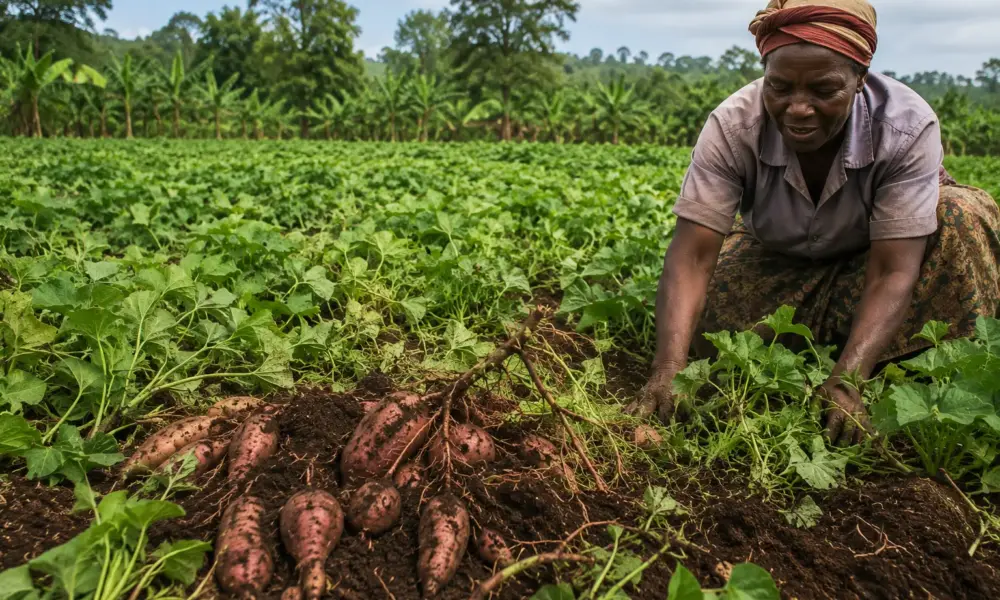
Uganda is the third-largest producer of sweet potatoes in the world, trailing only China and India, with the country accounting for an impressive 64% of Africa’s total output. Yet, despite this remarkable position, many smallholder farmers are still leaving significant money on the table. The truth is, sweet potato farming in Uganda is not just about growing and selling tubers at the farm gate. Rather, it is about understanding the full value chain, from soil preparation and variety selection all the way through to processing, packaging, and market access.
Table Of Content
- Why Sweet Potatoes Are Worth Growing in Uganda
- Common Sweet Potato Varieties Grown in Uganda
- Ideal Growing Conditions for Sweet Potatoes
- Pests, Diseases, and How to Manage Them
- Harvesting and Adding Value to Your Sweet Potatoes
- How to Make Sweet Potato Flour
- Making Mandanzi (Sweet Potato Doughnuts)
- Sweet Potato Juice
- Market Potential and Profitability
Whether you are a small-scale farmer looking to improve your household income or an agribusiness entrepreneur seeking a high-value crop with multiple revenue streams, this guide covers everything you need to know about sweet potato farming in Uganda, drawing on insights from the Ministry of Agriculture, Animal Industry and Fisheries (MAAIF).
Why Sweet Potatoes Are Worth Growing in Uganda
Sweet potato (Ipomoea batatas) is a perennial creeper and one of Uganda’s most versatile food crops. Beyond being a staple food, it is a nutritional powerhouse. The orange-fleshed variety, in particular, is rich in beta-carotene, which converts to vitamin A in the body, directly addressing the vitamin A deficiency that causes blindness in thousands of Ugandan children and adults every year.
Furthermore, the crop is valued for its carbohydrates, dietary fibre, vitamin C, vitamin B5, vitamin B6, and manganese content. Consequently, sweet potatoes are not only eaten boiled, fried, or steamed, but are also used to make Amukeke (sun-dried slices), Inginyo (crushed root), and Emukaru (earth-baked root), which are traditional dishes popular across northeastern Uganda.
Common Sweet Potato Varieties Grown in Uganda
Uganda grows a wide range of sweet potato varieties suited to different agro-ecological zones. The most common varieties include Tanzania, Tororo 3, New Kawogo, and Kakamega. In addition, the popular orange-fleshed varieties, known for their high vitamin A content, include NASPOT 8, 11, 12, 13, NASPOT 1, 2, 3, and 5. Furthermore, purple-fleshed varieties are also cultivated and are prized for their good storage root characteristics, high dry matter content, and resistance to the sweet potato virus and Striga weed. For the full list of recommended varieties by region, visit MAAIF’s official crop resources page.
Ideal Growing Conditions for Sweet Potatoes
Sweet potatoes thrive best at an average temperature of 24 degrees Celsius, with annual rainfall ranging between 750 and 1,000mm. They grow best in well-drained, light to medium-textured soils, though they can also be grown in poor soils with minimal fertiliser input. Notably, sweet potatoes can be produced across both low and high altitudes as long as the soil is fertile and the seedbed is well prepared without large clods.
In terms of planting, sweet potatoes are propagated using vine cuttings taken from mature stems. A good cutting should have at least six nodes and be disease-free. Farmers plant on mounds or ridges, with mound size varying by soil type. However, mounds should generally not exceed one metre in height and diameter to avoid waterlogging and over-exposure to drying sunshine.
Pests, Diseases, and How to Manage Them
The most common pest affecting sweet potato farming in Uganda is the weevil, followed by caterpillars and grasshoppers. Common diseases include Sweet Potato Virus, Fusarium wilt, and Altarnaria, which attack leaves and stems. Therefore, farmers are strongly advised to use resistant varieties and to avoid spreading susceptible seedlings across fields. Crop rotation is an effective way to break the pest cycle. In addition, closing the season also helps pests from spreading because there are no host plants over that period. For advisory support on pest and disease management, MAAIF’s Agricultural Extension Services provides guidance to farmers across Uganda.
Harvesting and Adding Value to Your Sweet Potatoes
To harvest, use a hand hoe or digging fork to gently remove the soil from ridges and mounds, starting at the top to follow the stem and roots of the vine. Because sweet potatoes are the third most common food security crop in Uganda, prices have, unfortunately, dropped to as low as UGX 30,000 per 100kg sack on some farms. Adding value is therefore the best strategy to earn more. According to the MAAIF Agriculture Value Chain Development Programme, processing raw produce into finished products is among the most effective income-boosting strategies for smallholder farmers.
How to Make Sweet Potato Flour
Sweet potato flour is a high-demand product used in confectionery items such as mandanzi, bagiya, and baking daddies. To produce flour, select mature, fresh, and healthy tubers. Scrub and wash the skin thoroughly, pre-dry the washed roots in the sun, then cut the roots into thin chips. After spreading the chips on a raised drying rack covered with tarpaulin, leave them in open sun, turning regularly to squeeze out moisture. Once the chips are brittle and break easily, take them to a mill for grinding into flour of the required particle size. Finally, pack in sealed bags and store in a cool, clean, and dry place.
Making Mandanzi (Sweet Potato Doughnuts)
Mandanzi is a popular sweet snack made from a blend of wheat flour and sweet potato. To make it, mix 2kg of wheat flour with 1kg of sweet potato flour, a quarter cup of sugar, a quarter teaspoon of salt, 2 tablespoons of blue band margarine, grated peeling from one lemon, and one egg in a clean container. Mix thoroughly until you have a balanced paste, then add water gradually until all ingredients are dissolved into a uniform paste. Subsequently, leave the paste on a clean surface and cut into uniform shapes. Fry in boiling cooking oil, keep turning until golden brown, remove and drain the oil before packaging.
Sweet Potato Juice
Sweet potato juice is another value-added product with growing consumer interest. To make it, boil and mash sweet potato into 2 litres of water, then filter using a muslin cloth to produce a clear juice. Add sugar to the remaining 4 litres of water and boil until syrup forms. Thereafter, add the hot syrup to the juice together with lemon and pineapple fruit juices, and heat the combined mixture to near-boiling point. Remove from heat, cool, and pack into sterilised containers. Dilute with water to taste before serving or distribution.
Market Potential and Profitability
Despite periodic price drops, sweet potato farming in Uganda holds strong commercial potential when farmers move beyond selling raw tubers. Processed products such as flour, mandanzi, daddies, and juice command significantly higher market prices and can be sold in supermarkets, schools, urban markets, and food processing outlets. For current agricultural statistics and market data, farmers can reference the latest MAAIF Statistical Abstract published by the ministry. The key, therefore, lies in building strong post-harvest handling systems and connecting with buyers through agribusiness networks such as AAN Agrihub.
Disclaimer
Africa Agricultural Network (AAN) is committed to informing and empowering agricultural communities across Africa as per our mandate. This article is intended for informational purposes only. Readers are advised to verify all details directly with the relevant agricultural organizations before making any decisions.

No Comment! Be the first one.