


Why Climate-Smart Agriculture Is Urgent for Uganda
Climate change is reshaping Uganda's farming calendar. Discover the practical climate-smart agriculture techniques helping Ugandan farmers adapt and thrive

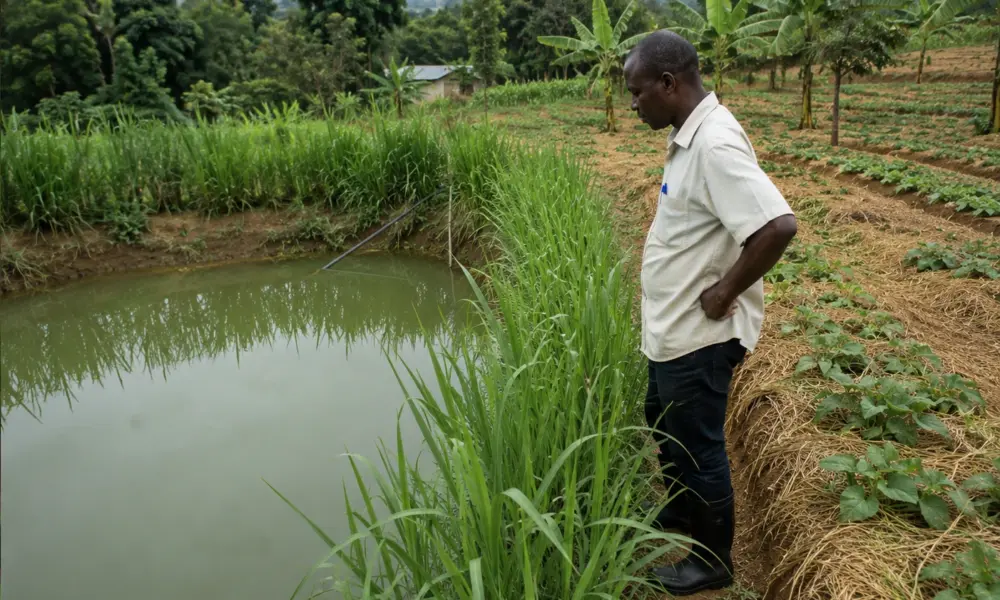
Uganda’s farmers are on the front lines of one of the defining challenges of our time. Across the country, rainfall patterns that farmers depended on for generations are becoming increasingly erratic. According to the FAO’s country profile for Uganda, 81 percent of the population is engaged in rain-fed subsistence farming, and the country faces multiple barriers in achieving its agriculture climate goals. Droughts that once occurred every ten years now arrive every three. Floods that were once seasonal anomalies are displacing entire farming communities.
Table Of Content
- What Climate-Smart Agriculture Actually Means
- Water Harvesting: Making Every Drop Count
- Practical Water Harvesting Options for Ugandan Farmers
- Soil Health Management: The Foundation of Climate Resilience
- Agroforestry: Trees as Climate Infrastructure
- Drought-Tolerant Varieties: The Most Cost-Effective Adaptation
- Getting Support: Resources for Ugandan Farmers
- The Bottom Line: Start Small, Start Now
- Disclaimer
The scale of the threat is well documented. Research published by FAO’s climate change impact assessment for Uganda found that between 70 and 97 percent of Ugandan farming households will be adversely affected by climate change, with the southwest region most at risk due to smaller farm sizes and limited livelihood alternatives. A 2022 study published in ScienceDirect projected annual maize yield losses of 7 to 10 percent in Uganda over the next 30 years if no adaptation measures are adopted.
This is not a distant future problem. It is happening now, and therefore the farmers who adapt earliest will be the ones who survive and thrive as conditions continue to change. The good news is that practical, affordable, and proven adaptation techniques are already available, and Ugandan farmers who apply them are already seeing measurable results.
What Climate-Smart Agriculture Actually Means
Climate-smart agriculture is not a single technology or practice. It is an approach to farming that simultaneously pursues three objectives: increasing productivity, building resilience to climate shocks, and reducing greenhouse gas emissions where possible. In practice, this translates into a set of concrete techniques that farmers can implement progressively, beginning with the lowest-cost and highest-impact options.
The Uganda Climate Smart Agricultural Transformation Project (UCSATP), a six-year government project implemented by the Ministry of Agriculture (MAAIF), NARO, and the Uganda National Meteorological Authority, is actively driving the adoption of these practices at national scale. According to the Uganda Ministry of Agriculture UCSATP page, the project aims to increase productivity, market access, and resilience of key agricultural value chains while supporting the development and adoption of climate-smart technologies and management practices.
For smallholder farmers, the most impactful entry points into climate-smart agriculture are four practical practices: water harvesting, soil health management, agroforestry integration, and the adoption of drought-tolerant crop varieties. Each of these can be implemented progressively, starting at low cost, and each delivers compounding returns over time.
Water Harvesting: Making Every Drop Count
Erratic rainfall is the most immediate climate challenge facing most Ugandan farmers. According to a 2022 ScienceDirect study on CSA and maize productivity in Uganda, AquaCrop model projections indicate that CSA practices including mulching and permanent planting basins can increase maize grain yield by 14 to 37 percent in rainfed production systems, making water management the single most impactful area for most Ugandan smallholders.
Water harvesting, the collection and storage of rainwater for agricultural use, is consequently one of the highest-impact adaptations available. Simple systems including farm ponds, half-moon catchments, trench composting, and contour bunds can be constructed using local materials and dramatically reduce a farm’s vulnerability to mid-season dry spells. Furthermore, the same study found that mulching at 4 to 6 centimetres depth and permanent planting basins of 20 to 30 centimetres depth were the most effective individual practices for improving both maize yield and water use efficiency in Uganda’s rainfed systems.
Additionally, mulching, which means covering the soil surface with crop residues, grass, or organic matter, reduces evaporation, maintains soil moisture between rains, and suppresses weed growth simultaneously. It is one of the cheapest and most practical first steps any Ugandan farmer can take toward climate adaptation, requiring no external inputs and generating immediate benefits in the next growing season.
Practical Water Harvesting Options for Ugandan Farmers
| Technique | How it works | Best for |
| Farm ponds | Excavated basins that collect and store surface runoff from rainfall for later use in irrigation | Farms with sloped land and a nearby field to irrigate |
| Half-moon catchments | Semi-circular earthen bunds that collect rainfall and concentrate it around a plant | Hillside farms and dry season vegetable production |
| Contour bunds | Low earthen ridges built along contour lines to slow runoff and allow water to infiltrate the soil | Farms on slopes experiencing erosion and run-off losses |
| Mulching | Covering soil with organic material to reduce evaporation and maintain moisture between rains | All farms, all seasons — the lowest-cost first step |
| Planting basins | Small pits dug at planting points that concentrate water and nutrients directly at the root zone | Maize, beans, sorghum in drier agroecological zones |
Soil Health Management: The Foundation of Climate Resilience
Healthy, well-structured soils absorb and retain water far more effectively than degraded, compacted, or chemically exhausted soils. Therefore, every investment a farmer makes in organic matter, through composting, cover cropping, minimum tillage, and the integration of nitrogen-fixing legumes, simultaneously improves soil fertility, water retention, and resilience to both drought and heavy rainfall events.
Research from FAO’s Voices of AGRIS project in Uganda confirms that organic materials such as coffee husks or goat manure can significantly improve soil fertility and crop performance. One research project found that smallholder farmers in Uganda typically harvest around 2.5 kilograms of tomatoes per plant, only half of the potential yield, and that applying organic amendments consistently bridges this gap.
Composting is the most accessible starting point. A simple compost heap made from kitchen waste, crop residues, animal manure, and dry leaves can be started at zero cost and produces a soil amendment that improves water retention, nutrient availability, and soil structure simultaneously. Consequently, farmers who compost consistently are building climate resilience into their soil with every crop cycle.
Agroforestry: Trees as Climate Infrastructure
Agroforestry, the deliberate integration of trees into crop and livestock systems, offers multiple climate-smart benefits that extend well beyond soil fertility. Trees reduce surface temperatures on farms by providing shade, protect soils from erosion during heavy rainfall, provide fodder and fuelwood, and in the case of nitrogen-fixing species such as Calliandra and Gliricidia, actively improve soil fertility through leaf litter and root nitrogen fixation.
Furthermore, agroforestry systems have been shown to improve microclimates on smallholder farms, reducing temperature stress on crops during the increasingly frequent heat events that Uganda’s farmers are experiencing. Farmers who integrate trees into their cropping systems are, over time, building a more stable and productive farm environment that is less vulnerable to the weather extremes that characterise Uganda’s changing climate.
Drought-Tolerant Varieties: The Most Cost-Effective Adaptation
Selecting crop varieties specifically bred for drought tolerance is one of the most cost-effective climate adaptations available to Ugandan farmers, and the evidence is compelling. A peer-reviewed study published by the US National Institutes of Health (NCBI) found that adoption of drought-tolerant maize varieties in Uganda increased yield by 15 percent and reduced the probability of crop failure by 30 percent. Furthermore, a 2025 policy paper by Foresight4Food found that adoption of NARO bean and maize varieties increased yields by 19 percent for beans and 22 percent for maize.
The National Agricultural Research Organisation (NARO) has released improved varieties of maize, beans, sorghum, and other staples specifically designed for East African conditions, with specific attention to drought tolerance, heat resistance, and reduced susceptibility to the diseases that become more prevalent under climate stress. Yet, despite the clear evidence of their benefits, adoption rates among Ugandan smallholders remain lower than they should be, primarily due to limited awareness, seed system gaps, and the higher upfront cost of certified improved seed.
Addressing this gap is a priority for Uganda’s agricultural development agencies. The Uganda Climate Smart Agricultural Transformation Project specifically targets the development of heat and drought-tolerant plant varieties and the creation of climate-resilient agronomic packages that make these varieties accessible and affordable for smallholder farmers across the country’s nine agroecological zones.
Getting Support: Resources for Ugandan Farmers
The Uganda Climate Smart Agricultural Transformation Project (UCSATP)
The UCSATP is a government-led, World Bank-supported six-year project implemented by MAAIF and NARO. It provides direct support to farmers through research, improved variety distribution, training in climate-smart practices, and investment in agricultural infrastructure. Farmers in the project’s priority agroecological zones can access support through their district agricultural extension offices.
NARO: Seeds, Training, and Farm Clinics
The National Agricultural Research Organisation (NARO) runs regular Seeds of Gold Farm Clinics across Uganda, providing practical hands-on training in climate-smart agriculture for smallholder farmers. In September 2025, NARO’s Hoima Farm Clinic trained over 1,000 farmers from across the Bunyoro region in priority enterprises and climate adaptation practices. These farm clinics are free to attend and are one of the most accessible entry points for farmers seeking to upgrade their knowledge and access improved seeds.
FAO Uganda: Research, Policy, and Farmer Support
The FAO Uganda office supports climate adaptation through research, capacity building, and partnerships with the government and NGOs. FAO’s South-South and Triangular Cooperation project in Uganda, run in partnership with China, is helping smallholder farmers adopt resilient agricultural practices, improve yields, and build more sustainable farming systems. The FAO Uganda website provides access to research publications, policy documents, and programme information relevant to Ugandan farmers.
The Bottom Line: Start Small, Start Now
Climate-smart agriculture does not require a transformation of the entire farm overnight. It requires a series of deliberate, progressively implemented changes that collectively build a more resilient farming system over time. The farmers who start with the lowest-cost interventions, mulching this season, composting this year, planting improved varieties next season, are the ones who will be best positioned to weather the disruptions that climate change continues to bring.
Furthermore, the evidence is clear that these adaptations pay. A 15 percent yield improvement from drought-tolerant varieties, a 14 to 37 percent yield increase from mulching and planting basins, and the long-term soil health benefits of agroforestry and composting all deliver measurable returns that compound season after season. For the Ugandan farmer navigating an increasingly unpredictable climate, climate-smart agriculture is not an optional extra. As the Foresight4Food Uganda climate resilience policy paper concludes, targeted financial assistance and adoption of climate-smart technologies are the most effective tools available for reducing smallholder vulnerability and improving food security across the country.
The good news is that the tools, the research, and the support systems are all in place. What remains is for farmers to take the first step.
Disclaimer
Africa Agricultural Network (AAN) is committed to informing and empowering agricultural communities across Africa as per our mandate. This article is intended for informational purposes only. Readers are advised to verify all details directly with the relevant agricultural organizations before making any decisions.
No Comment! Be the first one.