



How to Grow Oranges: A Complete Farmer’s Guide
Learn how to grow oranges from soil prep to harvest. This complete farmer's guide covers planting, watering, fertilizing, and pest control for a thriving citrus crop.

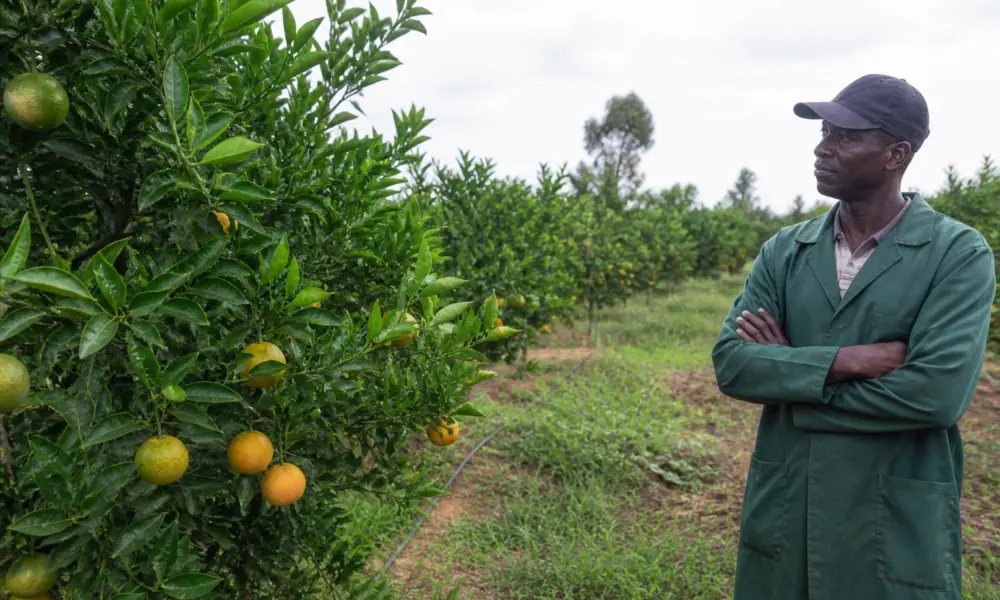
Oranges are among the world’s most consumed fruits, valued for their sweet flavour, rich vitamin C content, and commercial profitability. Furthermore, as demand for fresh citrus continues to rise across African markets, understanding how to grow oranges effectively has never been more important. According to the FAO Citrus Production Guide, global citrus output exceeds 150 million tonnes annually, with demand in sub-Saharan Africa growing steadily. Whether you are a smallholder farmer in Uganda or a large-scale commercial grower, this guide walks you through every critical stage of orange growing, from soil preparation all the way through to harvest.
Table Of Content
- Understanding the Climate Needs for Orange Growing
- Soil Preparation and Site Selection
- Steps for preparing your oranges orchard site
- Selecting the Right Orange Variety
- Planting and Spacing Guidelines For Oranges
- Fertilisation and Nutrient Management
- Irrigation and Water Management
- Pest and Disease Management in Citrus Farming
- Pruning, Training, and Orchard Maintenance
- Harvesting and Post-Harvest Handling
- Profitability and Market Outlook
- Disclaimer
| 20°C | 1,200 mm | 6.0–7.0 | |
| Years to first harvest | Ideal avg. temperature | Annual rainfall needed | Optimal soil pH |
Understanding the Climate Needs for Orange Growing
Before planting, it is essential to understand that oranges thrive in subtropical and tropical climates with warm temperatures and moderate rainfall. The ideal temperature range for optimal growth is between 15°C and 35°C, with an annual rainfall of 1,000–1,500 mm. In addition, oranges require a distinct dry period of two to three months to stimulate flowering and fruit set.
However, extreme frost or waterlogging can severely damage or kill orange trees. Therefore, selecting a location with good natural drainage and protection from strong winds is critical for any orange-growing enterprise to succeed.
Soil Preparation and Site Selection
The foundation of successful citrus farming lies in the soil. Notably, oranges perform best in well-drained, deep loamy soils with a pH of 6.0 to 7.0. Compacted, waterlogged, or highly saline soils will hinder root development and reduce yields significantly.
Steps for preparing your oranges orchard site:
First, clear the land of any weeds, stumps, or previous crop residue. Next, conduct a soil test through your nearest county agricultural office or an accredited agrochemical dealer to assess pH, nutrient levels, and soil texture. The Ministry of Agriculture, Animal Industry and Fisheries (MAAIF) provides guidance on approved soil health inputs and certified suppliers across Uganda. Consequently, if the soil pH is too low (acidic), apply agricultural lime at least three months before planting to allow proper neutralisation.
Additionally, dig planting holes of at least 60 cm × 60 cm × 60 cm and mix the top soil with well-decomposed farmyard manure or compost. This enriches the planting zone with organic matter and improves moisture retention both of which are vital for young tree establishment.
Selecting the Right Orange Variety
Undoubtedly, variety selection is one of the most consequential decisions in orange growing. Different varieties suit different climates, markets, and use cases. For instance, the most commercially grown varieties in East Africa include:
| Variety | Key Trait | Best Use |
| Washington Navel | Seedless, easy to peel | Fresh fruit market |
| Valencia | High juice content | Juice processing |
| Hamlin | Early-season, versatile | Fresh & processing |
Moreover, grafted seedlings from certified nurseries are strongly recommended over seed-grown trees, as they produce fruit faster (within 2–3 years) and maintain consistent varietal characteristics. The National Agricultural Research Organisation (NARO) has developed and released improved citrus varieties suited to Uganda’s climate always source seedlings from NARO-certified or MAAIF-registered nurseries to minimise disease introduction risk.
Planting and Spacing Guidelines For Oranges
Proper spacing ensures that each tree receives adequate sunlight, air circulation, and nutrients How to Grow Oranges: A Complete Farmer’s Guide, all of which directly influence yield. In general, the recommended spacing for orange trees is 6 m × 6 m (approximately 278 trees per hectare) for standard varieties. Alternatively, high-density planting at 4 m × 4 m can be used with dwarf rootstocks and intensive management to maximize early returns.
Plant during the onset of the long rains to reduce irrigation dependency in the early establishment phase. After transplanting, water the seedlings immediately and apply a layer of mulch around the base to conserve moisture and suppress weed growth.
Fertilisation and Nutrient Management
Orange trees are heavy feeders and respond remarkably well to a balanced fertilisation programme. As a rule, young trees require nitrogen-rich fertilisers to support vegetative growth, while mature fruiting trees benefit from a balanced N:P:K ratio supplemented with micronutrients like zinc, boron, and magnesium.
Specifically, apply CAN (Calcium Ammonium Nitrate) or urea twice yearly during the growing season
at the onset of rains and four to six weeks later. Furthermore, foliar sprays containing zinc and boron should be applied during flowering and fruit development stages to improve fruit set and quality.
Irrigation and Water Management
While established orange trees can tolerate moderate drought, consistent moisture is essential during flowering and fruit development. Ideally, drip irrigation is the most efficient method for orange orchards as it delivers water directly to the root zone, minimising evaporation and fungal disease risk on foliage.
In areas with unreliable rainfall, supplementary irrigation should be applied every 7–14 days during the dry season, providing approximately 50–100 litres per tree per week depending on tree size and
ambient temperature.
Pest and Disease Management in Citrus Farming
Orange growing comes with a range of pest and disease challenges that, if left unmanaged, can devastate entire orchards. Among the most common threats in East Africa are citrus psylla (Trioza erytreae), which transmits greening disease (Huanglongbing), one of the most destructive citrus diseases globally. Greasy spot, a fungal disease causing premature leaf drop, is also widespread. Additionally, the fruit fly (Bactrocera spp.) causes premature fruit drop and significant post-harvest losses.
Consequently, an Integrated Pest Management (IPM) approach combining cultural, biological, and chemical controls is the most sustainable strategy. Regular scouting, removal of infected branches, and timely application of approved pesticides are all part of effective orchard management. Consult the MAAIF crop protection directorate for a current list of legally approved agrochemicals for use on citrus in Uganda.
Pruning, Training, and Orchard Maintenance
Equally important to fertilisation and irrigation is proper pruning. Orange trees should be pruned annually after harvest to remove dead, diseased, or crossing branches. This improves light penetration into the canopy, promotes new productive growth, and reduces pest and disease pressure.
In the early years, train the tree to develop a strong central leader with three to four well-spaced primary scaffold branches. This structure gives the tree stability and allows for even fruit distribution across the canopy as the tree matures.
Harvesting and Post-Harvest Handling
Oranges are typically ready for harvest 8–12 months after flowering, depending on the variety and environmental conditions. As a general guide, harvest when the fruit has reached full colour, firmness, and a Brix level (sugar content) of at least 10%. It is worth noting that in tropical regions, oranges may remain green on the outside even when fully ripe internally, colour alone is therefore not a reliable harvest indicator.
After harvest, handle fruit carefully to avoid bruising. Pack in ventilated crates, pre-cool where possible, and transport to market within 24–48 hours of picking to maintain freshness and reduce post-harvest losses, which can account for up to 30% of orange revenue if poorly managed.
Profitability and Market Outlook
Orange growing is a highly profitable venture when managed well. A mature orange tree can yield between 200 and 400 fruits per season, and a hectare with 278 trees can produce up to 30–40 tonnes of fruit annually. Given that wholesale prices for oranges in Kampala markets average UGX 200–500 per fruit, gross revenues per hectare can range from UGX 20 million to over UGX 55 million annually.
Moreover,value addition through juice processing, marmalade production, and essential oil extraction from orange peels presents additional income streams for innovative farmers. As the demand for locally produced fruit juice continues to grow, orange farming holds exceptional promise for Uganda’s agricultural economy. For further research, variety trials, and agronomic support, visit the NARO citrus research programme portal.
Disclaimer
Africa Agricultural Network (AAN) is committed to informing and empowering agricultural communities across Africa as per our mandate. This article is intended for informational purposes only. Readers are advised to verify all details directly with the relevant agricultural organizations before making any decisions.


No Comment! Be the first one.