Bamboo in, Briquettes out. This Woman-led Agribusiness Delivers Clean Fuel to fight Deforestation and the Energy Crisis.
Divine Bamboo is making clean energy cheaper than charcoal in Uganda. Here is how one social enterprise is tackling deforestation and energy poverty with bamboo briquettes

Introduction
Uganda’s energy crisis and deforestation challenges are not separate problems; they are the same problem. According to Sustainable Energy for All, approximately 42 million Ugandans lack access to clean cooking fuels, and over 90% of households rely on biomass charcoal, firewood, or grass as their primary energy source. Consequently, forests are disappearing at an alarming rate, with Uganda having lost forest cover from 24% in the 1990s to just 7% by 2020, according to data from the Fund for Innovation in Development.
Furthermore, the transition to clean alternatives like electricity or gas remains out of reach for most rural and low-income households due to high switching costs. It is precisely in this gap that bamboo, fast-growing, regenerative, and carbon-sequestering, is emerging as one of the most practical and accessible solutions Africa has yet to embrace fully.
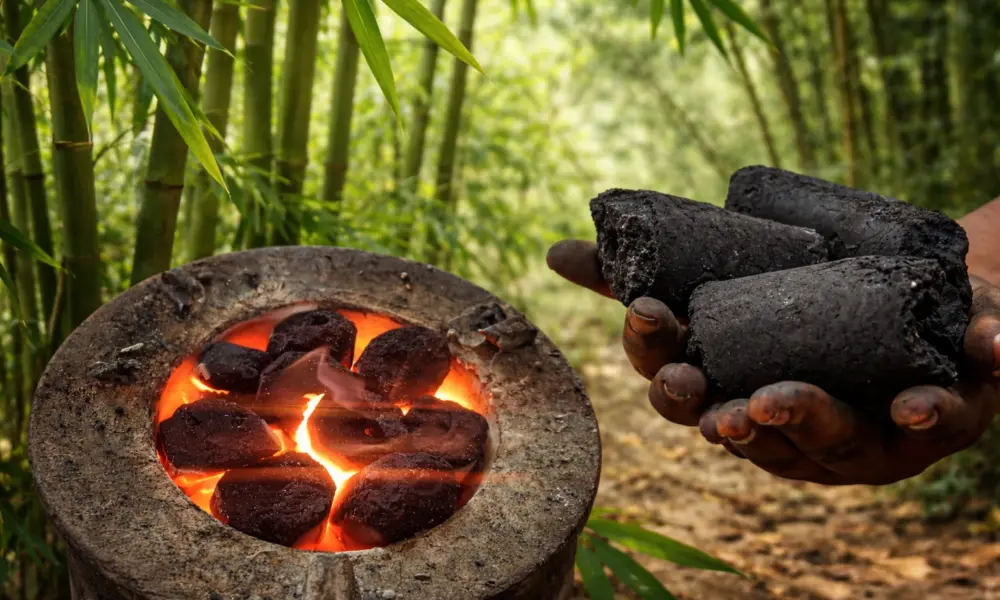
Into this gap stepped Divine Bamboo, a Ugandan social enterprise founded in 2016 by Divine Nabaweesi. The company’s mission is bold: zero deforestation in Africa and clean, affordable energy for everyone. Their solution is equally elegant: eco-friendly bamboo briquettes that cost significantly less than conventional charcoal, burn longer, produce less smoke, and are made from a plant that regenerates itself after every harvest.
Ten years on, the company has grown from a small nursery to a 43-person organisation operating Uganda’s largest bamboo nursery, a briquette production facility, and community training programmes in partnership with WWF Uganda and UNDP.
AAN sat down with Rachel Lanyero, Head of Operations at Divine Bamboo, to understand how the business works, what has kept it going for a decade, and what it will take to scale bamboo’s role in Africa’s clean energy future.
The Interview
Question: Tell us about yourself and about Divine Bamboo.
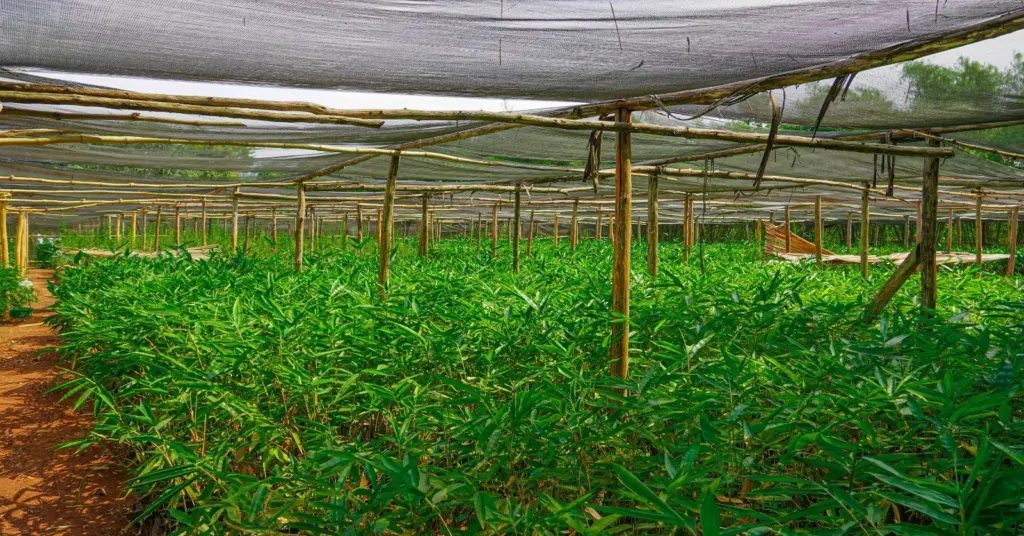
Rachel Lanyero: My name is Rachel Lanyero, and I am the Head of Operations at Divine Bamboo. We are an energy and forestry organisation deploying different models along the bamboo value chain. On the forestry side, we operate a five-star certified bamboo nursery with a current production capacity of 400,000 seedlings annually, and we are targeting one million within the next two to three years. On the energy side, we produce eco-friendly bamboo briquettes made from locally grown bamboo, combined with industrial and agricultural waste. This year in August, Divine Bamboo turns ten years old, a significant milestone. We have grown from 14 staff five years ago to 4 people today, and there are greater things ahead.
Question: What inspired the founding of Divine Bamboo, and when did you launch?
Rachel Lanyero: Divine Bamboo was founded by our CEO, Divine Nabaweesi, who incorporated the company in August 4th 2016. She has always had a deep love for nature and was deeply disturbed by the mass-scale cutting of trees she saw happening across Uganda. She went on doing research to find a solution, and she found bamboo. Three things drew her to it. First, bamboo is a fast-growing woody plant. Second, it sequesters significant amounts of carbon, which is good for the environment.
Third and most importantly, bamboo is regenerative in nature. Every time you harvest poles, new shoots keep coming. It is self-replenishing, which means you can harvest it without losing your plant cover, unlike conventional trees making it perfect for energy and biomass production.
She also looked closely at Uganda’s energy situation. Around 90% of households here depend on biomass for cooking, yet the transition to electricity or gas is simply too expensive for most people. Getting an electric cooker, a gas stove, a burner, a cylinder, the switching cost is enormous.
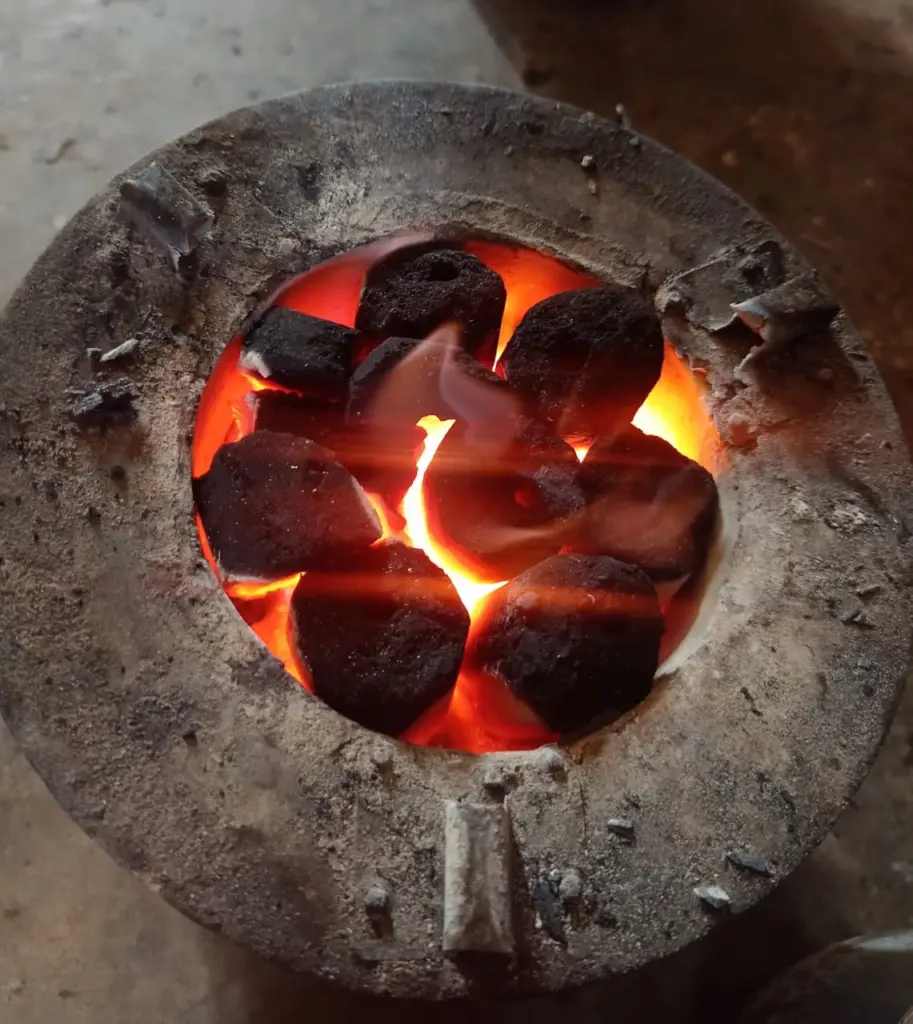
With bamboo briquettes, however, a household can use their existing sigiri or charcoal stove and simply switch their fuel. No new equipment required. That accessibility was central to her vision.
Question: What gaps in the market is Divine Bamboo trying to address?
Rachel Lanyero: The most pressing gap is the bamboo resource itself. Our briquettes currently use a mixture of bamboo and industrial and agricultural waste because the bamboo resource in Uganda is still limited. The main reason for that limitation is land access. Land in Uganda always has an owner; it is either government-owned or privately held, and it is not easy to access large tracts for plantation establishment.
Consequently, we developed a smallholder farmer programme where we partner with farmers to do boundary planting and strip planting on their existing land. This way, a coffee farmer in Kasese or Rubirizi does not lose their plantation to bamboo; they simply integrate bamboo along their boundaries or between their crop rows.
We also address the awareness gap. Not many Ugandans know what bamboo is or how it can benefit them. Therefore, we enter communities through training programmes where we teach people how to make craft items beds, chairs, cups, jewellery, chopping boards out of bamboo.
This creates what we call green jobs: livelihoods earned from nature without destroying nature. We currently have two training centres in Kasese and Rubirizi, established in partnership with WWF Uganda. Additionally, we pursue joint ventures with institutions like churches and schools, which typically have access to larger tracts of land, to expand bamboo plantation coverage.
Question: Tell us about your bamboo briquettes, what makes them different from biomass charcoal?
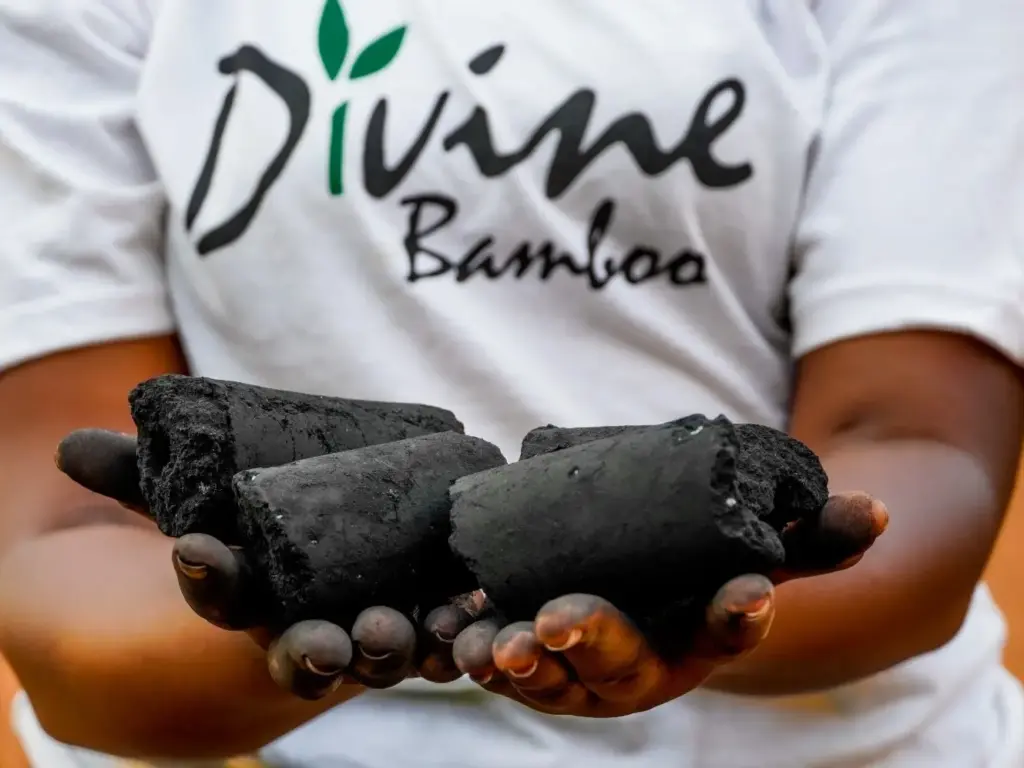
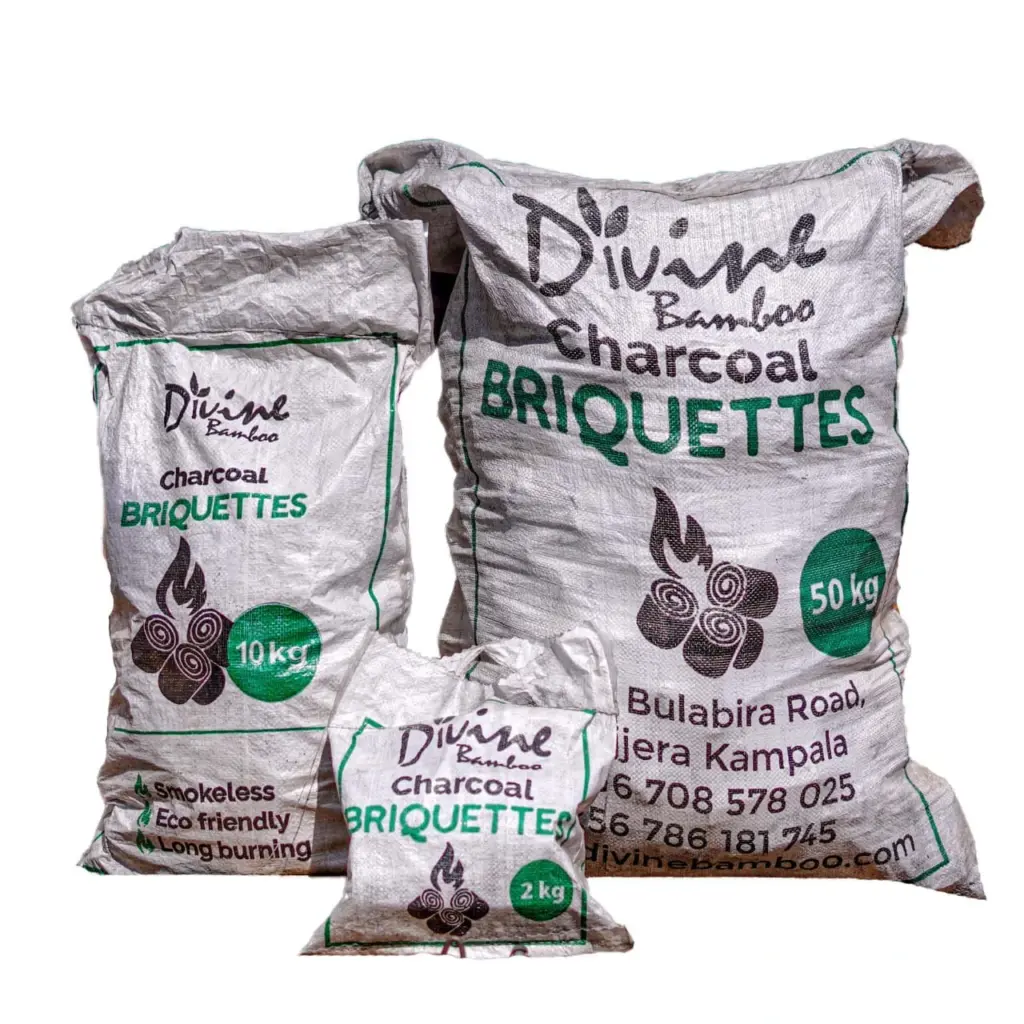
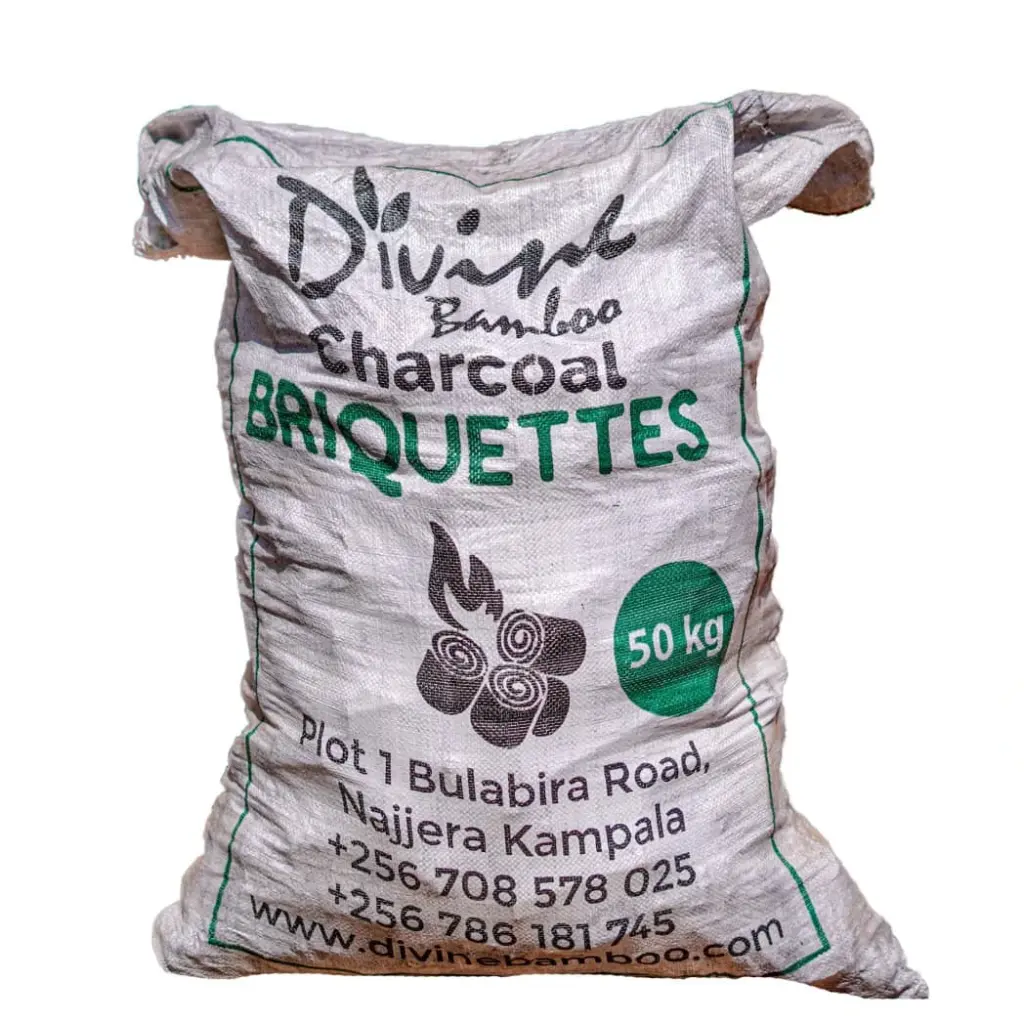
Rachel Lanyero: Our bamboo briquettes are eco-friendly, significantly cheaper than conventional charcoal, and available in three package sizes: 50 kilograms at UGX 60,000, 10 kilograms at UGX 15,000, and 2 kilograms at UGX 3,000. A comparable 50-kilogram bag of conventional charcoal currently costs around UGX 98,000 to 120,000 depending on the region. So our briquettes are almost half the price. Furthermore, they burn longer than charcoal and produce less soot and smoke, which has direct health benefits for the people, mostly women doing the cooking.
The 2-kilogram package is intentional. We want to ensure that even someone who lives day-to-day on what they earn can access clean energy. That is the problem we are trying to solve. Currently, our distribution is centralised around Kampala and nearby areas, with retail outlets at Kalerwe Market and Lweza for briquettes, and our seedling nursery in Luweero. Nevertheless, we are actively working to expand our distribution footprint so that briquettes are as easy to find as conventional charcoal.
“With bamboo briquettes, a household can use their existing sigiri and simply switch their fuel. No new equipment required. That accessibility was central to our founder’s vision.”
— Racheal Lanyero, Head of Operations, Divine Bamboo Uganda
Question: What products and services do you offer beyond briquettes?
Rachel Lanyero: As an organisation, Divine Bamboo offers bamboo briquettes, bamboo seedlings from our nursery, plantation establishment and management services, and consultancy services focused specifically on bamboo. For community and project-based work, we also offer training programmes on bamboo crafts and bamboo-based livelihoods.
These training programmes are typically tied to partner-funded projects, which allows us to deliver them without the cost being on the business directly. For example, our partnership with WWF Uganda has enabled us to operate training centres in Kasese and Rubirizi at scale. Similarly, our early pilot work on briquette formulation was done in partnership with Ndejje University, and our scale-up was made possible through a UNDP grant.
Question: What have been your biggest challenges?
Rachel Lanyero: Land access is our biggest structural challenge, as I mentioned. Beyond that, access to capital is a persistent difficulty. In Uganda, when you approach banks or financial institutions for growth capital to move from a startup to a fully operational SME they demand security at high interest rates.
For a social enterprise like ours, that is a significant barrier. Consequently, we have had to be creative, relying on partnerships, project funding, and grants to bridge those capital gaps rather than commercial debt.
During our early years, most of the groundwork involved research and development for the briquette formulation, which was capital-intensive. Fortunately, our partnership with Ndejje University helped us develop the formulation, and UNDP funding helped us set up the pilot stage.
From that point, we have not turned back. Nevertheless, scaling up further particularly in machinery remains a significant investment challenge. Automated briquette machines at the level used in countries like China and India are highly capital-heavy. What we produce in a full day here, advanced machinery could produce in about three hours.
Question: Who are your primary customers?
Rachel Lanyero: Essentially, anyone who currently uses charcoal is our primary customer. That includes homesteads, restaurants, hotels, small businesses, schools, and anyone in the hospitality or education sectors who uses fire for heating or cooking.
Furthermore, anyone who uses firewood, gas, or electricity for heating needs is also part of our target market, because we are offering a cheaper, cleaner, and more accessible alternative across all those use cases. Our immediate focus, however, is on the Kampala market and surrounding areas, because we want to first build a strong local base before expanding nationally and eventually exploring export.
Question: What lessons have you learned that you would share with other agribusinesses?
Rachel Lanyero: The most important lesson is to understand the unique value that every person in your team brings. In operations, you interact with everyone production, nurseries, sales, marketing and you realise quickly that every individual has a different background, a different way of seeing things, and a different strength. As a manager, your job is to harness that, not suppress it. Many businesses fold because leadership does not create the space for people to contribute their best ideas.
In the briquettes industry, bamboo is not something you learn in school. It is an art. You learn it on the ground and you get better at it over time. Therefore, I always encourage people to destroy the box rather than think inside it. Imagine the box never existed. That mindset of openness and adaptability is what has kept Divine Bamboo growing for ten years, and it is what I would recommend to any small or growing agribusiness trying to find its footing.
Question: Where do you see the biggest growth opportunities for bamboo in Africa?
Rachel Lanyero: The biggest opportunity is that bamboo has far more uses than most people realize construction, tiling, furniture, textiles, paper, and much more. At Divine Bamboo, we are honestly only scratching the surface of what bamboo can do. Consequently, the opportunity is enormous for more businesses and entrepreneurs to enter the bamboo space and develop different parts of the value chain. Additionally, bamboo’s regenerative nature is a critical advantage in a continent facing significant deforestation pressure.
Trees that take fifty or a hundred years to grow are being cut down in minutes. A plant that sends new shoots within months of harvesting is a fundamentally different proposition. As awareness of this grows, I believe the sector will attract more investment and more talent.
On the technology side, we are also exploring software solutions to improve our stock tracking and operational management. Moreover, digital marketing including TikTok and social media is an avenue we see growing in importance as smartphone and internet penetration increases across Uganda. The bamboo sector needs more visibility, more stories, and more education. Partnerships with platforms like Africa Agriculture Network are therefore a key part of how we intend to grow our reach.
Question: How can people access Divine Bamboo’s products and services?
Rachel Lanyero: People can reach us directly on our company phone number: +256786 181 745 / +256708578025. We are also reachable by email at info@divinebamboo.com. If you would like to visit us in person, our offices are at Plot 1, Najjera 2, along Bulabira Road, Kampala look for the bamboo and the greenhouse we use for drying our briquettes. For briquette purchases, you can call us, visit directly, or find us at our retail outlets at Kalere Market and in Lweza. We are expanding our distribution footprint steadily, so more outlets are on the way
Watch the video on how the process of turning bamboo into briquettes works here;
AAN Insight; Why This Matters for Africa
Divine Bamboo is proof that African homegrown innovation can compete globally, turning a locally abundant material into an export-ready, climate-smart industry. For agribusinesses and rural entrepreneurs across the continent, their model of integrated value chains, farmer income assurance, and sustainable harvesting offers a replicable blueprint worth studying. At AAN, amplifying exactly these kinds of stories is central to our mandate , because visibility is the first step to scale.
Disclaimer
This article is produced for informational purposes only and does not constitute an endorsement, recommendation, or promotion of Divine Bamboo or any of its affiliated entities by Africa Agri Network (AAN). AAN has no commercial relationship with the subjects featured in this article. All information presented is based on interview responses and has not been independently verified by AAN.
No Comment! Be the first one.