

This Agribusiness is Solving Uganda’s Fish Feed Crisis With Local Materials.
How De Heus Uganda is tackling fish feed quality, pricing, and supply and why cheap feed is the most expensive mistake a fish farmer can make.

Introduction
Uganda’s aquaculture sector is growing fast. But for years, fish farmers have been held back by one persistent problem: unreliable access to Good quality, affordable, and reliable fish feed. Consequently, when global animal nutrition giant De Heus entered the Ugandan market under the Koudijs brand, and subsequently launched a local manufacturing facility in Njeru, Jinja in September 2025, it signaled a turning point for the industry.
Table Of Content
- Introduction
- The Interview
- Question: Tell us about yourself and your role at De Heus Uganda.
- Question: When did De Heus launch in Uganda, and what is your area of coverage?
- Question: What gap in the market were you trying to address when you set up locally?
- Question: Can you walk us through the De Heus fish feed range? What makes it different?
- Question: What have been your biggest challenges in producing fish feed locally?
- Question: Who are your primary fish feed customers, and how do they access your products?
- Question: What lessons would you share with fish farmers who formulate their own fish feed on-farm?
- Question: What marketing platforms does De Heus Uganda use, and where do you need more support?
- Question: Many fish farmers say quality feed is too expensive. What is your response?
- Question: Where do you see the biggest growth opportunities for Uganda’s fish feed sector?
- Question: How can farmers access De Heus Uganda’s training and get in touch?
- Editor’s Note
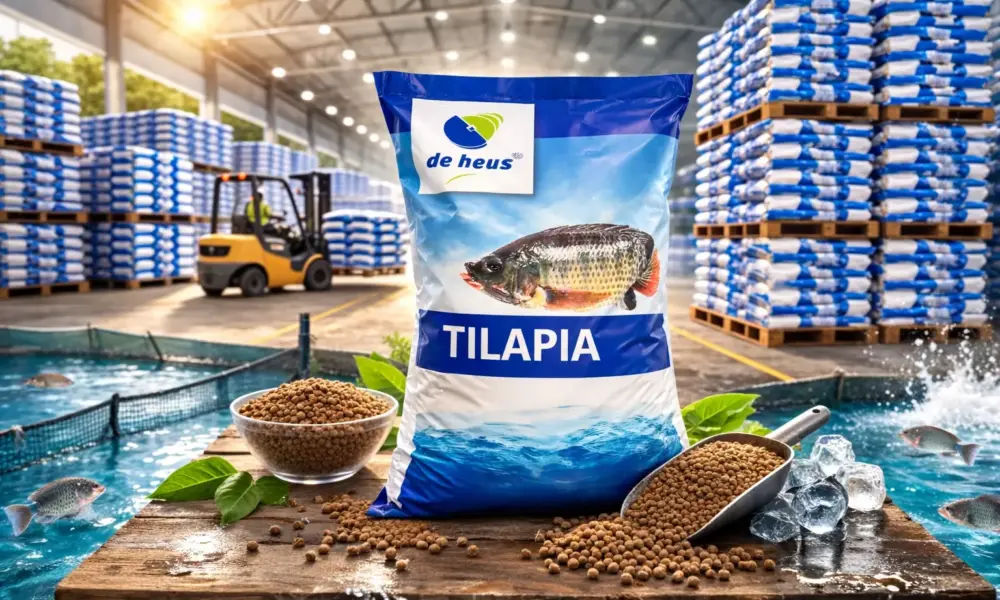
De Heus Uganda Limited, part of the De Heus global network operating in over 102 countries, now produces fish feed in Uganda locally, cutting import dependency, lowering farm-gate prices, and creating a market for local raw material suppliers in the process. Furthermore, the factory’s establishment has introduced a level of supply consistency that Uganda’s fish farming community has never previously enjoyed.
AAN sat down with Ivan Ssabwe, Sales Manager for fish feeds at De Heus Uganda, to understand how the business works, what challenges remain, and what advice he has for Uganda’s growing community of fish farmers. Here is what he had to say.
The Interview
Question: Tell us about yourself and your role at De Heus Uganda.
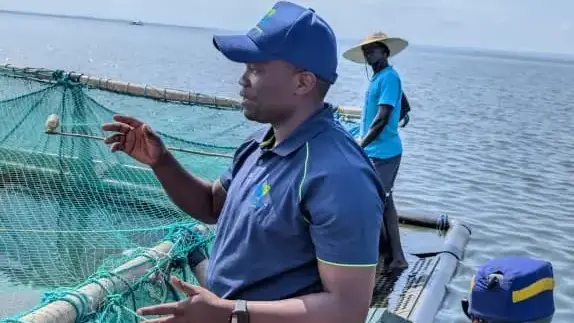
Ivan Ssabwe: I am an aquaculturalist with about seven years of experience in the industry. I work with De Heus Uganda Limited as a sales representative for fish feeds. In my current role, I manage nationwide sales for our fish feeds. But my work doesn’t stop at selling, I also train farmers on proper feed use, helping them gain the skills they need to run productive and profitable fish farming businesses.
Question: When did De Heus launch in Uganda, and what is your area of coverage?
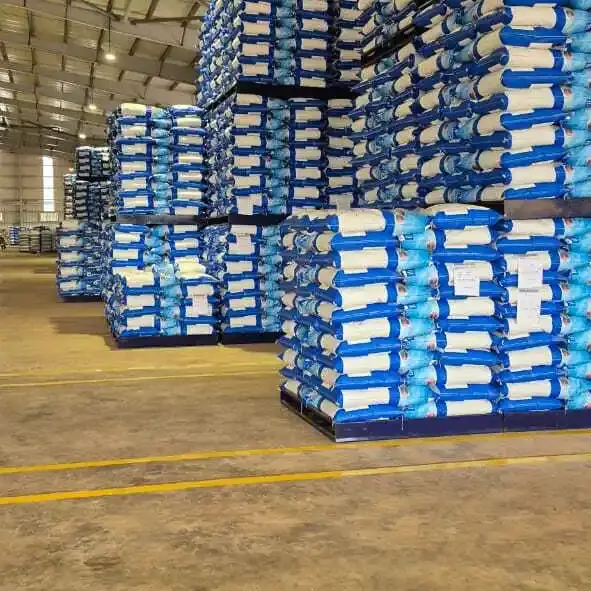
Ivan Ssabwe: De Heus is a global company present in over 120 countries. In Uganda, our factory was officially launched on 2nd September 2025, based in Njeru, Jinja. Nevertheless, we supply feeds all over the country. We do this through our distribution partner, Kafika Animal Feeds, who have nearly 100 branded shops countrywide, as well as through direct supply to larger-scale farmers.
Question: What gap in the market were you trying to address when you set up locally?
Ivan Ssabwe: There were three key gaps specific to fish feed in Uganda. First, Uganda never had a steady, reliable supply of quality and complete fish feed. We were importing, and consequently, we frequently ran out of stock, which pushed farmers toward poor alternatives or left their fish without feed entirely. At one point, disruptions in the Mediterranean Sea extended our container turnaround time from around 40 days to 180 days. You can imagine what that means for a fish farmer whose stock is starving and growing slowly.
Second, every imported fish feed carries the cost of logistics, cross-border movement, and labour, all of which feed into the final price farmers pay. Therefore, by producing locally, we have been able to bring prices down significantly, making quality feed more accessible. Third, we wanted to support Uganda’s local agricultural economy. About 80% of the raw materials we use corn, cassava flour, wheat flour, soy, and rice bran, are sourced right here in Uganda. In turn, our factory creates a direct market for local suppliers and adds value to what they grow.
Question: Can you walk us through the De Heus fish feed range? What makes it different?
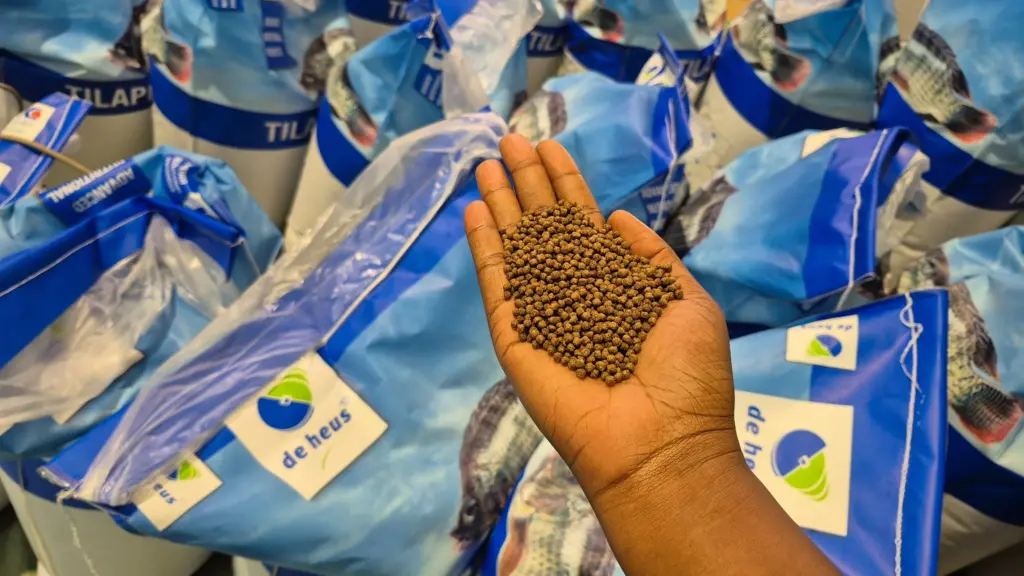
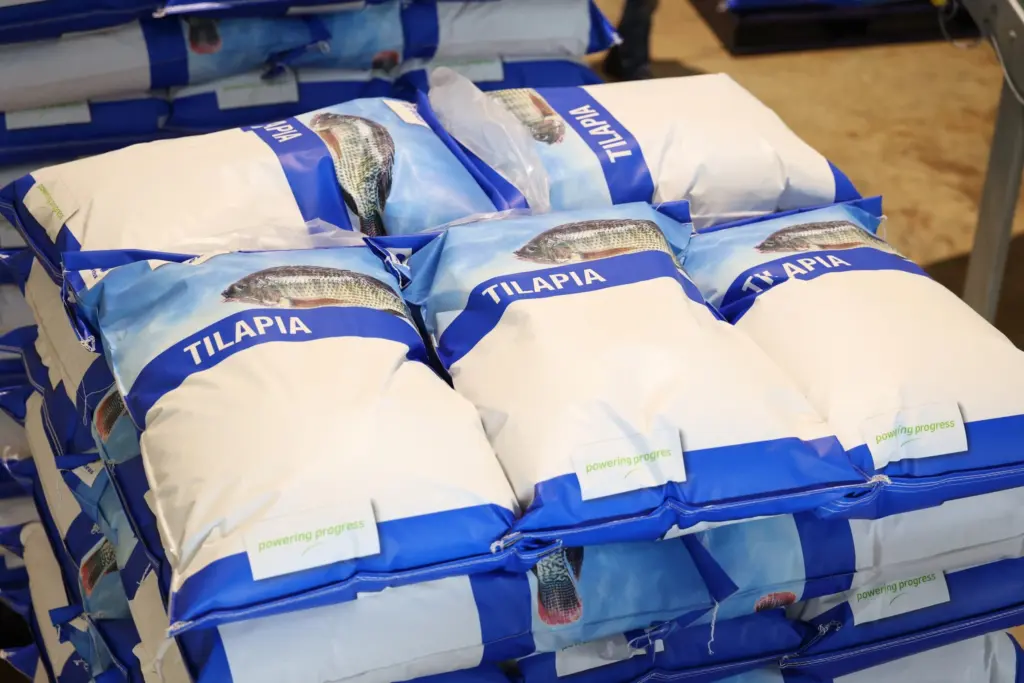
Ivan Ssabwe: Our fish feeds are specifically formulated to match the nutritional needs of fish at every stage of growth. A fingerling, for example, requires very different nutrients compared to a fish that’s almost ready for market so our various feed assortment is tailor made to support those needs at each stage of fish growth. As a result, fish raised on De Heus Uganda feeds achieve lower feed conversion ratios, grow more quickly, and develop superior flesh quality. This ultimately helps farmers reduce both time and production costs, allowing them to reach the market sooner.
In addition, every batch we produce undergoes strict quality checks in our in‑house laboratory. We test for protein levels, moisture content, aflatoxins, and other key quality indicators before any feed leaves our factory. This ensures fish farmers can rely on consistent, dependable quality in every bag they purchase.
Question: What have been your biggest challenges in producing fish feed locally?
Ivan Ssabwe: Sourcing high-quality raw materials remains one of our biggest ongoing challenges. De Heus Uganda adheres to strict global quality standards, yet many of the materials presented by suppliers do not meet these requirements when tested in our in house laboratory. Issues such as high moisture levels, aflatoxins, and even mould contamination are common. In fact, out of every ten trucks that arrive with raw materials, we typically accept only three or four.
When we reject materials, our production capacity is affected meaning that sometimes we produce less fish feed than planned, which impacts overall supply.
We are actively addressing this issue by educating and supporting local suppliers on proper post‑harvest handling and the quality standards required for feed production. However, this challenge also highlights a broader concern within Uganda’s agricultural sector, post‑harvest practices must significantly improve if local value chains are to reliably support industrial scale manufacturing.
Question: Who are your primary fish feed customers, and how do they access your products?
Ivan Ssabwe: Our ultimate goal is to get quality fish feed down to every farmer. In practice, we sell directly from our factory to medium and large-scale fish farmers, because buying directly comes with added advantages. Additionally, for smaller-scale farmers, our distribution partner Kafiika Animal Feeds covers nearly every corner of the country through their 98-plus branded retail outlets. Their headquarters are on Mutesa I Road, Mengo, and you can find their shops in every region of Uganda
Question: What lessons would you share with fish farmers who formulate their own fish feed on-farm?
Ivan Ssabwe: Fish feed is a very technical discipline, far more so than, say, poultry feed. Aquaculture is still a young industry in Uganda, and without proper technical expertise in feed formulation, farmers who try to produce their own feed end up taking two steps forward and one step back. Consequently, I strongly advise any farmer considering on-farm feed formulation to first invest in a qualified technical team. Without that, the cost of poor feed quality, slower growth rates, disease, and fish mortality, will far exceed any saving made on the feed itself.
I also have clients who make their own feeds, and consistently, they cannot raise their fish to market weight in the same timeframe as those using manufactured feeds from a standard factory like ours. The difference in results is clear and measurable. Therefore, if you are serious about fish farming in Uganda as a profitable business, the feed decision is the most important one you will make.
“Stop thinking that expensive feed is simply expensive. Cheap things are always expensive in the end. Attach your business to quality from day one. It is not an expense. It is an investment.”
— Ivan Ssabwe, Sales Manager, De Heus Uganda
Question: What marketing platforms does De Heus Uganda use, and where do you need more support?
Ivan Ssabwe: We use a mix of platforms, local television, radio, newspapers, social media, and direct farmer training in communities. Additionally, partnerships like this one with Africa Agriculture Network are an important part of how we reach farmers across a wider geography. In terms of where we need more support, any platform that helps us reach farmers at the last mile is welcome. If you know of a way to push our brand further, we are always open to it.
Question: Many fish farmers say quality feed is too expensive. What is your response?
Ivan Ssabwe: Stop thinking that expensive fish feed is simply expensive. There is a saying: cheap things are always expensive in the end, and it is absolutely true in fish farming. When you use quality feed, your fish grows to market weight faster, the flesh quality is superior, and your customers keep coming back because your product stays fresh longer at market. Consequently, your repeat sales increase, your reputation grows, and your business scales.
Furthermore, quality fish feed means fewer health problems, less lethargy, less disease, less mortality. You are not losing fish you have already invested months in raising. Most importantly, time is money in fish farming. If your fish takes longer to reach market weight because of poor feed, you go into diminishing returns. By the time you sell, you are only recovering your costs, not making profit. Therefore, attach your business to quality feed from day one. It is not an expense. It is your most important investment.
Question: Where do you see the biggest growth opportunities for Uganda’s fish feed sector?
Ivan Ssabwe: We are very positive about the market. The three gaps we identified when we entered, availability, quality, and price of fish feed in Uganda, are being addressed. As a result, farmers are saving more on feed costs, which means they are reinvesting and scaling up their operations. If even the farmers we currently supply simply doubled their production in the next two to three years, our factory capacity would need to double or even triple to keep up.
Moreover, we believe that within ten years, aquaculture could be among the biggest agricultural sectors in the entire East African region. Uganda has the water resources, the climate, and the growing demand, both domestically and for export. What it needs is a reliable, affordable, quality fish feed supply chain. That is exactly what De Heus Uganda is building.
Question: How can farmers access De Heus Uganda’s training and get in touch?
Ivan Sabwe: Farmers can access training information through our website at www.deheusug.com. We are also active on LinkedIn, where our team posts regular updates on upcoming training and events. Additionally, farmers can follow and contact our sales representatives directly. We share our contacts and emails openly. For those who would like us to come and train their farmer groups, they can reach out through any of those channels and we will work out how to reach them.
Editor’s Note
De Heus Uganda Limited is based in Njeru, Jinja. Their distribution partner, Kafika Animal Feeds, operates close to 100 branded retail outlets across Uganda, with headquarters on Mutesa I Road, Mengo. For more information on De Heus Uganda fish feeds, product ranges, or upcoming farmer training sessions, visit www.deheusug.com or follow De Heus Uganda on LinkedIn. Furthermore, for general aquaculture resources and agribusiness news, visit Africa Agriculture Network.
AAN Insight | Why This Matters for Africa
De Heus Uganda proves that Africa does not have to depend on imported inputs to build a world-class aquaculture industry. By producing quality fish feed locally, sourcing 80% of raw materials from Ugandan farmers, and pairing feed with direct training, they offer a clear and replicable model for the continent. At AAN, amplifying stories like this is central to our mandate, because affordable, quality feed is the foundation every African fish farmer deserves.
Disclaimer
This article is produced for informational purposes only and does not constitute an endorsement, recommendation, or promotion of De Heus Uganda Limited or any of its affiliated entities by Africa Agri Network (AAN). AAN has no commercial relationship with the subjects featured in this article. All information presented is based on interview responses and has not been independently verified by AAN.

No Comment! Be the first one.