



How This Agribusiness Is Turning Bamboo Into Everyday Materials
Meet Dr. Muhumuza Collin, the economist turning Ugandan bamboo into a global business. Discover how Amabanda Bamboo Processing is reshaping bamboo in Uganda

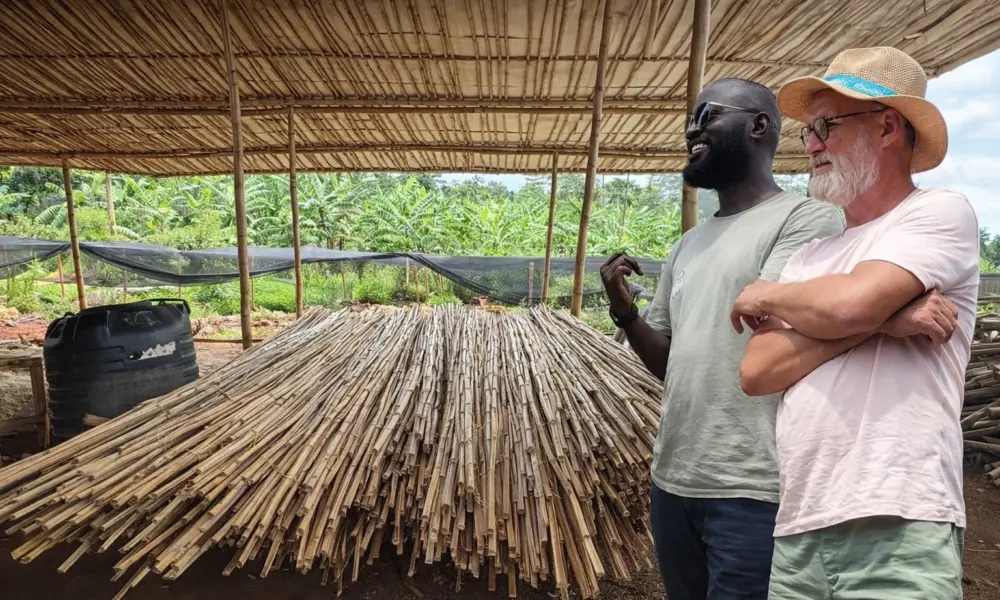
Table Of Content
- Question: Tell us about yourself and how Amabanda Bamboo processing got Started?
- Question: So Amabanda Uganda Limited was part of a bigger ecosystem from the start?
- Question: Beyond value addition, what market gap were you addressing?
- Question: What exactly does Amabanda Uganda Limited produce, and who are your customers?
- Question: How has the export side of the business been going?
- Question: What other challenges have you faced?
- Question: What is one lesson you learned the hard way?
- Question: Where do you see the biggest growth opportunities?
- Question: What support does Amabanda Uganda Limited need to scale?
- Question: What advice would you give to aspiring agribusiness entrepreneurs?
- How to reach Amabanda Bamboo Processing
- AAN Insight; Why This Matters for Africa
When most Ugandans think of bamboo, they picture a punishment stick, a bird perch, or a garden fence. However, Dr. Collin Muhumuza sees something entirely different, a high-performance, sustainable material with the power to transform livelihoods, protect forests, and compete on the global stage.
As General Manager of Amabanda Uganda Limited, He is at the heart of a growing bamboo business in Uganda that stretches from rural farms in Mukono all the way to manufacturing plants in the Netherlands. Moreover, his journey from a Ph.D in economics to bamboo entrepreneur is as compelling as the material itself.

Question: Tell us about yourself and how Amabanda Bamboo processing got Started?
Dr. Muhumuza Collin: My name is Dr. Muhumuza Collin. I hold a PhD in Global Economics from Shandong University, China. About two years ago, I began engaging with bamboo, initially through conversations with Chinese ambassador who was passionate about the material. That sparked my interest, and I started researching the sector deeply.
Eventually, an opportunity to join as a General Manager opened up, and I took it. However, Amabanda Uganda Limited’s story actually begins before I arrived.
It started with seven bamboo enthusiasts who gathered to ask a simple but powerful question: how do we move this value chain forward? One of them had been running a bamboo nursery for over a year without a single sale. That frustration, therefore, became the founding energy behind everything that followed.
Question: So Amabanda Uganda Limited was part of a bigger ecosystem from the start?
Dr. Muhumuza Collin: Absolutely. The group first established Bamboo Uganda, an association designed to unite bamboo stakeholders and help them identify where to invest along the value chain.
Subsequently, several ventures emerged from that foundation:
- Bijimu Bamboo Farming Services: Covering seedling supply, plantation management, and sustainable harvesting
- Amabanda Uganda Limited: The processing and manufacturing arm. The name itself means bamboo in Luganda, making it immediately relatable to local communities
- Studio Akeka: A design and build company helping clients use bamboo in construction and architecture
- Ekibbo Farming Services: Named after the Luganda word for basket, serving small-scale farmers with loans, transport, storage, and market access
Today, Bamboo Uganda has grown to 25 paid members across silver, bronze, and gold membership tiers. As a result, the ecosystem continues to strengthen with every new member.
Question: Beyond value addition, what market gap were you addressing?
Dr. Muhumuza Collin: When we entered the space, we found farmers who had already planted bamboo but had no buyers. Many were cutting their plantations down out of sheer frustration. Therefore, one of our core missions became restoring hope and more importantly, delivering assured, reliable income.
Furthermore, the sustainability case for bamboo is extraordinary. Unlike eucalyptus or pine, which require clear-cutting every seven to eight years, a bamboo plantation can be harvested from continuously for over 70 years. The land is never left bare. Carbon sequestration continues uninterrupted, and the farmer earns consistently throughout.
Additionally, a farmer with bamboo on their land gains access to multiple income streams, from granaries and cow sheds to biochar, charcoal, and hoe handles. Consequently, bamboo doesn’t just provide income; it transforms the entire agricultural ecosystem around it.
Question: What exactly does Amabanda Uganda Limited produce, and who are your customers?
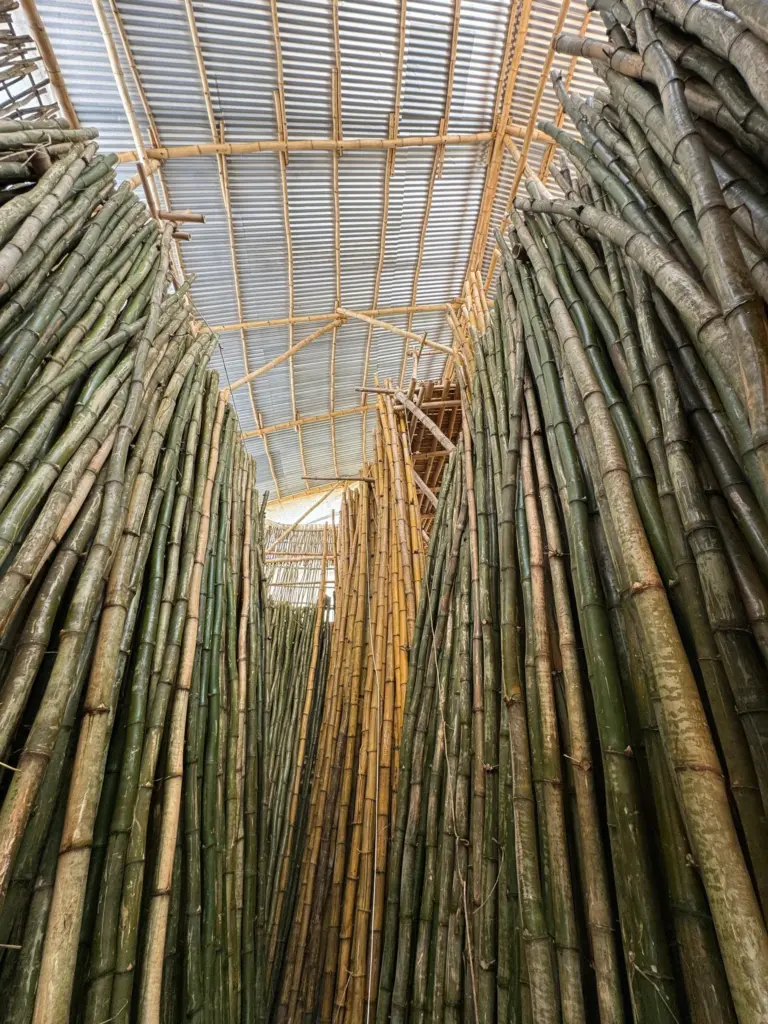
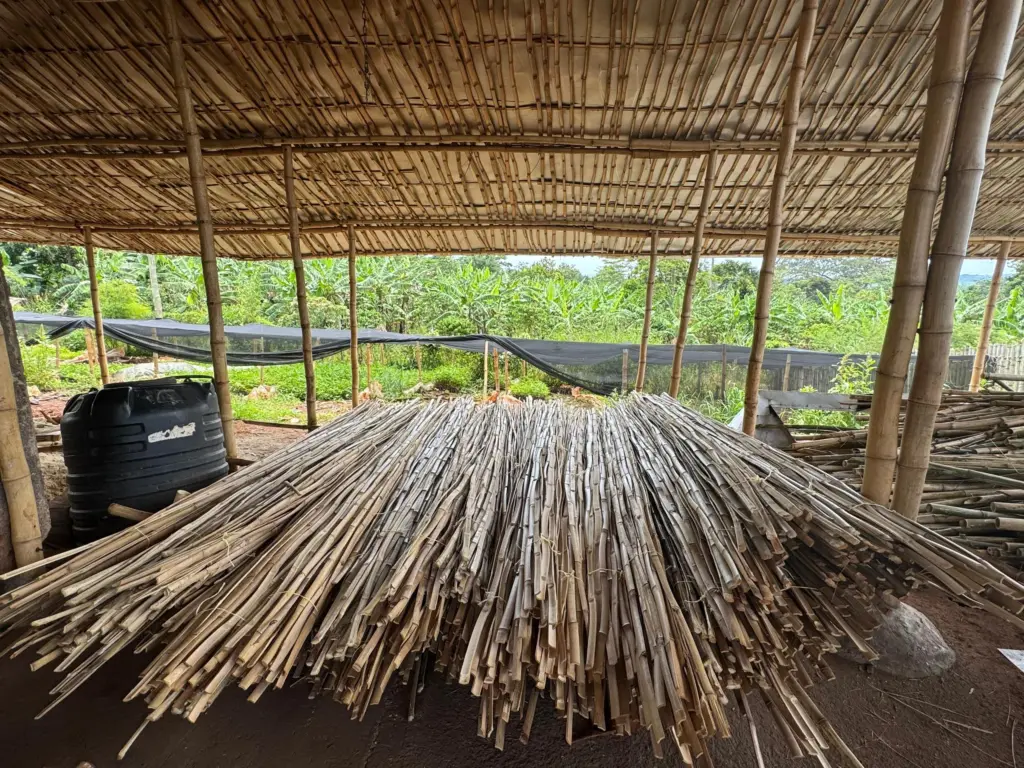
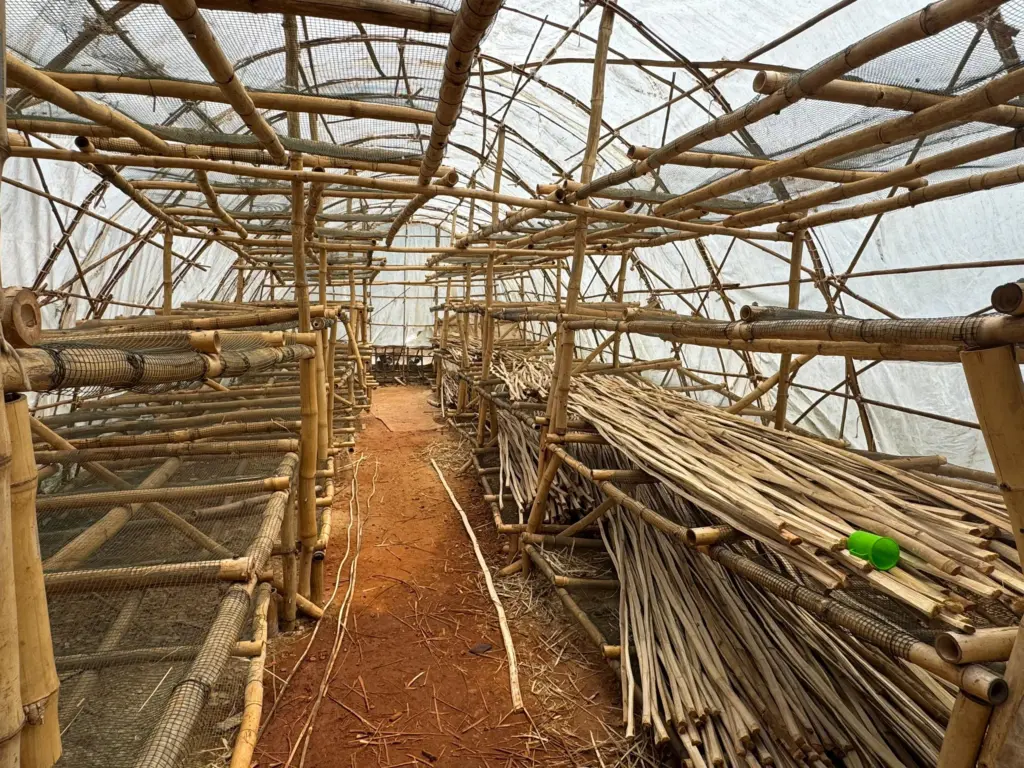
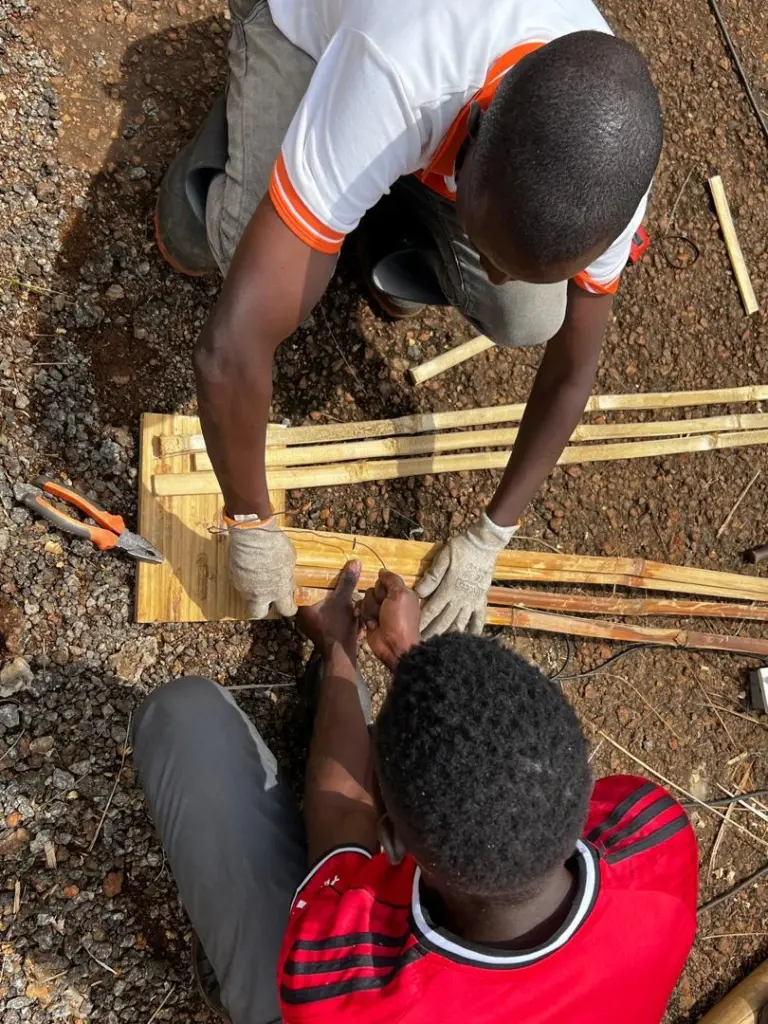
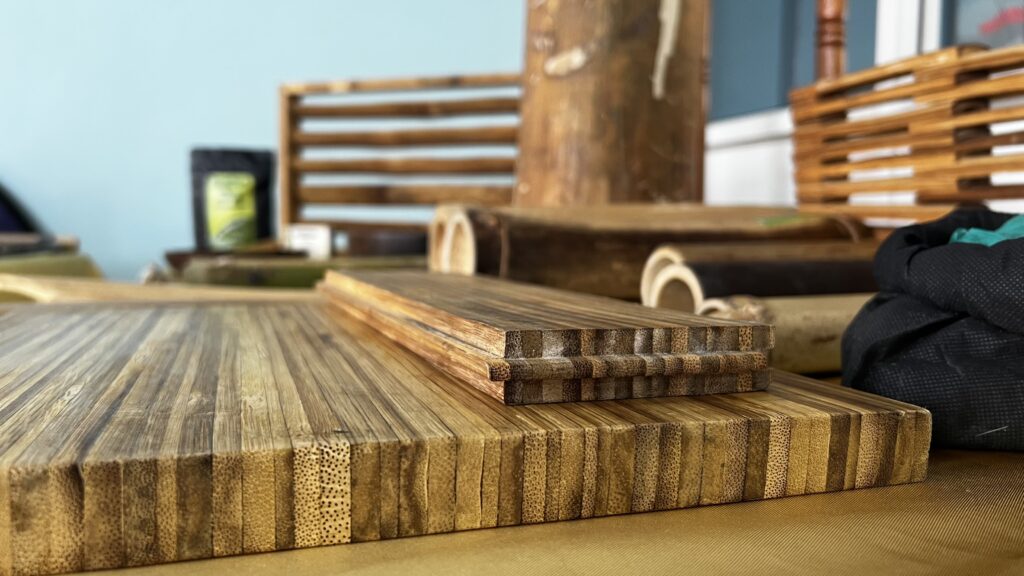
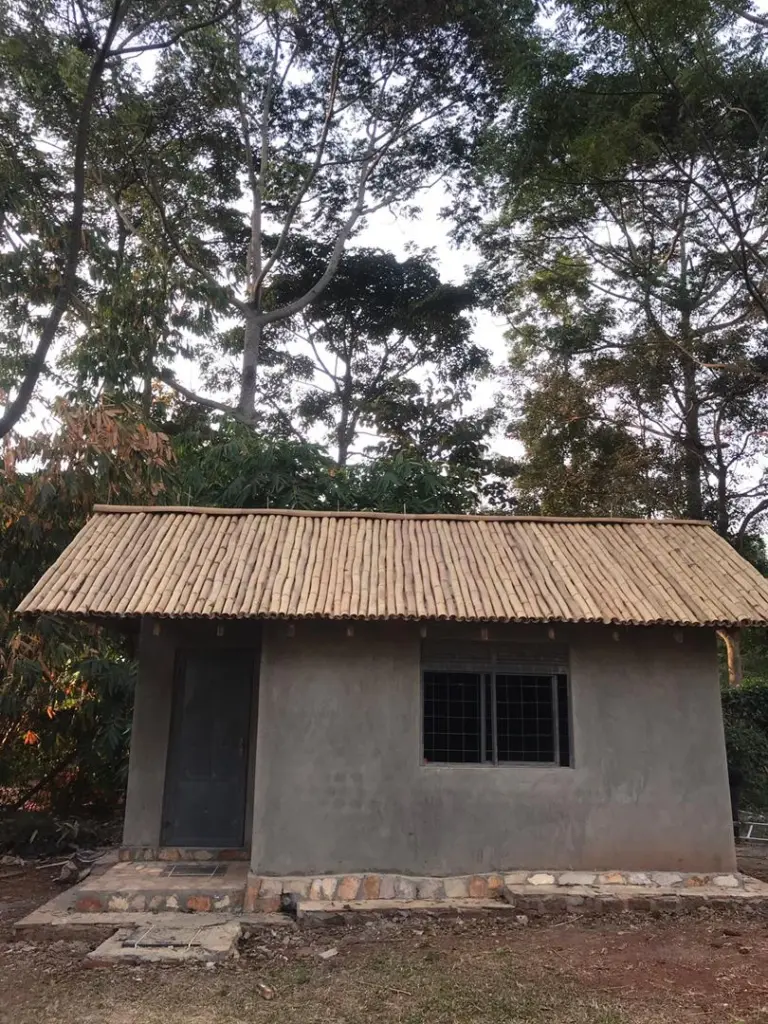
Dr. Muhumuza Collin: We treat bamboo poles with boron salt, an eco-friendly solution and sell them for construction and fencing. Additionally, we manufacture roofing material, flooring, and ceiling options.
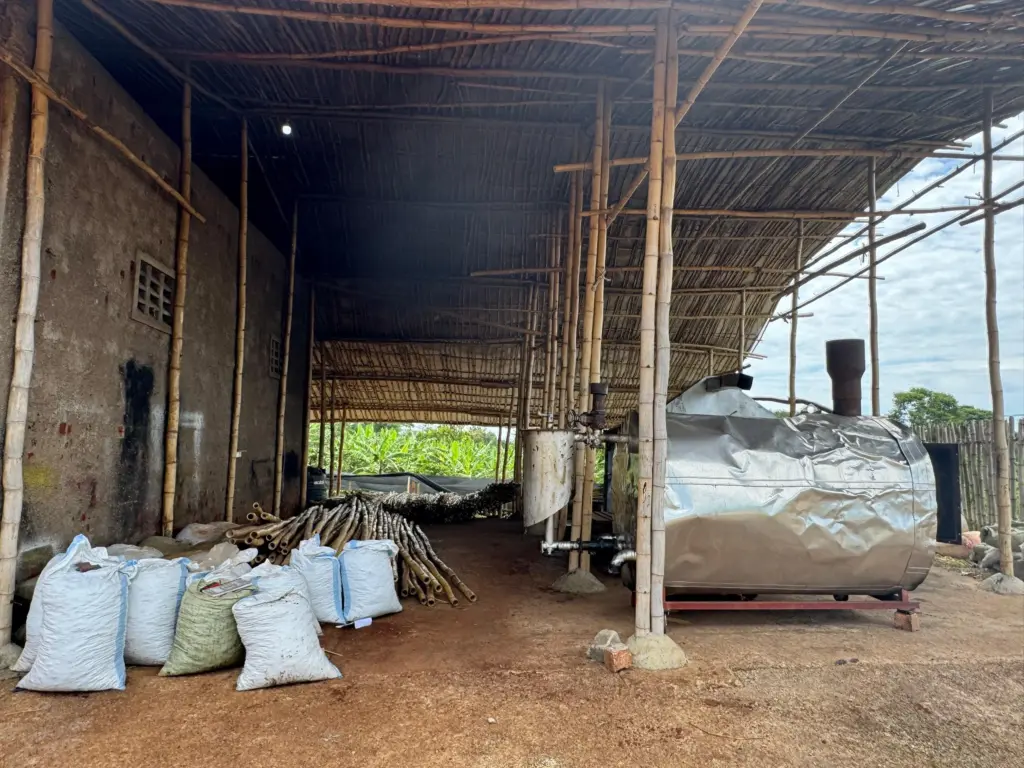
We also produce bamboo chips that we export to a client in the Netherlands, where they are used to make composite materials for airplane interiors, car dashboards, car spoilers, bulletproofs and traffic posts. Furthermore, our offcuts are processed into biochar, which a client blends into fertilizer to enhance nutrients while reducing carbon footprint.
So, our customer base ranges from local farmers and builders all the way to international manufacturers in aviation, automotive, and infrastructure sectors.
Question: How has the export side of the business been going?
Dr. Muhumuza Collin: The biggest challenge in export is scalability. Our client keeps growing their capacity and placing larger orders. Consequently, we need to constantly innovate to keep up.
Currently, we are developing a machine to process bamboo chips faster and more efficiently. Government bureaucracy around export licensing has also been a significant hurdle, the process is slow and often delays our timelines.
Nevertheless, the trajectory is exciting. Since 2021, Amabanda Uganda Limited has shipped six containers to the Netherlands. This year, we resume with three containers, then ten the following year, fifteen the year after, and growing from there. As a result, that growth in orders directly creates more off-take agreements with farmers, giving them an increasingly reliable monthly income.
Question: What other challenges have you faced?
Dr. Muhumuza Collin: First, bamboo coverage. We don’t yet have enough mapped acreage in Uganda to sustain rapidly growing orders. We are, however, actively encouraging more planting.
Second, a common myth is that bamboo requires no maintenance. In reality, it needs regular spot weeding, pruning, thinning, and mounding. Because many farmers neglected this, we received poor quality poles, something we are working hard to correct through farmer education.
Third, traceability. The global market increasingly demands it. We are mapping plantations, recording species, acreages, and harvest timelines, but that data infrastructure requires significant investment.
Finally, working capital remains a constant pressure. Innovating, building machinery, and marketing a product that isn’t yet mainstream all require funding that startups rarely have in abundance.
Question: What is one lesson you learned the hard way?
Dr. Muhumuza Collin: Insure everything, not just your machinery, but your infrastructure too. We had our three-phase electrical cable stolen twice. Each replacement cost four million shillings. Only after the second incident did we think to insure the cable itself.
We also discovered, quite dramatically, that Ugandan bamboo is significantly stronger than Asian or European bamboo. When our first export shipment arrived in the Netherlands, our client’s machines broke down because they were calibrated for softer Haitian bamboo. That was a surprising discovery, though ultimately it proved the exceptional quality of our material.
Additionally, we learned to begin government permit renewals at least three months before expiry, otherwise you risk operating with lapsed licenses while waiting in a slow bureaucratic queue.
Question: Where do you see the biggest growth opportunities?
Dr. Muhumuza Collin: I see growth from two directions. Locally, bamboo is moving toward the mainstream. As sustainability conversations deepen and affordability improves, we expect restaurants, offices, and government institutions to begin specifying bamboo in their construction projects. Therefore, local purchasing power for bamboo products is set to grow substantially.
On the export side, we are forecasting shipments to multiple international clients within a few years, potentially 50 containers annually. We are already seeing prototypes being developed using bamboo for boats, ships, aviation interiors, car components, paper, and furniture. Consequently, the market opportunity is wide, and Amabanda Bamboo Processing is well positioned to capture it.
Question: What support does Amabanda Uganda Limited need to scale?
Dr. Muhumuza Collin: We need greater investment in marketing and innovation. Bamboo is still misunderstood in Uganda. Changing that perception requires consistent digital storytelling, professional photography, educational content, and targeted campaigns.
Second, technical expertise. We are currently building a machine for radio lamination, and having qualified engineers on the team would help us innovate more efficiently.
Third, working capital to fulfill growing orders, run machinery development, and maintain a strong market presence.
Question: What advice would you give to aspiring agribusiness entrepreneurs?
Dr. Muhumuza Collin: Research deeply and qualify the problem you want to solve before you invest a single shilling. That research shapes your strategy and helps you avoid costly mistakes. Furthermore, understand your buyers, not just who they are, but what drives their purchasing decisions. That insight is what ultimately frames a viable business model.
How to reach Amabanda Bamboo Processing
You can connect with Amabanda Uganda Limited on LinkedIn, TikTok, and X under Amabanda Uganda Limited, or visit their website at www.amabanda.com. Additionally, you can reach their sales team directly at +256709 753 277 or +256760 273 450. Their processing factory is located in Kiyoola, Mukono, and site visits are welcome.
AAN Insight; Why This Matters for Africa
Amabanda Bamboo Processing is proof that African homegrown innovation can compete globally, turning a locally abundant material into an export-ready, climate-smart industry. For agribusinesses and rural entrepreneurs across the continent, their model of integrated value chains, farmer income assurance, and sustainable harvesting offers a replicable blueprint worth studying. At AAN, amplifying exactly these kinds of stories is central to our mandate , because visibility is the first step to scale.
Disclaimer
This article is produced for informational purposes only and does not constitute an endorsement, recommendation, or promotion of Amabanda Bamboo Processing or any of its affiliated entities by Africa Agri Network (AAN). AAN has no commercial relationship with the subjects featured in this article. All information presented is based on interview responses and has not been independently verified by AAN.

No Comment! Be the first one.