



Maximize Your Profits with Proper Egg Handling
Are poor egg handling habits costing you money? Learn how to protect quality, reduce losses, and maximise profits with these expert-backed tips.

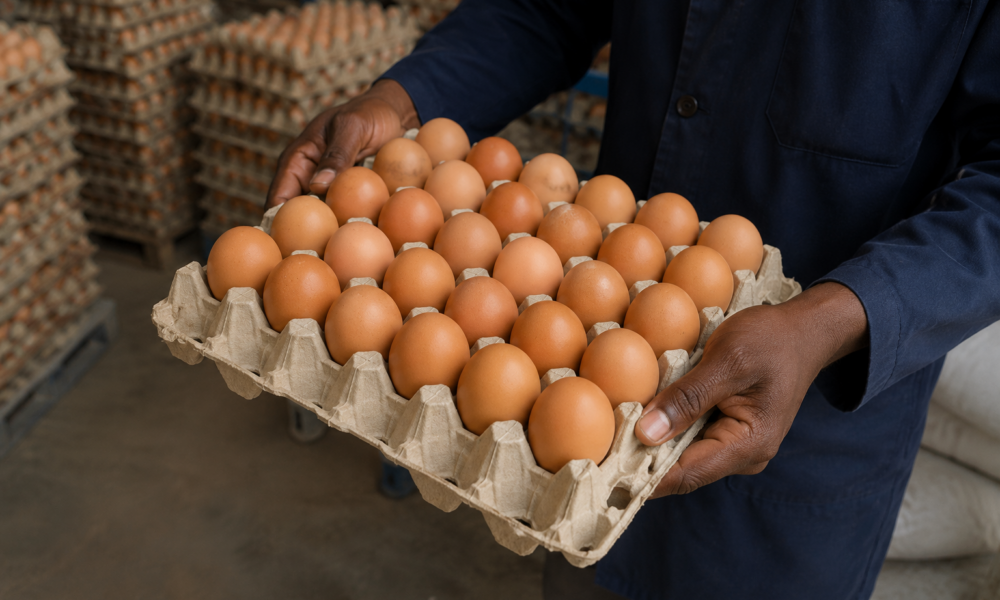
Across Africa, egg farmers are losing significant income not from poor production, but from poor post-lay management. Cracks, contamination, spoilage, and improper storage are silently eroding profits on farms of every size, from backyard flocks to large commercial operations. The difference between a profitable egg farming enterprise and a struggling one often comes down not to how many eggs are laid, but to what happens to those eggs between the nest and the market.
The evidence is clear and consistent. The Food and Agriculture Organization of the United Nations (FAO), which has worked extensively with smallholder poultry farmers across sub-Saharan Africa, states that the most effective way to preserve egg quality is through careful handling, proper storage, and consistent hygiene practice at every stage from collection to sale. Global layer genetics companies, including Hendrix Genetics and H&N International, whose breeds are among the most widely used on commercial and semi-commercial African farms, are equally unambiguous: most egg losses are preventable. For the African farmer operating in hot, humid, and often resource-constrained conditions, applying these practices is not optional. It is the foundation of a profitable operation.
1. Collect Eggs Frequently and Do Not Wait
The first and most important rule of egg handling is timely collection. Hendrix Genetics advises that nests must be kept clean at all times and eggs collected frequently, because the longer eggs remain in the nest, the higher the risk of contamination, breakage, and quality loss. Under normal conditions, eggs should be collected at least twice a day.
In the African context, however, twice daily is rarely sufficient. The FAO specifically recommends collecting eggs at least four times a day in hot, humid tropical conditions, precisely the environment that characterizes much of sub-Saharan Africa, to reduce the incidence of dirty and spoiled eggs. Frequent collection also prevents a damaging and costly behavior: once one hen begins breaking eggs in the nest, others follow quickly, creating a cycle of loss that is difficult to reverse. African farmers, particularly those managing medium to large flocks in warm lowland regions, should treat four daily collections as the baseline standard, not an aspiration.
2. Handle with Care and Avoid Contamination
Once collected, physical handling determines whether eggs reach the market as a saleable product or a loss. Eggs must be handled with care to avoid mechanical shocks at every stage: collection, loading, transport, and unloading. Even a hairline crack invisible to the naked eye allows bacteria to penetrate the shell and render the egg unsafe. A single moment of careless handling can destroy a significant portion of a day’s collection.
The Poultry Site, a leading international poultry industry resource widely referenced by extension officers and commercial farmers across Africa, recommends separating misshapen, cracked, broken, or extremely dirty eggs from clean eggs immediately upon collection. Egg trays or crates should always be used in place of baskets. Handlers must wash and sanitise their hands before and during collection or wear clean gloves to prevent transferring bacteria such as Salmonella onto the shell surface. The FAO’s Code of Hygienic Practice for Eggs and Egg Products reinforces this directly, stating that microbial load on eggs must be kept as low as achievable through consistent hygiene at every point of handling. For African farmers who often operate without laboratory testing or formal cold chains, preventing contamination at the source is even more critical than it is elsewhere
3. Never Wash Your Eggs
This is the single most damaging and most common mistake observed on smallholder and semi-commercial farms across Africa. Washing eggs removes the bloom, also known as the cuticle the natural protective coating deposited on the shell surface at the point of lay.
Hendrix Genetics reinforces this clearly in its egg quality management guidelines: washing eggs before handling removes the protective bloom and directly exposes the egg to potential contamination. The correct practice is to lightly brush off dirt with a clean, dry cloth or soft brush. Eggs that are too dirty to clean by dry brushing should be sold locally at the farm gate or to informal markets rather than entering formal retail or export channels where hygiene standards are enforced.
4. Control the Storage Environment
Temperature is the most critical variable in egg storage, and it is where African farmers face their greatest structural challenge. In the absence of reliable refrigeration, a reality on the majority of smallholder and semi-commercial farms across the continent, eggs stored at ambient tropical temperatures can begin to deteriorate within one to two days.
The Poultry Site recommends storing eggs at approximately 7°C (45°F), with relative humidity maintained between 70 and 85 percent. Under these conditions, clean eggs can remain saleable for up to three months. Hendrix Genetics warns that temperature fluctuations are particularly damaging, as sudden changes cause condensation to form on the shell surface, creating ideal conditions for bacterial growth. H&N International advises that eggs must never be left overnight in nests or on collection belts — they must be moved promptly to a designated storage environment immediately after each collection.
For the majority of African farmers operating without refrigeration, the FAO recommends storing eggs in a well-ventilated, shaded, cool area away from direct sunlight and heat sources. Even simple shade structures and passive ventilation can extend shelf life meaningfully. Where small cooling units are accessible, even those that do not achieve full refrigeration temperatures, their use produces measurable improvements in egg quality retention.
5. Rotate Stock and Label Trays
Disciplined stock management is as important as temperature control. The First-In, First-Out (FIFO) principle — always selling or using the oldest eggs first — is a straightforward practice recommended across the global poultry industry and directly applicable to African farm conditions regardless of scale. Each tray should be labelled with its collection date, and trays arranged so that older stock is always at the front of the storage area. This single habit eliminates the risk of eggs sitting unsold until they spoil.
For African farmers seeking to modernise their operations, digital farm management tools are increasingly accessible. Bivatec’s My Poultry Manager application, developed specifically for smallholder and commercial poultry farmers in Uganda and East Africa, allows farmers to track daily egg production, monitor laying trends, and generate production reports from a basic smartphone. Greater visibility over inventory enables more timely selling decisions, reduces waste, and directly protects farm margins.
6. Align Production with Market Demand
Overproduction relative to available market absorption — particularly without adequate cold storage — structural profit leak on many African farms. Farmers should actively manage production to match known demand cycles rather than maximising output regardless of market conditions. During peak demand periods, such as school term openings, public holidays, and festive seasons, increasing production and holding additional stock under cool conditions is justified. During slow market periods, moderating feed intake slightly over a few days can reduce laying rate and prevent the costly accumulation of unsold stock.
African egg markets are developing rapidly and offer increasing channel diversity: local markets, hotels, restaurants, institutional buyers, supermarkets, and direct farm delivery are all viable routes depending on location and scale. Farmers who combine sound egg handling with consistent quality have a clear competitive advantage in accessing and retaining premium buyers. Branding and packaging — even at a basic level — further strengthens market positioning and supports better farm-gate pricing. Aaron Vet Farms, a Ugandan poultry advisory service with direct field experience across East African markets, advises farmers to explore all available channels actively rather than relying on a single buyer or market route.
7. Transport Eggs Carefully
Improper transport is one of the most common causes of preventable egg loss across African supply chains, particularly where road infrastructure is poor and journeys are long. Hendrix Genetics is direct: eggs must be protected from mechanical shocks at loading, throughout transit, and at unloading. Sturdy, padded egg crates should be used. Trays must not be overpacked, as excess pressure increases cracking from below. For longer routes or during hot seasons, insulated crates significantly reduce temperature variation and prevent condensation on the shell.
H&N International specifically warns against the sweating effect: when cold eggs are moved abruptly into a warmer transport environment, condensation forms on the shell surface, creating conditions that allow bacteria to penetrate. For African farmers transporting eggs without refrigerated vehicles, scheduling deliveries during the cooler hours of the day — early morning or late evening — is a practical and low-cost measure that directly reduces this risk.
8. Consider Insurance for Your Flock
Even farmers who apply best-practice egg handling and storage face risks that lie beyond their control. Disease outbreaks, extreme weather events, sudden market price collapses, and feed supply disruptions are recurring realities across African poultry markets. Agricultural insurance products designed for smallholder and commercial poultry farmers are increasingly available across the continent through commercial banks, microfinance institutions, and agricultural development programmes. Farmer cooperatives and savings groups provide a complementary informal layer of financial protection.
Every egg farmer — regardless of flock size or operating model — should investigate what financial protection mechanisms are available in their area. The cost of insurance is predictable. The cost of an uninsured loss is not.
Quick Reference: Egg Handling Best Practices for African Farmers
- Collect frequently: At least twice daily; a minimum of four times daily in hot, humid tropical conditions (FAO).
- Handle gently: Use egg trays or crates at all times; sanitise hands or wear clean gloves (The Poultry Site).
- Never wash: Washing destroys the protective bloom. Dry-brush dirty eggs with a clean cloth or soft brush only (Bivatec; Hendrix Genetics).
- Control temperature: Target 7°C (45°F) with 70–85% humidity; store in a cool, shaded, ventilated space where refrigeration is unavailable (The Poultry Site; FAO).
- Rotate stock: Apply First-In, First-Out discipline; label every tray with its collection date.
- Match supply to demand: Scale production up during peak seasons; moderate output during slow periods to avoid oversupply (Aaron Vet Farms).
- Transport carefully: Use padded, insulated crates; avoid temperature swings and plan deliveries for cooler hours (H&N International; Hendrix Genetics).
- Insure your flock: Protect your investment against disease, weather, and market shocks.
The Bottom Line: Profit Is Protected in the Details
Africa’s egg market is one of the fastest-growing food sectors on the continent, driven by rising urban populations, expanding middle-income households, and increasing institutional demand. The opportunity for layer farmers, from smallholders to large commercial operators, has never been greater. But production alone does not capture that opportunity. How eggs are handled, stored, and transported determines whether output translates into income or loss.
The practices outlined in this article are not theoretical. They are drawn from the FAO, from global layer genetics companies including Hendrix Genetics and H&N International whose breeds stock African farms, from industry resources such as The Poultry Site that support extension workers and commercial producers across the continent, and from agri-tech businesses like Bivatec and advisory services like Aaron Vet Farms working directly with African farmers on the ground. The majority of the improvements they recommend are low-cost and immediately actionable: collecting more frequently, stopping the practice of washing, improving shade and ventilation in storage, and labelling trays consistently.
Ultimately, the single biggest improvement most African egg farmers can make to their profitability requires no new breed, no new housing, and no significant capital investment. It requires consistent attention to what happens to the eggs after they are laid. That discipline, applied every day, is where profit is protected or lost.
Disclaimer
Africa Agricultural Network (AAN) is committed to informing and empowering agricultural communities across Africa as per our mandate. This article is intended for informational purposes only. Readers are advised to verify all details directly with the relevant agricultural organizations before making any decisions.


No Comment! Be the first one.