



Did You Know Contract Farming Can Shield You from Price Crashes?
Contract farming protects farmers from seasonal price fluctuations. Learn how pre-harvest agreements guarantee prices, boost incomes, and secure markets


Table Of Content
- Introduction
- What is Contract Farming?
- Crops Commonly Grown Under Contract Farming
- The Basic Structure
- How Does Contract Farming Work?
- Why Contract Farming Works: Key Benefits
- Types of Contract Farming Models
- Potential Challenges and How to Overcome Them
- Tips for Successful Contract Farming
- Conclusion
Introduction
Did you know that contract farming is one of the most effective ways farmers can combat devastating seasonal price fluctuations? Indeed, across Uganda and worldwide, unpredictable market prices represent one of the biggest challenges farmers face today. Moreover, without warning, these price swings can leave hardworking farmers reaping only their production costs, or worse, facing complete losses after months of dedicated labor.
Imagine spending an entire season carefully nurturing your crops, investing in seeds, fertilizers, and labor, only to watch prices crash right before harvest. Unfortunately, this nightmare scenario plays out repeatedly for independent farmers. However, contract farming offers a proven solution that’s transforming how smart farmers approach the market. Furthermore, this agricultural arrangement provides price security, guaranteed markets, and often higher incomes than traditional selling methods.
In this article, we’ll explore how contract farming works, why it’s becoming increasingly popular in Uganda, and how you can leverage this system to build a more profitable, predictable farming business. Therefore, if you’re tired of price uncertainty threatening your livelihood, keep reading to discover this game-changing approach.
What is Contract Farming?
Contract farming involves agricultural production carried out based on a formal agreement between buyers and farm producers. Essentially, it’s a pre-harvest agreement where terms are set before you even plant your seeds. Subsequently, both parties know exactly what to expect, eliminating the uncertainty that plagues traditional farming.
According to the Food and Agriculture Organization (FAO), contract farming has emerged as a critical tool for smallholder farmer development worldwide. Moreover, it creates sustainable partnerships between farmers and agribusinesses, benefiting both parties significantly.
Crops Commonly Grown Under Contract Farming
In Uganda, contract farming is most common in sugarcane and tea, where farmers benefit from guaranteed markets and long-term income stability. High-value crops such as chili, spices, and export vegetables are also widely contracted, offering premium prices and technical support. Other contract crops include tobacco, specialty coffee, cotton, dairy, and poultry feed crops like maize and soya beans.
The Basic Structure
In a typical contract farming arrangement, the buyer specifies the quality standards required and commits to a predetermined price. Meanwhile, the farmer agrees to deliver the specified quantity and quality at a future date. Consequently, this creates a win-win situation where farmers gain price security and buyers secure reliable supply.
For example, a sugar company might contract farmers to grow sugarcane, specifying the variety, planting methods, and quality standards. In return, they guarantee to purchase all qualifying production at an agreed price, regardless of market fluctuations. Therefore, farmers can invest confidently, knowing their market is already secured.
How Does Contract Farming Work?
Step 1: Agreement Negotiation
First, farmers and buyers meet to negotiate contract terms. During this stage, several critical elements are discussed and agreed upon. Specifically, these include crop variety, quality standards, quantity commitments, pricing mechanisms, and delivery schedules. Additionally, some contracts specify farming methods, input provision, and technical support.
Step 2: Production Phase
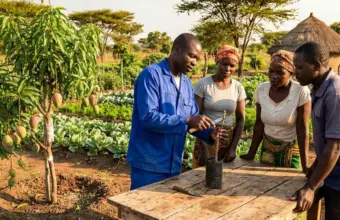
Once the contract is signed, farmers begin production following the agreed specifications. Throughout this phase, many buyers provide ongoing support. For instance, they may supply quality inputs like certified seeds, fertilizers, or pesticides at subsidized rates. Moreover, some companies offer technical advice, training, and field visits to ensure farmers meet quality standards.
Step 3: Quality Inspection
As harvest approaches, buyer representatives typically inspect crops to verify they meet contracted quality standards. Consequently, this ensures both parties fulfill their obligations. Furthermore, early inspection allows farmers to make final adjustments if needed.
Step 4: Harvest and Delivery
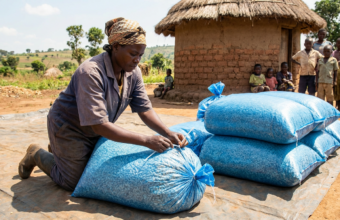
At the agreed time, farmers harvest and deliver their produce to specified collection points. Subsequently, the buyer grades and weighs the produce, confirming it meets contract specifications. Therefore, transparent processes protect both farmers and buyers from disputes.
Step 5: Payment
Finally, farmers receive payment according to contract terms. Typically, payment happens promptly—often within days or weeks of delivery. As a result, farmers enjoy faster cash flow compared to searching for buyers after harvest.
Why Contract Farming Works: Key Benefits
1. Price Protection Against Market Fluctuations
The most significant advantage is protection from volatile market prices. Indeed, when you have a contract guaranteeing UGX 800 per kilogram for your chili, sudden market drops to UGX 500 don’t affect you. Moreover, you can plan your farm budget accurately, knowing your expected revenue in advance.
Research from the International Food Policy Research Institute (IFPRI) shows that contract farmers experience 30-40% less income volatility than non-contract farmers. Consequently, this stability allows better long-term planning and investment.
2. Higher Incomes
Besides combating price fluctuations, contract farmers typically obtain higher incomes than their counterparts without contracts. Specifically, several factors contribute to this income advantage. First, contract prices often exceed average market prices because buyers value supply reliability. Additionally, access to quality inputs and technical support improves yields significantly. Furthermore, reduced post-harvest losses occur because harvesting schedules and handling procedures are optimized.
3. Guaranteed Market Access
Finding reliable buyers represents a major challenge for many farmers. However, contract farming eliminates this problem entirely. Indeed, your market is secured before you even plant. Therefore, you avoid the desperation of searching for buyers at harvest when supply is high and prices are lowest.
Moreover, some contracts guarantee to purchase your entire production, regardless of market conditions. As a result, you never face the heartbreak of unsold produce rotting in your stores.
4. Access to Quality Inputs and Credit
Many contract farming arrangements include input provision as part of the agreement. For instance, buyers may supply certified seeds, fertilizers, and pesticides, deducting costs from final payment. Consequently, farmers access quality inputs they might not afford upfront.
Additionally, some buyers arrange credit facilities for contracted farmers. Therefore, smallholders without collateral can still access financing because the contract itself serves as security.
5. Technical Knowledge and Training
Contract buyers invest in farmer training to ensure quality production. Subsequently, farmers learn improved cultivation techniques, pest management, and post-harvest handling. Furthermore, this knowledge remains valuable even after the contract ends, improving all future farming activities.
6. Risk Sharing
Contract farming distributes production and market risks between farmers and buyers. For example, if prices spike dramatically, farmers might not capture full market value. However, if prices crash, they’re protected from losses. Therefore, this risk-sharing creates stability for both parties.
Types of Contract Farming Models
1. Centralized Model
In this arrangement, a central company contracts individual farmers, provides all inputs, and purchases all output. Moreover, the company typically offers comprehensive support including technical advice, credit, and transportation. Consequently, this model suits crops requiring significant processing like sugarcane or tea.
2. Nucleus Estate Model
Here, a company operates its own farm (nucleus estate) while contracting surrounding smallholder farmers. Subsequently, the nucleus estate serves as a demonstration farm and quality benchmark. Furthermore, it guarantees minimum processing capacity even if contracted supply falls short.
3. Multipartite Model
This model involves several parties including farmers, buyers, government agencies, and financial institutions. For instance, government might provide infrastructure, banks offer credit, buyers guarantee purchase, and farmers produce. Therefore, risk spreads across multiple stakeholders.
4. Informal Model
Some contract arrangements operate informally based on trust and relationships rather than formal legal contracts. However, while flexible, these arrangements offer less security if disputes arise. Therefore, formal written contracts generally provide better protection.
5. Intermediary Model
In this system, intermediaries or farmer cooperatives contract with both farmers and buyers. Consequently, they aggregate production from multiple small farmers, making contracting more efficient for buyers. Moreover, cooperatives can negotiate better terms through collective bargaining.
Potential Challenges and How to Overcome Them
Side Selling. Sometimes farmers sell contracted produce to other buyers offering higher spot market prices. However, this breaks trust and can lead to contract termination. Therefore, farmers should honor agreements and consider long-term relationships more valuable than short-term price advantages.
Solution: Choose buyers with fair pricing mechanisms that adjust for extreme market movements. Additionally, build relationships with trustworthy companies that respect their commitments.
Quality Rejection. Buyers may reject produce that doesn’t meet quality standards. Consequently, farmers lose income and face disposal challenges. Therefore, understanding and consistently meeting quality requirements is critical.
Solution: Follow technical advice carefully, ask questions when unclear, and maintain communication with buyer field officers throughout the growing season.
Input Credit Burden. Some farmers struggle with input costs deducted from final payment, especially if yields disappoint. Moreover, input credit can become debt if crops fail completely.
Solution: Understand all contract terms before signing, including input costs and repayment obligations. Additionally, maintain good agronomic practices to maximize yields and returns.
Power Imbalances. Large companies sometimes dictate unfavorable terms to individual smallholder farmers. Furthermore, farmers with limited alternatives may accept poor conditions out of desperation.
Solution: Join farmer cooperatives or associations that can negotiate collectively. Moreover, seek legal advice before signing complex contracts. According to Uganda Farmers Federation, organized farmers achieve better contract terms.
Delayed Payments. Occasionally, buyers delay payments beyond agreed timelines, creating cash flow problems for farmers. Therefore, this can undermine trust and create financial hardship.
Solution: Include clear payment terms with specific timelines in contracts. Additionally, document all deliveries carefully and follow up promptly on late payments.
Tips for Successful Contract Farming
1. Read and Understand Contracts Thoroughly Never sign contracts you don’t fully understand. Moreover, seek clarification on unclear terms and consider consulting agricultural extension officers or legal advisors. Subsequently, ensure all verbal promises appear in written contracts.
2. Choose Reputable Buyers Research potential contract partners carefully. Indeed, talk to other contracted farmers about their experiences. Furthermore, established companies with good reputations offer more security than unknown buyers.
3. Maintain Quality Standards Consistently meeting quality requirements builds your reputation and strengthens the relationship. Therefore, follow technical advice carefully and invest in proper post-harvest handling.
4. Keep Detailed Records Document all interactions, deliveries, payments, and input provision. Consequently, if disputes arise, you have evidence supporting your position. Additionally, good records help you evaluate contract profitability accurately.
5. Communicate Proactively If problems arise—pest outbreaks, weather challenges, or personal emergencies—inform your buyer immediately. Moreover, early communication allows collaborative problem-solving rather than contract breaches.
6. Diversify When Possible While contract farming provides stability, don’t put all your resources into contracted crops. Instead, maintain some production diversity to spread risk. Therefore, if one contract ends unexpectedly, you have alternative income sources.
7. Invest in Learning Take advantage of training opportunities offered by buyers. Furthermore, continuously improve your farming skills through extension services, farmer groups, and agricultural resources. Subsequently, better skills lead to higher yields and incomes.
Conclusion
Contract farming represents a powerful tool for combating the price uncertainty that threatens farmer livelihoods worldwide. Indeed, through pre-harvest agreements specifying quality, quantity, and price, farmers gain market security and income stability. Moreover, access to inputs, technical support, and credit makes contract farming particularly valuable for smallholder farmers.
While challenges exist, choosing reputable partners and understanding contract terms thoroughly can minimize risks. Furthermore, the benefits—price protection, guaranteed markets, higher incomes, and knowledge transfer—often far outweigh potential drawbacks.
As Uganda’s agricultural sector continues modernizing, contract farming will likely expand into new crops and regions. Therefore, understanding how these arrangements work positions you to capitalize on emerging opportunities. Subsequently, whether you grow sugarcane, tea, chili, or other crops, contract farming might offer the price security and market access your farm needs to thrive.
Remember, successful contract farming builds on mutual trust, clear communication, and shared commitment to quality. Consequently, approach contracts as partnerships rather than transactions, and you’ll discover they can transform your farming business from uncertain to stable and profitable.
Watch video here;




No Comment! Be the first one.