
Agriculture Summit Africa 2026: Africa’s Food Power Play
Africa controls roughly 60 percent of the world’s remaining uncultivated arable land, yet the continent still spends more than $50 billion every year importing food it could grow at home. That...

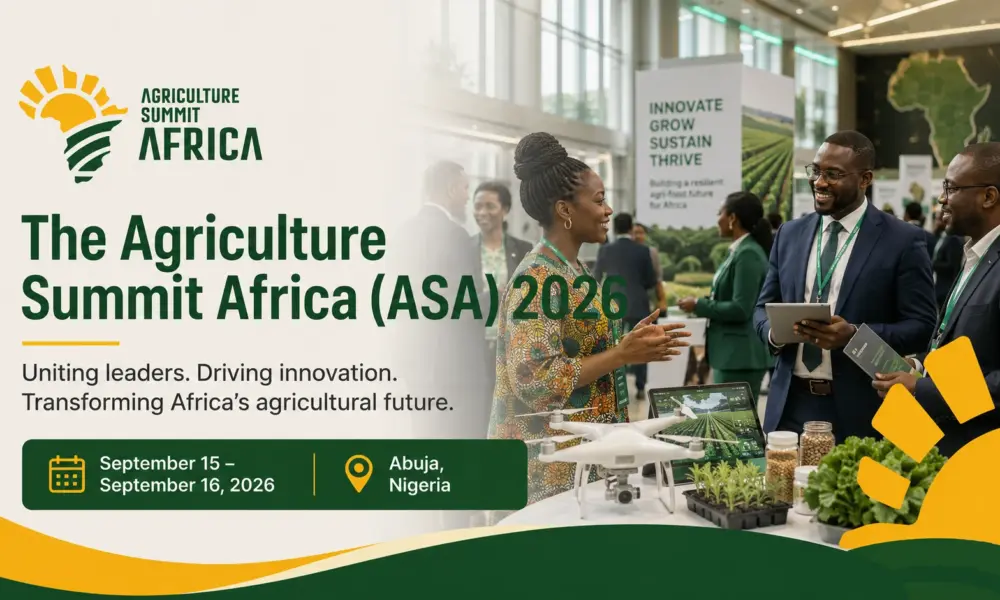
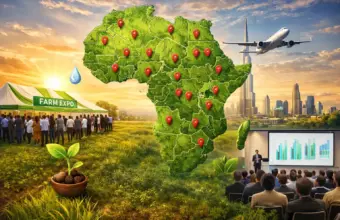
Africa controls roughly 60 percent of the world’s remaining uncultivated arable land, yet the continent still spends more than $50 billion every year importing food it could grow at home. That contradiction sits at the centre of Agriculture Summit Africa (ASA) 2026, which convenes at the Transcorp Hilton in Abuja, Nigeria, from 15 to 16 September 2026. Now in its ninth edition, ASA has become one of the continent’s most closely watched agricultural gatherings, and this year’s theme, “Building the Next Superpower: Africa’s Food Power Play,” makes the summit’s ambition explicit: this is not a conversation about feeding Africa. It is a conversation about who controls the systems that decide whether Africa eats.
Table Of Content
A Gap Built on Disconnection, Not Scarcity
According to ASA organisers, Africa’s food import bill is not a shortage of potential. It is the consequence of disconnected systems, where production sits separated from finance, farmers from quality inputs, infrastructure from markets, and policy from long-term agricultural transformation. That framing matters, because it shifts the summit’s focus away from simply producing more food and toward fixing the plumbing that connects production to profit.
The numbers back up the urgency. Agriculture employs more than 60 percent of Africa’s workforce and contributes between 30 and 40 percent of GDP across many economies, yet the sector receives less than 5 percent of formal bank lending continent-wide. Meanwhile, the African Development Bank has warned that Africa’s food import bill, already above $50 billion, could exceed $110 billion by 2030 if structural inefficiencies persist. Therefore, ASA 2026 arrives at a moment when the financing gap it exists to address is not shrinking. It is widening.
From Sterling Bank’s Boardroom to a Continental Platform
ASA began in 2018 as a Sterling Bank initiative focused on Nigeria’s rural agricultural enterprise. Consequently, its evolution into a genuinely continental platform, now drawing delegates from roughly 30 countries, reflects how far the summit’s ambitions have expanded. Sterling Bank continues to convene the event, this year in partnership with the Lagos State Employment Trust Fund, the Lagos State Ministry of Agriculture and Food Systems, and Sunbeth Global Concepts, alongside a wider roster of public and private sector backers.
Recent editions have shown the summit is not just talk. At ASA 2024, Sterling Bank committed $33 million in low-interest financing for women in agriculture. At ASA 2025, held under the theme “Survival of the Greenest,” the Nigerian federal government used the summit’s platform to unveil its National Livestock Growth Acceleration Strategy, a plan to grow the country’s livestock sector from $32 billion to $74 billion by 2035. In 2024 alone, investors reportedly sealed deals worth more than $100 million through the summit’s dedicated Deal Room. That track record sets a clear benchmark for what ASA 2026 will be measured against.
Five Pillars, One Objective
ASA 2026 will bring together leaders across government, agribusiness, finance, technology, development, research and farming to move the continent from food security to food sovereignty, a distinction organisers treat as central rather than semantic. Food security asks whether people have enough to eat. Food sovereignty asks whether a country controls its own capacity to produce, process and trade that food on its own terms.
To get there, the summit will explore how Africa can build stronger value chains, mobilise smarter finance, scale innovation, strengthen intra-African trade, and improve food processing and storage, while shaping policies that empower producers and protect the continent’s food future. Each of those threads addresses a specific point of failure identified in the sector: weak value chains lose value before it reaches producers, thin financing starves growth before it starts, and limited intra-African trade keeps food moving out of the continent instead of across it.
Why the “Superpower” Framing Matters
Calling agriculture a path to African “superpower” status is a deliberate escalation in ambition from ASA’s earlier themes, which focused on scarcity, resilience and greenness. This shift mirrors a broader trend across the continent’s biggest food and agriculture events in 2026, from the Africa Food Systems Forum’s investment-focused Kigali summit to Nairobi’s FINAS gathering on closing Africa’s roughly $100 billion agricultural financing gap. Collectively, these events point to the same underlying diagnosis: Africa’s constraint has never been land, climate or talent. It has been capital, coordination and control.
Consequently, ASA’s positioning as a place “where the conversation becomes coordination” is a direct response to that diagnosis. Rather than treating each session as a standalone policy discussion, the summit is structured to connect capital directly to bankable projects, a model reinforced by ASA’s own Deal Rooms, which have historically paired investors with agribusiness ventures in specific sub-sectors like feed, fodder and livestock.
What to Watch at ASA 2026
For delegates and observers alike, several signals will indicate whether the 2026 edition lives up to its theme. Deal Room outcomes will show whether pledged capital converts into signed agreements, as it did in 2024. Government announcements, following the pattern set by Nigeria’s livestock strategy reveal in 2025, may again use the summit as a launchpad for new national policy commitments. And discussions on intra-African trade will test how seriously the continent is pursuing the African Continental Free Trade Area’s potential to keep locally produced food circulating within African markets rather than leaking out through import dependency.
The Stakes Heading Into September
Ultimately, ASA 2026 is betting that coordination, not just capital, is the missing ingredient in Africa’s agricultural transformation. The continent has the land. It increasingly has the policy frameworks, from the Malabo Declaration’s successor, the Kampala Declaration, to national investment plans rolling out across multiple countries. What remains unproven is whether summits like ASA can consistently convert declarations into disbursed financing, and financing into functioning value chains that farmers, processors and traders can actually rely on. As delegates gather in Abuja this September, that is the real test behind the “Africa’s Food Power Play” theme: not whether the continent can talk about becoming a food superpower, but whether it can finally build one.
How to Register
Registration for ASA 2026 is open now through the summit’s official website. Policymakers, agribusiness leaders, investors, innovators, farmers and development partners can secure a spot by visiting agricsummit.org/#Register and completing the online registration form ahead of the 15 to 16 September gathering in Abuja. Given the scale of past editions, which have drawn delegates from roughly 30 countries, early registration is recommended to guarantee a seat at sessions, Deal Room engagements and networking events across the two-day summit.
Disclaimer
Africa Agricultural Network (AAN) is committed to informing and empowering agricultural communities across Africa as per our mandate. This article on Agriculture Summit Africa (ASA) 2026 is intended for informational purposes only, based on publicly available information as of publication. Event details are subject to change. Kindly verify with ASA for clarity.




No Comment! Be the first one.