

AfDB Approves $18.8M to Boost Ghana’s Rice Production
West Africa eats rice like nowhere else on the continent, yet it cannot grow enough of it. The region produces around 14 million metric tonnes of milled rice a year against demand north of 22 million...

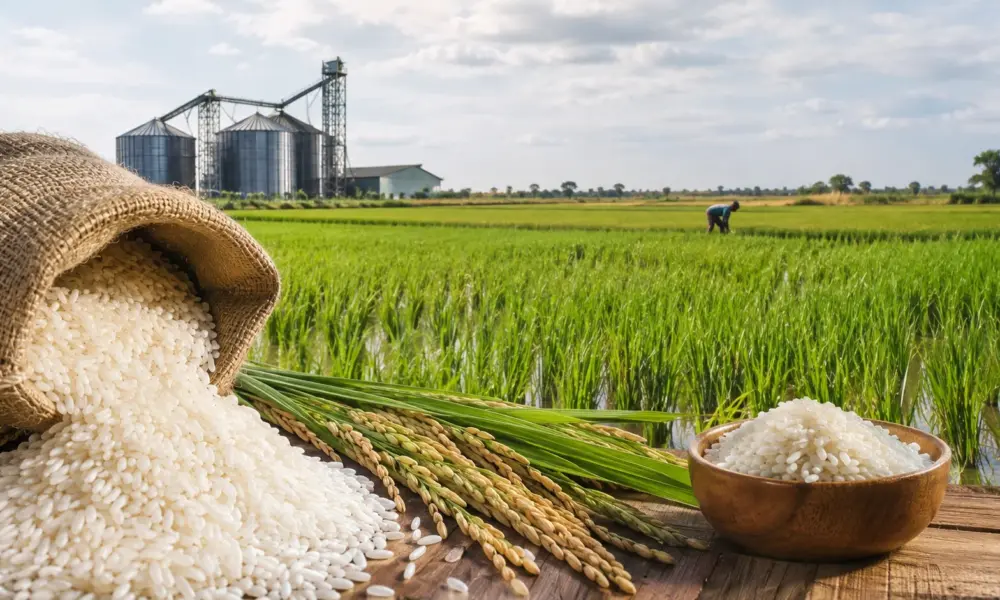
West Africa eats rice like nowhere else on the continent, yet it cannot grow enough of it. The region produces around 14 million metric tonnes of milled rice a year against demand north of 22 million tonnes, a gap that costs it an estimated $3.5 billion annually in imports. The African Development Bank Group (AfDB) is now putting real money behind closing that gap. The Board of Directors has approved an $18.8 million grant to the Government of Ghana to implement the Regional West Africa Resilient Rice Value Chains (REWARD) Project, a move designed to lift domestic rice output, strengthen food security, and create jobs across the value chain.
Table Of Content
The grant lands as one piece of a much larger regional campaign. REWARD itself is a $680 million programme spanning all 15 ECOWAS member states, and Ghana’s financing arrives as the bank names the country a strategic anchor for the entire initiative.
What the Ghana Grant Will Fund
According to the AfDB, the money will target the structural weaknesses holding Ghana’s rice sector back: limited access to quality seeds and mechanisation, weak irrigation infrastructure, and processing capacity too thin to handle rising demand. Consequently, the project is built to increase rice productivity, improve market systems, and reduce Ghana’s dependence on imported rice, while making locally grown rice genuinely competitive on price and quality.
Halima Hashi, the AfDB’s Ghana Country Manager, framed the investment as sector-wide rather than narrowly agricultural. “This project will help strengthen Ghana’s rice value chain by increasing productivity, improving market access, and supporting agribusiness development,” she said, adding that climate-resilient agriculture would also drive job creation and more inclusive economic growth.
The project ties directly into Ghana’s own Feed Ghana Programme, the government’s flagship agricultural transformation and food security agenda, meaning the AfDB financing reinforces a policy direction Accra has already committed to rather than imposing a new one.
A Regional Programme Two Years in the Making
REWARD did not appear overnight. The programme traces back to the Dakar 2 Summit in January 2023, where African heads of state endorsed the Dakar Declaration on Food Sovereignty and Resilience, and AfDB President Akinwumi Adesina formally launched REWARD later that year at the Korea Africa Forum for Economic Cooperation in Busan, with an initial budget of $650 million running through 2030.
Since then, the bank has moved in stages rather than all at once. In November 2024, the African Development Fund released $99.16 million in initial financing covering Gambia, Guinea-Bissau, ECOWAS and AfricaRice. A further $11.78 million followed in March 2025 to strengthen ECOWAS-level coordination, and in July 2025 the ADF approved a $9.44 million grant through its Climate Action Window to scale climate-smart rice practices across 13 countries. Most recently, in February 2026, the bank launched an $8.5 million technical support programme with AfricaRice covering 14 West African nations. Ghana’s $18.8 million grant is the latest instalment in that sequence, and the bank says close to $136 million has now been approved for early REWARD operations across the region.
The Numbers REWARD Is Chasing
The programme’s targets are ambitious by any measure. Regional REWARD documentation projects average rice yields rising from roughly 2 tonnes per hectare to as much as 7 tonnes, alongside average farmer incomes climbing from about $1,385 to $1,605 a year. Officials also expect the wider programme to generate up to 78,000 jobs, nearly half of them for women, while expanding intra-regional rice trade to an estimated 250,000 tonnes.
Those figures matter because West Africa’s rice problem is not simply about farmland. Post-harvest losses across the region run as high as 42 percent, and climate shocks have cut output by 16 to 29 percent over the past 15 years, according to AfDB-linked data. Therefore, REWARD’s design deliberately spans the full chain, from seed systems and irrigation through to processing equipment and cross-border trade, rather than treating production alone as the fix.
Why Ghana Was Named an Anchor
Ghana’s selection as a strategic anchor country signals more than a single grant. The AfDB has indicated Ghana is lined up for further financing under its 2026 to 2027 lending programme, suggesting the $18.8 million is a first tranche rather than a one-off disbursement. Bank officials have also pointed to costly long-term finance, weak irrigation, and limited processing capacity, not weak demand, as the real constraints holding the region’s rice sector back, a diagnosis that puts the emphasis squarely on infrastructure and financing rather than consumer appetite.
What Comes Next
For Ghana, the immediate task is implementation through the Ministry of Food and Agriculture, which will run the project domestically while coordinating with the regional REWARD structure managed out of Abuja. For the wider region, the bigger test is whether REWARD can convert two years of sequential financing announcements into the yield gains, income growth, and import substitution its own projections promise. With roughly $544 million of the $680 million programme still to be committed, Ghana’s $18.8 million grant is an early marker of how far AfDB is willing to go to turn West Africa’s rice import bill into a rice export opportunity.
Disclaimer
Africa Agricultural Network (AAN) is committed to informing and empowering agricultural communities across Africa as per our mandate. This article is intended for informational purposes only. Readers are advised to verify all details directly with theAFDB Secretariat before making any decisions.




No Comment! Be the first one.