



How a Ugandan Farmer Built a Goat Empire From Ten Goats.
Most people look at a goat and see dinner. Semanda Hamiisi looked at one and saw a business empire waiting to be built. Today, on 70 acres in Kayunga, 134 kilometres from Kampala, his Ham Goat...

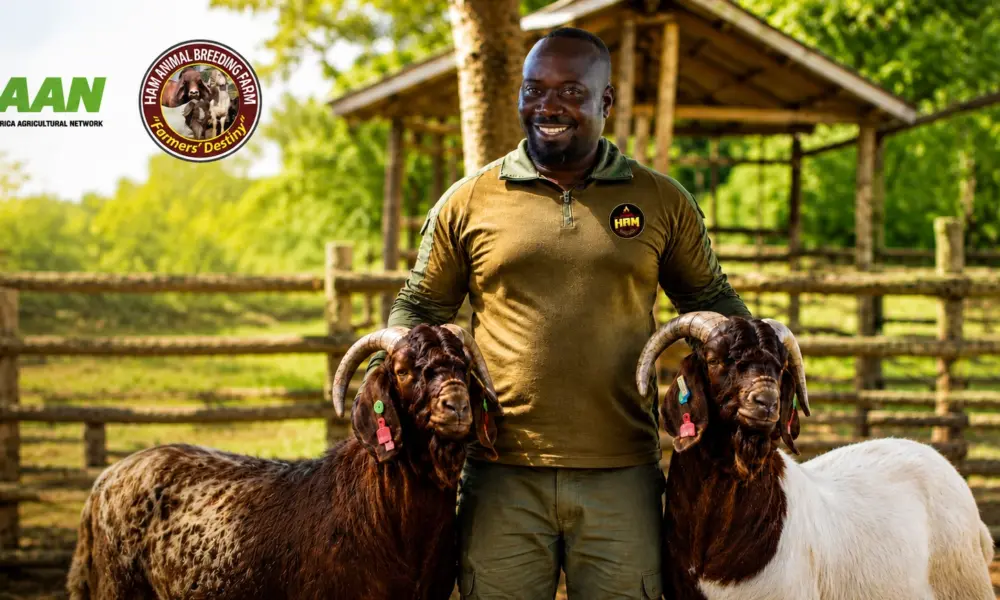
Most people look at a goat and see dinner. Semanda Hamiisi looked at one and saw a business empire waiting to be built. Today, on 70 acres in Kayunga, 134 kilometres from Kampala, his Ham Goat Breeders’ Farm holds over 1,500 goats, employs roughly 60 workers, and runs a restaurant that turns a single kilo of meat into 50,000 shillings. He calls the goats his mother and father. School fees, cars, his wife’s needs: all of it, he says, gets negotiated with the herd.
Table Of Content
None of that empire arrived overnight. Hamiisi, a trained animal health practitioner who once helped other farmers grow their herds in Sembabule, started his own journey with just ten goats bought off a modest salary. What followed wasn’t luck. It was a calculated, unglamorous climb built on breeding science, ruthless discipline, and a flat refusal to spend his life working for someone else. His story now reads like a working blueprint for anyone who wants to know whether goat farming can actually pay, and exactly how fast it multiplies once the fundamentals click into place.
Why Goats Are a “Poor Man’s Project”
Hamiisi didn’t stumble into goats. He chose them, deliberately, because they solve the one problem that kills most agribusiness dreams before they start: cost of entry. Unlike cattle or large-scale crop farming, goat farming lets a farmer start small and grow on their own terms. Two goats, three, five, ten. It doesn’t matter. The model scales from wherever you can afford to begin.
Land, too, doesn’t have to be bought outright. In Kayunga, an acre leases for around 250,000 shillings a year, while a single goat costs roughly 500,000 shillings. So a modest salary is genuinely enough to get started, provided the farmer has the discipline to reinvest early profits straight back into the herd instead of spending them.
The Math Behind the Multiplication
The real power of this business, though, is reproduction speed, and the numbers move fast. Female goats can be bred from eight months old, and healthy hybrid breeds routinely throw twins. Run the math and a starting stock of ten goats can realistically hit around 38 within two years, and close to 100 within three, without a single shilling of fresh capital injected into the herd.
That growth rate lives or dies on breed choice, and here Hamiisi draws a hard line. He avoids local goat breeds entirely, betting instead on hybrids like Savannah, Boer and Kalahari, plus blackhead breeds imported from South Africa. Local goats, he explains, can take up to four years just to reach breeding age and grow far slower the whole way through, quietly bleeding profit margin out of every animal that sits around unproductive.
Feeding, Housing and Disease Control
Beyond genetics, Hamiisi credits nutrition and housing for driving his herd’s growth. His goats eat a deliberate mix of alfalfa, Brachiaria mulato, Chloris gayana and sugar grass, most of it grown on-site and run through a chopper so the animals can’t pick and choose what to eat. His housing, meanwhile, stays open and well ventilated. Goats want to be outdoors, he insists, and only need shelter when it rains.
Disease is where the business gets dangerous. Newly stocked animals face the highest mortality risk, often from stress-related illness as they adjust to unfamiliar ground. Even so, Hamiisi points out that most goat diseases are preventable through routine, low-cost vaccination, covering threats like PPR, CCPP and brucellosis, for roughly 700 shillings a shot. It’s a small price against losing an animal worth half a million shillings.
Turning a Farm Into a Full Business
Here’s the twist: Hamiisi doesn’t run day-to-day operations at all. He hands that authority entirely to a farm manager who buys, sells, hires and fires without needing sign-off. Hamiisi’s own job is to raise capital and supervise from a distance, a structure he credits for keeping him free of the farm while it keeps growing without him.
That same instinct for capturing value has pushed him well past raw goat sales. Instead of selling meat to abattoirs at 15,000 shillings a kilo, he built Ham Gardens Café and Grill, where that same kilo sells for 50,000 shillings once it’s on a plate. He’s pushed further still into agro-tourism: cottage stays, bonfire nights, and plans for horse rides and boat trips along a nearby river, turning the working farm itself into a destination people pay to experience.
The Takeaway for Aspiring Farmers
Strip away the goats and Hamiisi’s real message is about ownership. Salaried work, he argues, will never make you rich, because you’re trading fixed hours for fixed pay. Farming reproduces capital instead of renting out your time, and that difference compounds into generational wealth. Goat farming in Uganda, built on the right breeds, disciplined feeding and tight disease control, offers one of the lowest barriers into that model. It starts with a handful of goats and a plan to let them multiply, and from there, the math does the rest.
Watch the video here
Disclaimer
Africa Agricultural Network (AAN) is committed to informing and empowering agricultural communities across Africa as per our mandate. This article is intended for informational purposes only.

No Comment! Be the first one.