


Africa’s Soil Crisis and the Regenerative Response
Africa’s agricultural soils are at a critical crossroads. According to the World Bank, more than 80 percent of the continent’s agricultural land suffers from degradation due to...

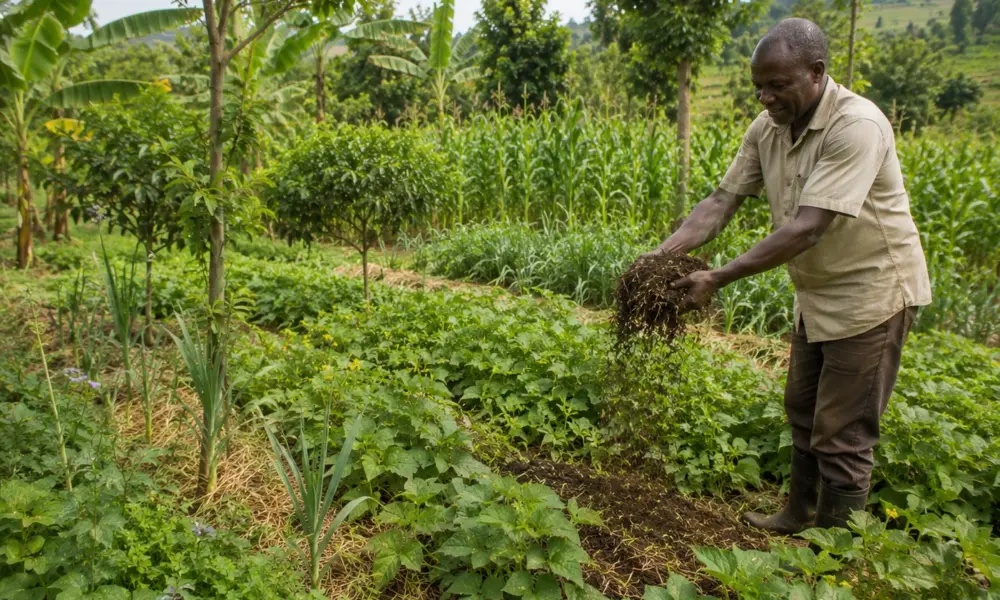
Africa’s agricultural soils are at a critical crossroads. According to the World Bank, more than 80 percent of the continent’s agricultural land suffers from degradation due to biophysical and chemical constraints, and a 2024 report from Africa Science News found that 65 percent of African agricultural land has reached a critical tipping point, with Sub-Saharan Africa holding the highest rate of land degradation worldwide. The consequences are severe: improved crop varieties achieve only 28 percent of their potential yield in Africa, compared to 88 percent in Asia, primarily because the soils they are planted in are too depleted to support the productivity they were designed to deliver.
Table Of Content
- What Is Regenerative Agriculture?
- The Evidence: What Regenerative Agriculture Is Already Achieving in Africa
- Practical Regenerative Practices for African Smallholder Farmers
- The Barriers: Why Scale Remains a Challenge
- The Opportunity: What Wider Adoption Could Mean for Africa
- What African Farmers Can Do Today
This crisis did not happen overnight. Decades of extractive farming practices, including monocropping, overuse of synthetic fertilizers, continuous tillage, overgrazing, and deforestation, have stripped African soils of the organic matter, microbial life, and structural integrity they need to be productive. The result is a vicious cycle: degraded soils produce lower yields, which push farmers to clear more land or apply more inputs, which accelerates degradation further.
Regenerative agriculture is emerging as the most compelling response to this crisis. Rather than simply sustaining what remains, regenerative agriculture actively restores what has been lost. And as the FAO’s 2024 discussion on agroecology and regenerative agriculture in Africa concluded at the Africa Fertilizer and Soil Health Summit in Nairobi, the transition from input-heavy farming to ecological intensification is not just an environmental aspiration. It is an economic necessity for the continent’s food security.
What Is Regenerative Agriculture?
Regenerative agriculture is a farming approach that goes beyond sustainability. Where sustainable farming aims to maintain the current state of an agricultural system, regenerative farming actively works to improve it, rebuilding soil health, restoring biodiversity, improving water cycles, and increasing the long-term productivity of the land with each passing season.
The term encompasses a diverse set of practices rather than a single prescription. This is particularly important in the African context, where agroecological conditions, crop systems, cultural practices, and resource availability vary enormously from the Sahel to the highlands of East Africa to the savannahs of Southern Africa. Consequently, regenerative agriculture in Africa is not a one-size-fits-all system imported from elsewhere. It is an approach that draws on both modern science and indigenous ecological knowledge to build farming systems that work with nature rather than against it.
At its core, regenerative agriculture is built on five interconnected principles that, when applied together, create a self-reinforcing cycle of soil restoration, productivity improvement, and climate resilience.
| Principle | What it means in practice for African farmers |
| Minimum soil disturbance | Reducing or eliminating tillage to protect soil structure, preserve microbial networks, and prevent carbon release. Practices include direct seeding, planting basins, and minimum tillage systems. |
| Keeping soil covered | Maintaining living or dead plant cover on soil at all times through mulching, cover cropping, and leaving crop residues on the field. Covered soil retains moisture, resists erosion, and supports microbial activity. |
| Maximising plant diversity | Growing multiple crops, varieties, and species together rather than monocultures. Intercropping, polycultures, and diverse cover crop mixes create resilient farming systems less vulnerable to pest, disease, and climate shocks. |
| Integrating livestock | Managed livestock grazing and integration of animals into cropping systems creates natural nutrient cycles through manure, improves soil structure through hoof action, and diversifies farm income streams. |
| Maintaining living roots year-round | Keeping living plant roots in the soil throughout the year feeds soil microbes, improves water infiltration, and prevents nutrient loss. Perennial crops, cover crops, and intercropping all contribute to this principle. |
The Evidence: What Regenerative Agriculture Is Already Achieving in Africa
Kenya: 50,000 Farmers Transformed in Eight Years
One of the most compelling bodies of evidence for regenerative agriculture in Africa comes from Kenya’s Strengthening Regenerative Agriculture in Kenya (STRAK) project, documented by Farm Africa. Between 2017 and 2024, more than 50,000 farmers in Embu and Tharaka Nithi counties experienced dramatic transformations in their yields, incomes, and resilience to climate change through the adoption of regenerative practices including mulching, intercropping, organic composting, and diverse cover crops. Farm Africa’s Cultivating the Future report documents how these practices rebuilt soil fertility and organic carbon stocks while simultaneously improving farmer livelihoods.
Furthermore, the STRAK project demonstrates a critical point about regenerative agriculture in Africa: it works best when it is designed around the specific agroecological context, the available resources, and the knowledge that farmers already hold. Imposing a standardised regenerative system from outside is less effective than building on and enhancing the practices that farmers are already familiar with.
East Africa: The Nature Conservancy’s Tuungane Project
Across East Africa, The Nature Conservancy (TNC) works with smallholder farmers in Kenya and Tanzania through the Tuungane Project, a partnership with Pathfinder International that applies climate-smart and regenerative practices tailored to local environments. TNC’s research confirms that when done correctly, regenerative practices aid in carbon sequestration, improve the soil’s essential nitrogen and phosphorus content, and increase soil moisture retention, directly translating into better yields and greater resilience to drought.
Uganda: Regenerate Africa’s Model Farm
In Uganda, Regenerate Africa operates a model Regenerative Farm in Nalumuli Bay with over 200 cattle, inspiring over 500 smallholder farmers to adopt regenerative practices including rotational grazing, adaptive livestock management, and legume integration to enrich soil nutrients. The organisation focuses on reviving the historically integrated crop-livestock farming model that once created a natural nutrient loop through manure use, demonstrating that regenerative approaches frequently build on traditional farming wisdom rather than displacing it.
Practical Regenerative Practices for African Smallholder Farmers
The most important insight from the evidence across Africa is that regenerative agriculture does not require expensive inputs or radical farm transformation. The most impactful regenerative practices are accessible, affordable, and in many cases draw on farming knowledge that already exists in communities. The following practices represent the highest-impact entry points for African smallholder farmers.
1. Composting and Organic Matter Management
Compost is the foundation of regenerative soil management. By converting kitchen waste, crop residues, animal manure, and organic materials into a structured composting process, farmers create a powerful, free soil amendment that rebuilds organic matter, improves water retention, activates soil microbial communities, and provides a slow-release source of nutrients for crops.
Research across Sub-Saharan Africa consistently shows that even modest applications of compost, combined with reduced synthetic fertiliser use, can maintain or improve yields while significantly improving long-term soil health. Additionally, composting converts waste into a resource, reducing the farm’s external input dependency and improving its economic resilience.
2. Intercropping and Crop Diversification
Monocultures, the practice of growing a single crop across an entire field, are among the most soil-damaging farming approaches in wide use across Africa. Intercropping, growing two or more crops together in the same space and time, is one of the most accessible and immediately impactful regenerative practices available to African smallholders.
The most widely researched and proven intercropping system in Sub-Saharan Africa is the push-pull system, developed by the International Centre of Insect Physiology and Ecology (ICIPE), which combines a cereal crop with Desmodium as a ground cover and Napier grass as a border crop. This system simultaneously suppresses weeds and striga, deters stem borers, improves soil nitrogen, and improves yields. Over 150,000 farmers across East Africa have adopted push-pull, with an average yield increase of two to three times compared to conventional monoculture.
3. Cover Cropping and Minimum Tillage
Keeping soil covered and minimising disturbance are two of the most universally applicable regenerative principles. Cover crops, planted between main crop seasons, protect the soil from erosion, add organic matter, and in the case of leguminous species such as Mucuna, Lablab, and Cowpea, actively fix atmospheric nitrogen into the soil for the benefit of subsequent crops.
Minimum tillage, or conservation tillage, reduces the mechanical disturbance of soil that destroys fungal networks, releases stored carbon, and disrupts the biological communities that drive soil fertility. Combined with mulching and cover cropping, minimum tillage creates a farming system that improves with each successive season rather than declining.
4. Agroforestry and Farmer-Managed Natural Regeneration
The deliberate integration of trees into farming systems is one of the oldest and most effective regenerative practices in Africa, and it is experiencing a significant revival. Farmer-Managed Natural Regeneration (FMNR), the practice of protecting and managing naturally regenerating trees and shrubs on farmland, has transformed degraded agricultural landscapes across the Sahel and East Africa.
In Niger alone, FMNR has contributed to the regeneration of an estimated 200 million trees across 5 million hectares of farmland, improving soil fertility, reducing erosion, improving water retention, and increasing crop yields by 15 to 20 percent. Furthermore, trees provide fodder, fuelwood, and additional income streams that diversify farm livelihoods beyond crop production alone. The Second Roundtable of African Farmers (October 2024), attended by farmers from Uganda, Kenya, Rwanda, Nigeria, South Africa, and five other African countries, identified agroforestry and integrated crop-tree-livestock systems as among the most promising regenerative approaches for scaling across the continent.
5. Rotational Grazing and Livestock Integration
Unmanaged livestock grazing is one of the leading drivers of soil degradation in Africa’s pastoral and mixed farming regions. However, properly managed rotational grazing, where livestock are moved systematically between paddocks to allow vegetation to recover, has the opposite effect: it stimulates plant growth, deposits manure evenly across the landscape, and, over time, rebuilds the soil organic matter and water retention capacity of degraded grasslands.
Regenerate Africa’s model farm in Uganda demonstrates that integrating livestock into a regenerative system, using rotational grazing, adaptive management, and legume integration, creates a self-sustaining nutrient cycle that reduces the farm’s dependence on external inputs while improving both animal and soil health simultaneously.
The Barriers: Why Scale Remains a Challenge
Despite the compelling evidence, regenerative agriculture in Africa faces significant barriers to scale. The Second Roundtable of African Farmers (Bayer, 2024), attended by smallholder farmers from nine Sub-Saharan African countries, identified the primary barriers as: low public and private investment in research and development; high upfront costs for new technologies; limited access to insurance and credit products designed for regenerative farming transitions; and lack of infrastructure for knowledge transfer and extension support.
Consequently, the farmers who benefit most from regenerative approaches are often those who already have access to extension support, farmer networks, demonstration farms, or digital learning platforms that make the knowledge and techniques accessible. For the majority of smallholders who lack this access, the transition remains out of reach, not because of unwillingness but because of knowledge and resource gaps.
Addressing these gaps requires a coordinated response from governments, development organisations, financial institutions, and agricultural education providers. African farmers at the 2024 Roundtable called for outcome-driven agricultural policies, low-interest loans and grants specifically for regenerative transitions, and expanding education and training through demonstration farms, digital platforms, and extension services. These are not aspirational demands. They are the documented prerequisites for scaling practices that are already proven to work.
The Opportunity: What Wider Adoption Could Mean for Africa
The scale of the opportunity is extraordinary. According to a report commissioned by IUCN and the UNFCCC, cited by Business Fights Poverty, if just 50 percent of African farmers adopted regenerative agriculture by 2040, the continent would see a 30 percent reduction in soil erosion, a 20 percent increase in soil carbon content, and a 16 percent increase in daily per capita calorie intake. These are not marginal improvements. They represent a structural transformation of African food security.
Furthermore, regenerative agriculture creates a carbon sequestration dividend that is increasingly recognised in global carbon markets. As African governments and the private sector develop carbon credit frameworks linked to agricultural land management, the financial incentives for regenerative farming are growing beyond just improved yields and reduced input costs.
As AgroCentric’s 2026 analysis of regenerative agriculture trends in Africa concludes, African agriculture is at a crossroads. Decades of extractive farming have accelerated soil degradation, biodiversity loss, and declining farm productivity across the continent. Moving regenerative agriculture from the margins to the mainstream is not a choice between productivity and environment. It is the only credible pathway to both.
What African Farmers Can Do Today
Regenerative agriculture does not require a revolution. It requires a series of deliberate, progressive changes that collectively build a more productive and resilient farming system over time. The following entry points are accessible to most African smallholder farmers right now, regardless of farm size, capital, or location.
- Start composting this season. Even a small compost heap using on-farm materials is the first and most impactful regenerative investment any farmer can make.
- Add a legume intercrop to your next planting. Cowpea, Mucuna, or Lablab planted alongside your main crop begins rebuilding soil nitrogen from the first season.
- Stop burning crop residues. Leaving residues on the field as mulch is free, immediate, and directly improves soil moisture and organic matter.
- Protect any naturally regenerating trees on your farmland. Farmer-Managed Natural Regeneration costs nothing and delivers soil, water, and income benefits that compound over years.
- Connect with a farmer group, cooperative, or digital learning platform to access knowledge, inputs, and market linkages that make regenerative transitions viable.
The soil crisis in Africa is real, and it is urgent. But the solutions are already here, already proven, and already working on tens of thousands of farms across the continent. The distance between where African agriculture is today and where regenerative farming can take it is not measured in technology or capital. It is measured in knowledge, access, and political will. For the farmer who starts today, the journey begins with the next seed they plant.
Disclaimer
Africa Agricultural Network (AAN) is committed to informing and empowering agricultural communities across Africa as per our mandate. This article is intended for informational purposes only. Readers are advised to verify all details directly with the relevant agricultural organizations before making any decisions.

No Comment! Be the first one.