



Aquaponics Farming: Grow Plants & Fish Together
Discover aquaponics farming - grow plants and raise fish together. Learn how it works, benefits, suitable crops, and system types for Uganda farmers.

Introduction
Imagine raising fresh fish while simultaneously growing vegetables in the same system, using 90% less water than traditional farming. This is aquaponics, an innovative method combining aquaculture (fish farming) with hydroponics (soilless plant cultivation).
Table Of Content
Consequently, fish waste provides natural nutrients for plants, while plants purify water for fish. Moreover, this closed-loop system eliminates chemical fertilizers and significantly reduces water consumption. Therefore, aquaponics offers Ugandan farmers a sustainable solution producing two income streams, fish and vegetables-year-round. This guide explains what aquaponics is, how it works, benefits, and system types.
What is Aquaponics Farming?
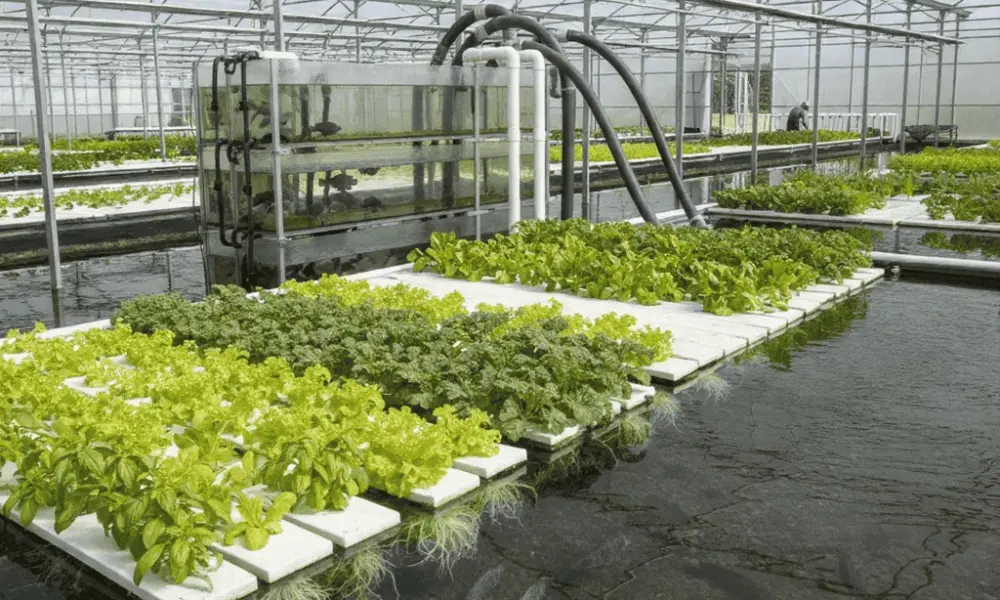
Aquaponics merges aquaculture (fish farming) and hydroponics (soilless plant growing) in one system. Fish produce waste containing ammonia. Consequently, beneficial bacteria convert ammonia into nitrates. Moreover, plants absorb nitrates as nutrients while filtering water. Therefore, clean water returns to fish tanks, creating a continuous natural cycle. Learn about climate-smart farming strategies for Uganda
How Aquaponics Systems Work
Key Components: Fish tanks, grow beds, biofilter (beneficial bacteria), water pump, and aeration system work together continuously.
The Process: Fish produce ammonia waste → Bacteria convert ammonia to nitrates → Plants absorb nitrates and clean water → Clean water returns to fish. Moreover, the cycle repeats 24/7 with only fish food and replacement water for evaporation needed.
Benefits of Aquaponics Farming
Water Efficiency: Uses 90% less water than traditional farming. Water recirculates continuously with only evaporation replacement needed.
Year-Round Production: Not subject to seasons, grow plants and raise fish throughout the year.
Chemical-Free: Fish waste provides all nutrients naturally. No synthetic fertilizers or pesticides needed—100% organic production.
No Weeding: Soilless system eliminates weeds, saving time and labor costs.
Space Efficient: Suitable for small spaces and urban areas. Moreover, vertical arrangements maximize production per square meter.
Dual Income: Revenue from both fish and vegetables year-round. Consequently, farmers enjoy diversified income streams.
Faster Growth: Plants grow 2-3 times faster than in soil because nutrients are readily available in dissolved form.
Suitable Fish for Uganda
Tilapia (most popular): Thrives in Uganda’s climate, grows in 6-9 months, hardy for beginners, high market demand.
Catfish: Tolerates lower oxygen, crowded conditions, good market prices.
Nile Perch: Premium value for large commercial operations, requires experience.
Ornamental Fish: Goldfish and koi for learning, niche markets, beginner-friendly.
Plants You Can Grow
Leafy Greens (best performers): Lettuce (30-45 days), spinach (40-50 days), kale (60 days), collards (60-75 days), Swiss chard (50-60 days).
Herbs (high value): Basil (30-40 days), coriander (30-45 days), mint, parsley (70-90 days).
Fruiting Vegetables: Tomatoes (70-90 days), peppers (80-100 days), cucumbers (50-70 days), eggplants (80-100 days), strawberries (120 days).
Other Crops: Cauliflower, broccoli, cabbage, beans, peas, okra, berries.
Three Main Types of Aquaponics Systems
1. Deep Water Culture (DWC)
Description: Plants float on rafts in long channels filled with nutrient-rich water. Consequently, plant roots hang directly in water accessing nutrients continuously.
Best for: Leafy greens, herbs, and fast-growing crops. Moreover, DWC suits commercial operations requiring high production volumes.
Advantages: Simple design, low maintenance, scalable for large operations. Additionally, consistent nutrient delivery ensures uniform growth.
Considerations: Requires backup aeration systems because plant roots depend entirely on dissolved oxygen. Furthermore, water temperature management is critical.
2. Media-Filled Bed or Gravel Bed Culture (GBC)
Description: Plants grow in containers filled with inert media like gravel, expanded clay, or lava rock. Consequently, water floods and drains through the media periodically.
Best for: All crop types including fruiting vegetables with larger root systems. Moreover, GBC provides excellent biological filtration.
Advantages: Media supports beneficial bacteria colonies, provides mechanical filtration, and anchors plant roots securely. Additionally, this system is versatile and beginner-friendly.
Considerations: Media-filled beds are heavier and more expensive to establish initially. However, they require less technical management than other systems.
3. Nutrient Film Technique (NFT)
Description: A thin film of nutrient-rich water flows continuously through sloped channels where plant roots access nutrients. Consequently, only root tips touch water while most roots remain in air.
Best for: Lightweight crops like lettuce, herbs, and strawberries. Moreover, NFT maximizes space efficiency in vertical arrangements.
Advantages: Uses minimal water, allows easy plant inspection and harvesting, and maximizes growing density. Additionally, NFT systems cool water naturally through evaporation.
Considerations: Vulnerable to pump failures because roots dry quickly if water flow stops. Furthermore, limited to lighter crops that don’t require extensive root support.
Conclusion
Aquaponics farming offers Ugandan farmers a sustainable, water-efficient solution producing chemical-free fish and vegetables year-round. Indeed, this system uses 90% less water, eliminates weeding, and creates dual income streams from minimal space.
Moreover, whether you’re a smallholder seeking food security or an entrepreneur pursuing agribusiness, aquaponics provides tremendous potential. Therefore, start small with Deep Water Culture, Media-Filled Bed, or Nutrient Film Technique systems, learn the fundamentals, and gradually scale your operation.
Consequently, join the agricultural revolution producing sustainable food for Uganda’s future with aquaponics farming.
Watch video here;

No Comment! Be the first one.