



Plant Grafting: Boost Your Crop Yields Naturally
Learn about plant grafting to improve crop varieties and boost farm productivity. Learn 6 grafting techniques, benefits, costs, and step-by-step methods.

Introduction
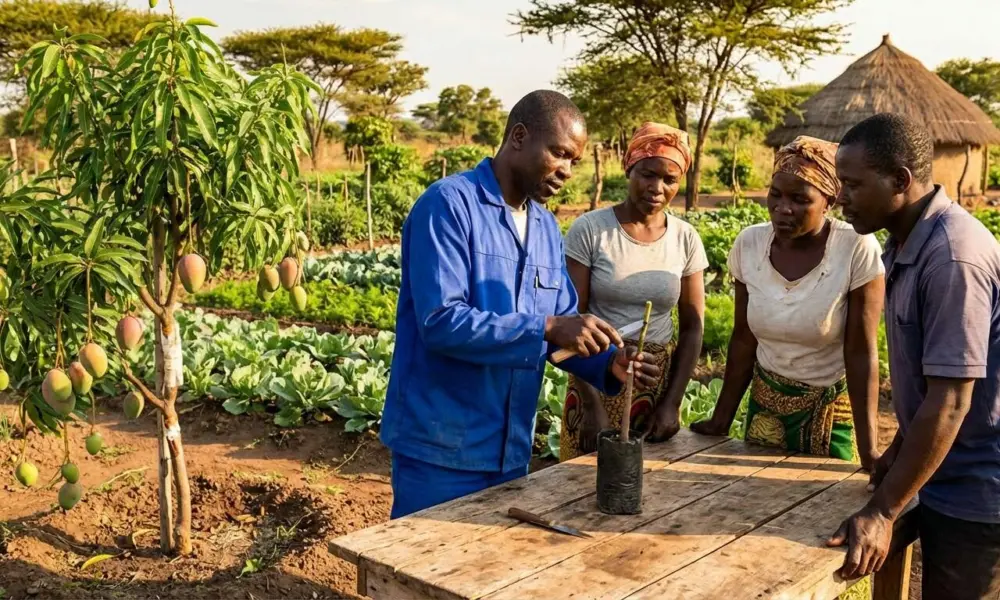
Have you ever wondered how commercial farmers produce disease-resistant fruit trees that yield abundant harvests year after year? Indeed, the secret lies in plant grafting—a powerful propagation method that combines the best characteristics of two plants into one superior organism. Furthermore, this ancient technique is transforming Ugandan agriculture, helping farmers grow healthier, more productive crops.
Table Of Content
- Introduction
- What is Plant Grafting?
- Benefits of Plant Grafting
- Disease Resistance and Improved Growth
- Superior Variety Propagation
- Adaptation to Challenging Conditions
- Six Essential Grafting Techniques
- Step-by-Step Grafting Process
- Popular Plants for Grafting in Uganda
- Common Mistakes to Avoid
- Where to Get Training and Materials
- Conclusion
Plant grafting isn’t just for large-scale operations. In fact, small-scale farmers across Uganda are increasingly adopting this method to enhance fruit trees, ornamental plants, and vegetables. Moreover, whether you’re growing mangoes in Eastern Uganda or apples in the highlands, understanding grafting can revolutionize your farm’s productivity and profitability. Therefore, learning these techniques represents a critical investment in your agricultural future.
What is Plant Grafting?
Plant grafting is a horticultural technique that joins two different plants to create a single, integrated organism. Essentially, the process involves carefully connecting the vascular tissues of the rootstock (lower portion providing roots) and scion (upper portion producing fruits or flowers). As a result, nutrients, water, and essential elements flow seamlessly between them, creating a plant that inherits the best qualities from both parents.
For successful grafting, both plants must be closely related—typically within the same family. In addition, their cambium layers (growth tissue between bark and wood) must align properly. According to the Royal Horticultural Society, proper timing and technique are crucial for high success rates. Consequently, mastering these fundamentals ensures better grafting outcomes.
Benefits of Plant Grafting
Disease Resistance and Improved Growth
Grafting onto disease-resistant rootstocks protects valuable varieties from soil-borne diseases, fungal infections, and bacterial wilts. As a result, you can grow high-quality crops in challenging environments while reducing pesticide dependence. Furthermore, grafted plants often exhibit faster growth, earlier fruiting, and 30-50% higher yields compared to non-grafted plants. In addition, this means lower input costs and higher profit margins for your farm.
Research from the International Society for Horticultural Science shows that grafted fruit trees begin production 2-3 years earlier than seedlings. Subsequently, this translates to faster returns on your investment. Moreover, the reduced mortality rates mean you lose fewer plants to disease outbreaks.
Superior Variety Propagation
Grafting enables exact reproduction of elite varieties that don’t breed true from seed. Indeed, this proves particularly valuable for fruit trees, where seedlings rarely produce identical fruits. Moreover, grafting preserves unique characteristics like exceptional flavor, unusual colors, or specific ripening times that would otherwise disappear. In fact, without grafting, many premium varieties would be impossible to maintain commercially. Therefore, this technique serves as an essential tool for preserving agricultural biodiversity.
Adaptation to Challenging Conditions
Through strategic rootstock selection, grafting helps plants thrive in difficult conditions. For instance, drought-tolerant rootstocks extend production into water-scarce areas, while cold-hardy options enable cultivation in cooler regions. Additionally, this adaptability proves essential across Uganda’s diverse agro-ecological zones. Furthermore, grafting allows you to overcome soil limitations like poor drainage or high salinity. As a result, previously unproductive land can become profitable agricultural space.
Six Essential Grafting Techniques
1. Whip and Tongue Grafting; This technique works excellently for joining rootstocks and scions of similar diameter (6-12mm). Specifically, the method involves making matching diagonal cuts with interlocking “tongues” that create stability and large contact areas. As a result, the cambium layers align more effectively than with simple cuts.
Best For: Apples, pears, cherries, roses, grapes
Success Rate: 80-95%
Timing: Late winter to early spring
2. Cleft Grafting. Cleft grafting suits situations where rootstock is larger than scion wood. Essentially, this involves splitting the rootstock vertically and inserting wedge-shaped scions into the split. Moreover, it’s ideal for renovating older trees with new varieties. In addition, this method works well when you want to change varieties without removing entire trees.
Best For: Mangoes, avocados, citrus, large fruit trees
Success Rate: 70-85%
Timing: Early spring as buds swell
3. Bark Grafting. Bark grafting works when bark “slips” easily during active growth. Specifically, this method involves lifting bark and inserting scions underneath. Therefore, it’s perfect for grafting onto larger rootstocks without causing damage. Furthermore, this technique allows multiple scions to be inserted around the circumference.
Best For: Large diameter rootstocks, mature trees
Success Rate: 75-90%
Timing: Spring when sap flows actively
4. Side Veneer Grafting. This technique involves making a shallow cut on the rootstock side and inserting a matching scion while leaving the original top intact initially. As a result, you have insurance if the graft fails. Subsequently, once established, you remove the original top. In addition, this method works well for valuable or difficult-to-graft species.
Best For: Ornamental trees, conifers, difficult species
Success Rate: 70-85%
Timing: Late winter through early summe
5. Approach Grafting. Approach grafting uniquely joins two plants that remain on their own roots during grafting. Consequently, both plants continue growing independently while the union forms, ensuring high success rates. Furthermore, this technique works well for difficult-to-graft species. In fact, it’s one of the safest methods because neither plant depends entirely on the graft for survival during healing.
Best For: Tropical fruits, tree repair, difficult species
Success Rate: 85-95%
Timing: During active growth periods
6.Bud Grafting (T-Budding). Bud grafting involves inserting a single bud from the desired variety into the rootstock. Notably, this economical technique requires minimal scion material. Moreover, it’s particularly popular for roses, citrus, and stone fruits. In addition, bud grafting allows you to produce many plants from limited scion wood.
Best For: Roses, citrus, stone fruits
Success Rate: 75-90%
Timing: Summer for T-budding
Step-by-Step Grafting Process
1. Preparation:
First, select healthy rootstock and collect scion wood from productive parent plants. Next, sterilize all tools with alcohol to prevent disease transmission. Indeed, this simple step significantly improves success rates.
2. Making Cuts:
Subsequently, make smooth, decisive cuts at appropriate angles for your chosen technique. According to Penn State Extension, clean cuts heal faster and improve success rates. Therefore, invest in sharp, quality tools.
3. Aligning Cambium:
Then, position the scion carefully, ensuring the thin cambium layers (just beneath bark) align on at least one side. In fact, this critical step determines grafting success. Moreover, proper alignment allows vascular tissues to connect seamlessly.
4. Securing the Union:
Afterward, wrap firmly with grafting tape, overlapping by 50%. Subsequently, seal all exposed surfaces with grafting wax to prevent moisture loss. Additionally, label each graft with variety and date information.
5. Aftercare:
Finally, place grafted plants in partial shade with 70-80% humidity. Monitor weekly for signs of success—bud swelling and new growth indicate successful grafting within 2-4 weeks. Furthermore, remove any growth below the graft union to direct energy into the scion.
Popular Plants for Grafting in Uganda
Fruit Trees: Mangoes, citrus (oranges, lemons), avocados, apples, and passion fruits benefit tremendously from grafting. Grafted mangoes, for instance, produce fruit in 2-3 years versus 5-7 years for seedlings.
Ornamental Plants: Roses, bougainvillea, and hibiscus create stunning displays when grafted. Moreover, multiple color varieties can be grafted onto single rootstocks.
Vegetables: Tomatoes and eggplants grafted onto disease-resistant rootstocks show 30-50% yield increases while dramatically reducing bacterial and fusarium wilt losses.
Grapes: Grafting protects against phylloxera and soil-borne pests while maintaining quality characteristics.
Common Mistakes to Avoid
Poor Cambium Alignment: First and foremost, practice precise cuts and take time positioning pieces carefully. Indeed, proper alignment is the single most important factor in grafting success.
Contaminated Tools: Similarly, always sterilize between cuts to prevent disease transmission. In fact, this simple step can prevent most grafting failures caused by infection.
Desiccation: Additionally, work quickly and seal exposed surfaces immediately to prevent tissue drying. Moreover, maintain high humidity during the healing period.
Wrong Timing: Furthermore, learn optimal grafting periods for your specific crops and climate. Consequently, timing your grafts correctly dramatically improves success rates.
Inadequate Aftercare: Finally, monitor grafts regularly and maintain optimal humidity during healing. In addition, protect grafted plants from extreme weather and physical damage.
Where to Get Training and Materials
The National Agricultural Research Organization (NARO) offers periodic grafting workshops. Additionally, district agricultural extension officers provide guidance and demonstrations. Furthermore, materials are available at agricultural input shops in Kampala’s Nakasero Market, Victoria Seeds, and regional agricultural centers. Moreover, many progressive farmer groups organize hands-on training sessions.
Online resources from FAO provide detailed illustrated guides for self-learners. In addition, YouTube channels dedicated to tropical agriculture offer visual demonstrations of various grafting techniques.
Conclusion
Plant grafting represents one of agriculture’s most powerful tools for improving crop quality and increasing yields. Indeed, while requiring practice to master, even beginners achieve good success with proper instruction and materials. Furthermore, by learning grafting techniques, you gain control over your farm’s genetic resources, enabling reliable propagation of superior varieties.
Start with simpler techniques like cleft grafting before attempting complex methods. In addition, practice on less valuable plants first. Subsequently, with each attempt, you’ll develop skills for consistently successful grafts. Moreover, the investment in learning grafting pays dividends for decades as your trees produce abundant, high-quality harvests year after year. Therefore, consider grafting not just a technique, but a cornerstone of sustainable, profitable farming.


No Comment! Be the first one.