


5 Takeaways From AGRA’s 2026 Africa Agriculture Report
To mark its 20th anniversary, AGRA released its Impact, Learning and Foresight Report 2026 in Nairobi on August 31, 2026, just a day before the Africa Food Systems Forum opened in Kigali. It offers...

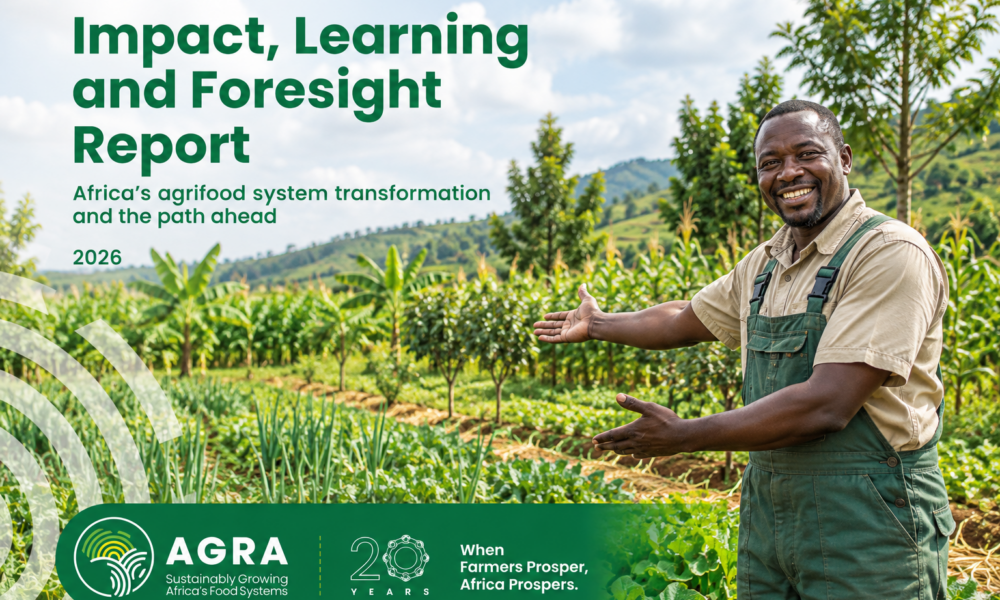
To mark its 20th anniversary, AGRA released its Impact, Learning and Foresight Report 2026 in Nairobi on August 31, 2026, just a day before the Africa Food Systems Forum opened in Kigali. It offers one of the most comprehensive, data-backed pictures available of how the continent’s food systems are actually performing, beyond conference pledges and individual project announcements. Rather than treating it as a single dense document, it is worth breaking down into the themes that matter most to farmers, investors, and policymakers alike.
Table Of Content
- 1. Production Has Grown, But the Productivity Gap With the World Persists
- 2. The Real Financing Gap Is $180 Billion a Year
- 3. Africa’s “Three Traps” Explain Why Growth Hasn’t Reached Farmers
- 4. Climate and Land Degradation Are Raising the Stakes
- 5. Two Decades of Evidence, and a Clear Shift in How Success Is Measured
- Why This Report Matters More Than a Single News Story
1. Production Has Grown, But the Productivity Gap With the World Persists
Africa’s agricultural output has roughly doubled in real terms over the past two decades, and cereal yields have increased by around 40 percent, according to AGRA’s assessment. Yet the productivity gap with the rest of the world remains stark: agricultural gross value added per worker in Africa sits at roughly $1,500, compared with a global average of about $4,300. The maize yield gap tells a similar story, with African farmers averaging around 1.6 tonnes per hectare against a global average closer to 4 tonnes. Irrigation access is a major structural constraint behind that gap, with only about 3 percent of cropland in sub-Saharan Africa irrigated, compared with roughly 40 percent in Asia. This is consistent with what other September stories are already pointing to, from regenerative farming pilots in Kano to fertiliser access issues tied to the AfDB’s new crisis response framework; productivity gains require a bundle of factors working together, not any single fix.
2. The Real Financing Gap Is $180 Billion a Year
Perhaps the report’s single most striking figure is its estimate of an annual financing gap of around $180 billion across Africa’s agrifood sector, including roughly $65 billion specifically for small and medium-sized agribusinesses, the companies that connect smallholder farmers to larger commercial markets through inputs, mechanisation, processing, logistics, and digital agriculture. AGRA frames this explicitly as an investment opportunity rather than purely a development challenge, arguing that commercial banks, development finance institutions, private equity, impact investors, insurers, and fintechs all have a role to play in closing it.
3. Africa’s “Three Traps” Explain Why Growth Hasn’t Reached Farmers
AGRA identifies three interconnected constraints it calls the productivity trap, the value trap, and the capability trap. The productivity trap refers to output that remains too low or too vulnerable to shocks. The value trap emerges when higher production does not translate into stronger farmer incomes, viable businesses, or trade. The capability trap concerns the institutions, finance, policies, and skills needed to turn agricultural strategies into sustained results. The report’s central argument is that addressing any one of these traps in isolation, higher yields without market access, for instance, will not be enough on its own.
4. Climate and Land Degradation Are Raising the Stakes
AGRA estimates that around 65 percent of Africa’s productive land is degraded, while desertification threatens approximately 45 percent of the continent’s total land area. Combined with the continent’s limited irrigation coverage, that leaves much of African agriculture heavily exposed to rain-fed volatility, floods, and drought, the exact combination of risks driving localised responses such as Katsina State’s new $1 million climate resilience project in northern Nigeria. For investors, the report frames this resilience gap as an increasingly economic consideration, not solely an environmental one, since drought and unpredictable rainfall directly translate into supply and pricing risk across agricultural value chains.
5. Two Decades of Evidence, and a Clear Shift in How Success Is Measured
Over the past 20 years, AGRA and its partners say they have supported 118 seed companies and more than 650 improved seed varieties, helped build networks of more than 25,000 agro-dealers and 33,000 community extensionists, trained around five million farmers in soil-health and climate-smart practices, and helped leverage approximately $691 million for national agricultural investment plans. But AGRA President Alice Ruhweza was explicit that the next phase requires a different measure of success: “Twenty years of evidence show that Africa’s agrifood sector can move when the conditions are right,” she said, adding that the task now is translating that progress into “income, resilience, dignity and opportunity” for farmers.
Why This Report Matters More Than a Single News Story
Individual news stories, a new financing framework here, a state-level project there, tell you what is happening. A data-driven report like AGRA’s helps explain whether those individual efforts are actually adding up to meaningful continental progress, or simply keeping pace with mounting pressure. AGRA Board Chair Hailemariam Dessalegn framed the stakes clearly in presenting the findings: the question for the next decade is no longer simply how much Africa can produce, but whether the systems surrounding farmers, finance, infrastructure, and markets, enable them to actually prosper from that production. For anyone trying to understand where African agriculture genuinely stands in 2026, beyond the headlines coming out of Kigali, this report is the place to start.
Disclaimer:
Africa Agricultural Network (AAN) is committed to informing and empowering agricultural communities across Africa as per our mandate. This article summarises publicly available reporting on AGRA’s Impact, Learning and Foresight Report 2026 and is intended for informational purposes only.


No Comment! Be the first one.