
NOW 2026: Uganda Pushes Organic Agriculture Trade in Africa
Uganda's National Organic Week and Expo in Kampala launched the Kilimohai Blue Mark and urged African buyers and farmers to boost organic agriculture trade.

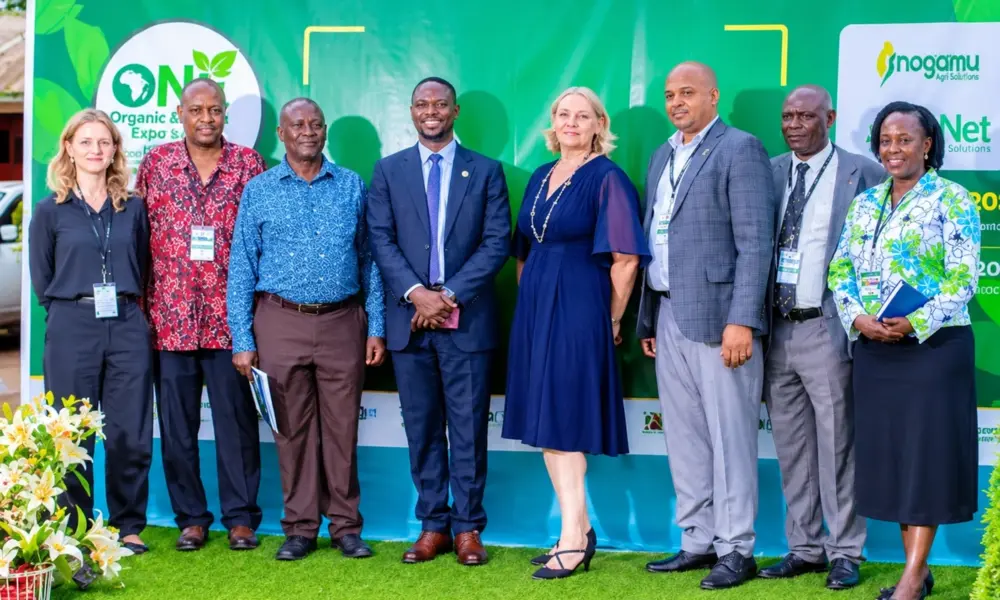
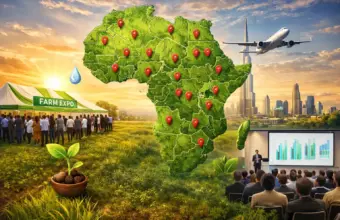
Kampala became the centre of organic agriculture in Africa from 4 to 7 November 2026, as the National Organic Week 2026 and the Organic and Nature Expo Africa (NOW & ONE 2026) brought Africa’s organic and regenerative community together at Hotel Africana. The programme ran from policy and youth dialogue to conferences, regenerative coffee and field tours. The National Organic Agriculture Movement of Uganda (NOGAMU) organised the gathering with the Ministry of Agriculture, Animal Industry and Fisheries and the African Organic Network (AFRONET). It ran under the theme “Organic and Regenerative Innovations: Africa’s Competitive Edge.”
Table Of Content
Farmers, buyers, processors, innovators and policymakers met to exchange knowledge and do business. Importantly, the event launched the Kilimohai Agroecology (Blue), which now joins the established Kilimohai Green Mark. Meanwhile, speakers agreed on one point: Africa has the farmers and the demand, but it still needs processing, trust and market links to trade organic produce with itself.
As a result, the central message was clear. Africa must not only produce for the world, but also trade with Africa.
Government commits to organic agriculture
Rt Hon. Rukia Isanga Nakadama, speaking on behalf of President Yoweri Museveni, said government sees organic agriculture as a pathway to transformation, sustainability and wealth creation. Uganda has had a national organic agriculture policy since 2019. Now, consultations on a regulatory impact assessment are under way, and validation is expected in the last week of November 2026.
However, she warned that demand alone will not make Uganda competitive. Therefore, the country must invest in productivity, processing, storage, logistics and renewable energy for irrigation and cold storage.
The Netherlands’ Ambassador, H.E. Angèle Samura, said Uganda can become a leading supplier of high-quality organic products if farmers get reliable markets, technology, finance and extension services. Likewise, partners such as CBI, SNV and Idh backed the sector. Finally, women and youth champions showcased innovations, while exhibitors held business meetings.
Frank Tumwebaze, Minister of Agriculture, Animal Industry and Fisheries , argued that legislation alone cannot drive organic adoption. Instead, farmers need clear incentives and practical support. Therefore, he called for harmonised messaging and terminology, stronger research partnerships and direct farmer engagement. Moreover, he pledged to work with NOGAMU on the Organic Farming Bill and welcomed expert input.
NOGAMU chairperson Owek. Samuel Nyanzi thanked the government for the policy, while CEO Dr Chariton Namuwoza asked it to expedite the organic law. Meanwhile, Mr Nyanzi unveiled the NOGAMU Organic Academy, which is being aligned with the Ministry of Education so that trainees receive accredited certificates.
According to NOGAMU, Uganda has the largest number of organic producers in Africa and ranks second in the world. Consequently, leaders urged the government to protect that lead.
Kilimohai marks build trust for organic trade
Green and Blue: how they differ
Samuel Ddungu of Kenya explained that the Kilimohai Green Mark rests on the regional organic standard developed in 2007. Companies certify against it, and farmer groups use it in participatory guarantee systems (PGS), where peers verify one another. By contrast, the new Blue Mark rests on agroecology principles and a farmer-led assessment tool.
While the Green Mark sets a minimum threshold, the Blue Mark rewards transition and continuous improvement. Nevertheless, both marks embed traceability and verification. Therefore, buyers get the credible, consistent information they demand.
According to Mr Ddungu, unlocking intra-African trade requires harmonised standards, mutual recognition, stronger buyer engagement and wider PGS networks. In addition, the Blue Mark can help farmers reach supermarkets, health stores, online platforms and farmers’ markets together.
Dr Million Belay of the Alliance for Food Sovereignty in Africa (AFSA) pushed further. He asked who owns the business, who processes the crop and who sets the price. Indeed, he argued, “a successful certification system operating within an unjust economy is not yet food system transformation.”
The business case for organic agriculture
Odrek Rwabogo, commended NOGAMU and described two incentives. First, health: he cited about 830 million people with diabetes worldwide and roughly US$1.1 trillion in yearly treatment costs. Second, price: organic demand keeps rising in Europe, North America and African cities. He also urged farmers to produce to market demand rather than hope for buyers.
Because Uganda’s small farmers are scattered, he proposed regional aggregation centres. For instance, one centre could chill, dry, store and train, while also arranging transport and long-term contracts. A free-zone pilot, including Hortifresh, is preparing a first consignment for the Middle East and Europe.
Regenerative coffee: from resilient landscapes to premium markets
The Organic and Regenerative Agriculture Conference devoted a day to coffee under the theme “Regenerative Coffee Day: From Resilient Landscapes to Premium Markets.” Participants explored how regenerative agriculture can transform Uganda’s coffee sector by strengthening production, building climate-resilient landscapes, improving livelihoods and opening premium markets.
Conrad Buluma, Senior Research Specialist at Market Share Associates (MSA), reported that farmers nearly doubled their regenerative practices between 2021 and 2025, from almost two to three or four per farmer. Moreover, across Uganda and Kenya, participating coffee companies sourced about 8,200 metric tonnes against a 7,500-tonne target. Therefore, he said, regenerative agriculture can benefit both farmers and coffee businesses when support is commercially sustainable.
Flavia Birungi of Solidaridad highlighted growing environmental risks in the Greater Masaka coffee landscape, which lost about 32,292 hectares of tree and dense vegetation cover between 2015 and 2025. Because challenges differ by area, she called for targeted restoration. Practical measures include mulching, proper shade-tree planting and soil conservation against erosion, prolonged dry spells and falling productivity.
However, 59% of coffee farmers rely on coffee as their main income, so restoration must go hand in hand with livelihood protection. She therefore urged affordable, inclusive interventions involving farmers, women, youth, cooperatives, buyers and local authorities.
Taken together, the discussions show that organic and regenerative agriculture in Uganda now has policy backing, trusted Kilimohai marks and growing evidence from the coffee sector. However, success will depend on turning pledges into incentives, standards and reliable buyers. Ultimately, farmers stand to gain most when Africa trades with Africa.
Disclaimer
Africa Agricultural Network (AAN) is committed to informing and empowering agricultural communities across Africa as per our mandate. This article is intended for informational purposes only. Statements and figures referenced were drawn from speakers’ remarks at National Organic Week 2026 and the Organic and Nature Expo Africa, and from the organisers’ published announcements.


No Comment! Be the first one.