


UfarmX: How One Founder Is Fixing Credit for African Farmers
When Alexander Zanders bought 100 acres of farmland in Iseyin, Nigeria, during the COVID-19 pandemic, he wasn’t planning to start a fintech company. He simply wanted to put idle land to good...

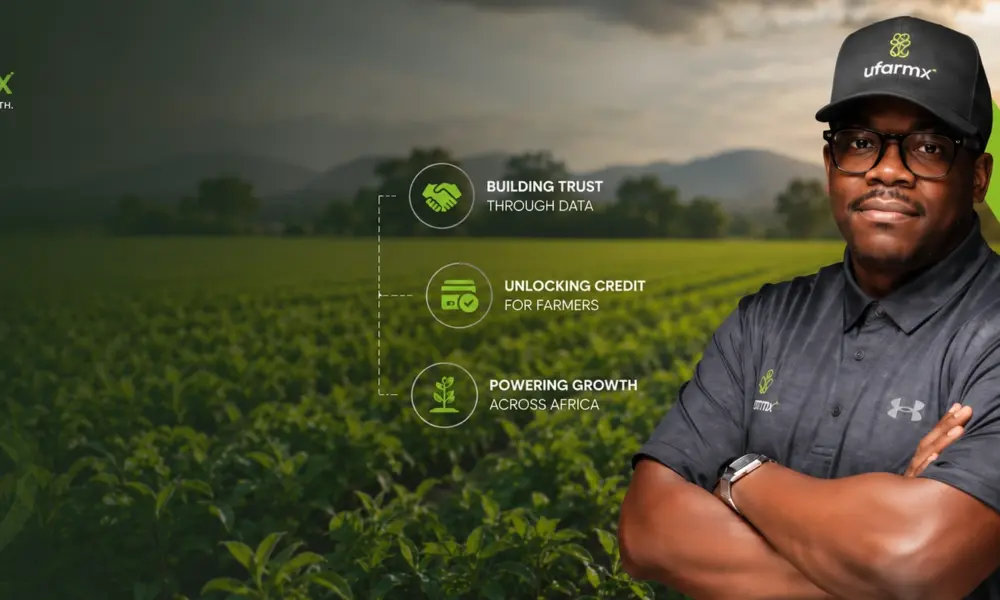
When Alexander Zanders bought 100 acres of farmland in Iseyin, Nigeria, during the COVID-19 pandemic, he wasn’t planning to start a fintech company. He simply wanted to put idle land to good use. But working the soil alongside local farmers exposed him to a problem far bigger than one farm: banks routinely turned away smallholder farmers, viewing them as too risky to lend to. Without credit, farmers couldn’t buy the fertiliser, seeds, or equipment needed to raise their yields, and without better yields, they had nothing to offer banks as proof of creditworthiness. It was a trap millions of farmers across the continent knew all too well. That observation became the seed of UfarmX, an agritech company now working to rewire how credit reaches Africa’s farming communities.
Table Of Content
A Small Experiment With Big Results
Zanders didn’t set out to build a company right away. He started small, offering 15 farmers inputs on credit, hands-on technical guidance, and direct connections to buyers for their produce. The outcome surprised even him: yields nearly tripled, farmer revenues roughly doubled, and the group’s repayment rate held below 10% default, a figure that outperformed many conventional bank lending programmes. That pilot convinced Zanders there was a scalable model hiding inside a problem everyone else had written off as unsolvable.
From Direct Lending to Enabling Others to Lend
Early success brought an uncomfortable realisation: no single company could hope to lend to every farmer across the continent. So UfarmX shifted its strategy. Rather than acting purely as a lender, the company began building the underlying infrastructure, data-driven credit scoring built from geospatial and socioeconomic information, that other institutions could use to lend safely themselves. This pivot let UfarmX multiply its impact far beyond what direct lending alone could achieve, positioning the company as a credit-scoring layer for African agriculture rather than just another microfinance outfit.
Scaling Across Borders
UfarmX now operates in Nigeria, Senegal, Liberia, and Kenya, working with thousands of farmers and tens of thousands of acres. Along the way, the company has layered in additional services: aggregating and reselling farmer produce, securing purchase orders with buyers, and, in some cases, financing refrigerated storage containers that curb post-harvest losses. In Senegal, for instance, storage interventions of this kind have helped farmers hold onto far more of their harvest than they otherwise would have lost to spoilage.
Why Human Networks Still Matter
Unlike agritech ventures that lean entirely on apps and digital marketplaces, UfarmX has leaned into a hybrid model. Local agents collect farmer data in person, complete with photographs and GPS coordinates, building verified profiles that pure software can’t easily replicate. Given how patchy internet access, power supply, and smartphone penetration still are in much of rural Africa, this blend of technology and trusted local relationships has proven essential to getting farmers to actually adopt and stick with the platform.
What’s Next: An API for African Credit
UfarmX’s next major milestone is set for 2027, when the company plans to launch an API product that will let any financial institution tap into its credit-scoring system on demand. The ambition is bold: to become something like a credit bureau for African farmers, in the way Experian or Equifax function in Western financial systems. If it succeeds, banks and lenders across the continent could plug directly into farmer credit data without having to build their own scoring systems from scratch.
The Bigger Picture
Africa holds a substantial share of the world’s remaining arable land, and its farming population numbers in the hundreds of millions, yet the sector remains chronically underfunded. Zanders argues the problem isn’t a lack of demand for food or farming potential, it’s that farmers simply can’t get their hands on upfront capital. As farmland shrinks in the United States, Europe, and Asia due to urbanisation and land pressures, the stakes for unlocking Africa’s agricultural capacity keep rising.
For Zanders, the mission remains deeply personal. What began as a way to make use of a family gift of land has grown into an attempt to reshape how an entire continent finances its food production, one farmer, one credit score, one harvest at a time.
Disclaimer
Africa Agricultural Network (AAN) is committed to informing and empowering agricultural communities across Africa as per our mandate. This article is intended for informational purposes only and reflects claims and figures shared by UfarmX and its founder. Readers should verify all details directly with UfarmX and relevant authorities before making business decisions.


No Comment! Be the first one.