Adja Mamounata Velegda, Burkina Faso’s Queen of Cereals | The African Agripreneur
Starting with just 300 CFA francs, approximately US$0.50, and no formal education, Adja Mamounata Velegda transformed a small galette business into one of Burkina Faso’s leading agribusiness...

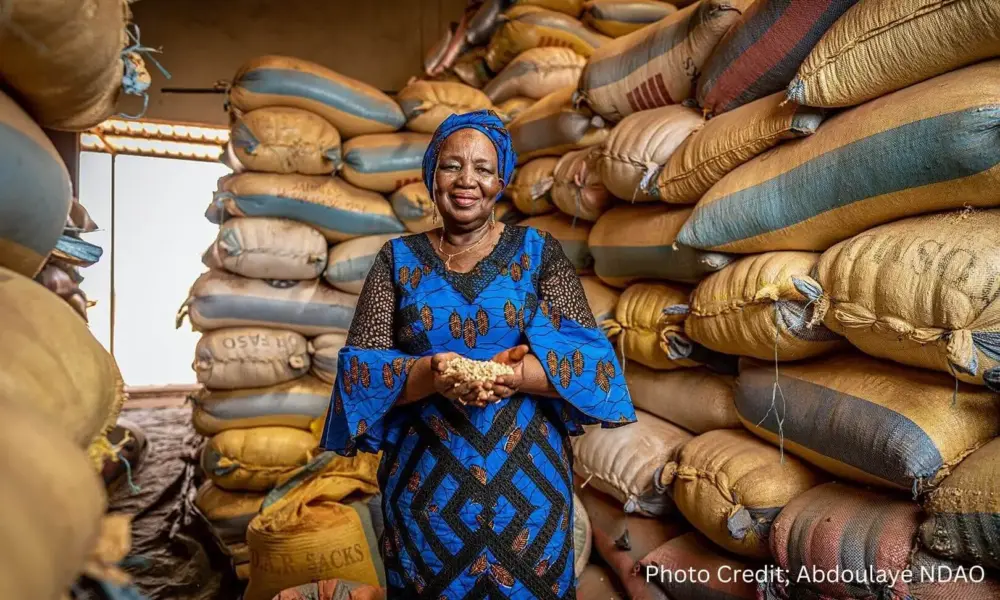
Before the warehouses, processing machines and international buyers, Adja Mamounata Velegda had only 300 CFA francs, less than one US dollar, and a strong desire to change her family’s life.
Table Of Content
How it started
Born in 1958 in Bonnessin, in Burkina Faso’s Kouritenga Province, Mamounata was the eldest of eleven children in a farming family. When a school opened in her village, she wanted to attend. Her father, however, chose to educate her brothers while she remained at home helping with domestic work. She grew up without formal schooling, but she refused to believe that education was the only path to success.
She entered business because she saw how hard her mother worked and wanted to help provide for the family.
Because she had not gone to school, she took on whatever small jobs she could find. She remembers collecting shea nuts as early as two or three in the morning. Even after she married, she continued gathering and selling them before eventually moving into the preparation and sale of galettes.
Around 1980, she began with just 300 CFA francs ($0.5). She reinvested the little money she earned instead of spending it. After selling galettes, traditional street-food fritters or flatbreads made from locally sourced grains such as millet, sorghum or fonio, she moved into selling maize flour and other agricultural products. She walked about 15 kilometres each day to reach the market, often carrying the products herself.
She sold flour and shea nuts around Pouytenga before eventually relocating to Ouagadougou.
What began as a way to survive slowly became a serious trading operation.
Those early years were difficult. Mamounata worked in the heat, travelled long distances and entered a business world where women were not always taken seriously. Without formal training, she learned by listening and observing.
She followed prices, built relationships with farmers and studied what customers needed. She learned that growth often comes through small decisions made well.
The contract that changed everything
As demand increased, Mamounata expanded from small trading into the collection, production, processing and sale of agricultural commodities. Her growing business later became Groupe Velegda, a leading agribusiness company based in Ouagadougou.
Her major breakthrough came in 1996, when she secured her first large contract with SONAGESS, Burkina Faso’s national food-security stock agency. The contract was worth more than 700 million CFA francs ($1.2million). For a woman who had started with only 300 francs ($0.5), it marked an extraordinary turning point.
To buy enough grain for her customers, she travelled through several parts of Burkina Faso, including Dori and the eastern region. Her business grew through movement, negotiation and the ability to connect farming communities with large institutional buyers.
In 1998, she began supplying cereals to the World Food Programme. She also built relationships with the Red Cross, Plan International, Catholic Relief Services, Médecins Sans Frontières and other humanitarian organisations. Several of these organisations are listed among Groupe Velegda’s partners.
For Mamounata, these contracts depended on trust. She explained that suppliers who failed to honour a World Food Programme contract could be suspended for three years. She took that responsibility seriously and says she has consistently fulfilled her commitments. Reliability became one of the strongest foundations of her success.
Taking Burkina Faso’s produce to the world
Groupe Velegda now handles products including maize, rice, millet, sorghum, cowpeas and sesame. It buys from producers, stores and processes commodities, and supplies local and international customers.
The company exports sesame seeds to neighbouring countries such as Togo and Ghana. It has also established a business presence in Denmark and Switzerland. Burkinabè crops now reach both regional and European markets.
Entering international trade requires more than simply having products to sell. Exporters must consistently meet expectations related to quality, quantity, packaging and delivery. For a business that began with a tray of galettes, reaching West African and European buyers represents decades of learning, growth and trust-building.
The company’s wider product portfolio also allows it to serve different markets. In addition to grains, it collects and trades commodities such as shea, cashew nuts, hibiscus, soybeans, edible oils and gum arabic within Burkina Faso and internationally.
A company with a national footprint
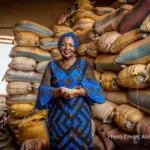
Groupe Velegda now employs more than 500 people and has operations in Ouagadougou, Bobo-Dioulasso, Banfora and Pouytenga. The company also lists permanent representation in Koupéla and seasonal operations in Dédougou, Nouna and Solenzo. Its annual turnover is measured in billions of CFA francs.
Its success supports more than direct employees. Farmers gain buyers for their crops. Transporters move products between fields, warehouses and markets. Traders receive goods to sell. Families gain income and communities become connected to larger supply chains.
Access to finance helped Mamounata move from local trading into larger-scale processing and export. With support connected to Coris Bank International and IFC programmes for women-owned businesses, she was able to strengthen the company, enter wider markets and create more than 300 employment opportunities.
Still building at the top
Reaching the top has not made Mamounata slow down.
One of her most ambitious projects is a modern rice-processing facility backed by an investment of about 5 billion CFA francs ($8million). The aim is to increase the processing of locally grown rice and help Burkina Faso become a stronger regional producer.
The plant is still under construction in Komsilga. Once operational at its planned capacity, it is expected to process as much as 400 tonnes of rice per day.
Another project on the horizon is an industrial facility for processing cashew nuts. These projects show that Mamounata is moving beyond buying and selling raw produce. She is working to process more of Burkina Faso’s crops inside the country, where they can create jobs and retain greater value.
The project shows that Mamounata is not satisfied with being remembered only for what she has already achieved. She is still investing, taking risks and building for the future.
Her story is not inspiring simply because she became wealthy. It is inspiring because she built something valuable from a position where many people would have seen no opportunity. She had no formal education, very little capital and no easy route into the business world.
Today, she is widely known as Burkina Faso’s “Queen of Cereals.” Yet the habits that carried her from a tray of galettes to international markets remain the same: start with what you have, learn from every experience, reinvest patiently and never become too successful to keep working.
For Africa’s next generation of agripreneurs, her journey offers a powerful lesson. A small beginning does not have to produce a small future.
Disclaimer
Africa Agricultural Network (AAN) is committed to informing and empowering agricultural communities across Africa as per our mandate. This article is intended for informational purposes only. Readers are advised to verify all details before making any decisions.
No Comment! Be the first one.